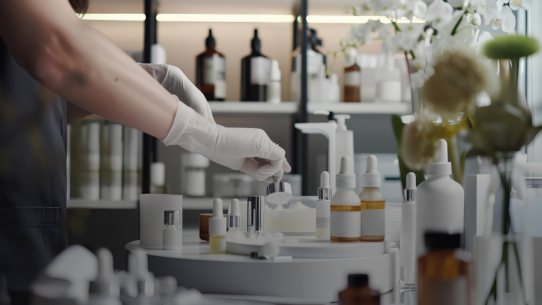



Korea is an established center for cosmetics research, product development, and manufacturing. For international beauty brands, working with a Korean manufacturer can offer access to formulation expertise, diverse product formats, and manufacturing capabilities across skincare, makeup, hair care, body care, fragrance, and beauty devices.
But finding the right manufacturing partner involves more than identifying a factory that produces cosmetics. Brands need to understand the differences between private label, OEM, and ODM, evaluate manufacturers against their product requirements, and coordinate development from the initial concept through production.
Siseon helps international beauty brands navigate Korea’s cosmetics manufacturing landscape. Through a network of Korean manufacturers, we recommend suitable partners for each project and support brands with product strategy, manufacturer matching, development coordination, and production management.
Why Work With a Korean Cosmetics Manufacturer?
Korea’s cosmetics industry combines established manufacturing infrastructure with a product development environment shaped by evolving consumer preferences, ingredient innovation, and experimentation with formulations, textures, and product formats.
For international brands, Korean manufacturing can provide access to this expertise without the need to establish an in-house manufacturing operation in Korea.
The opportunity extends beyond reproducing popular K-beauty products. Brands can work with Korean manufacturers to develop products around their own positioning, target consumers, and commercial objectives.
Korean manufacturers work across categories such as skincare, makeup, hair care, body care, facial masks, patches, fragrance, and beauty devices. Their capabilities vary, however, and not every manufacturer is equipped for every product type or development requirement.
The right partner depends on the product concept, formulation requirements, packaging, target production volume, budget, quality expectations, and intended sales markets.
Understanding these requirements before approaching manufacturers makes the selection process more focused and productive.
Korean Private Label Cosmetics, OEM, and ODM Explained
When researching Korean private label skincare or cosmetics manufacturing, brands will commonly encounter the terms private label, OEM, and ODM. These describe related but distinct approaches to product development and manufacturing.
The terminology can vary between manufacturers, so brands should always confirm the precise scope of services available.
Korean Private Label Skincare and Cosmetics
Private label generally refers to products manufactured for sale under a brand’s own name. Depending on the supplier, this can involve selecting an existing formulation, choosing from available product options, customizing certain elements, or developing a more tailored product.
For brands looking to develop cosmetics without creating every formulation from scratch, private label can offer a more accessible starting point.
The level of customization varies. Some suppliers offer established formulations with limited changes, while others provide options for fragrance, texture, packaging, branding, or additional development.
Before proceeding, confirm what can be customized, whether the formula can be modified, which packaging options are available, and what order quantities and commercial conditions apply.
OEM (Original Equipment Manufacturing)
OEM generally refers to manufacturing products according to specifications provided by the brand. The brand may supply an established formula or detailed product requirements, and the manufacturer produces the product under the agreed specifications.
OEM can be suitable for businesses with a defined product brief or an existing formulation that needs to be manufactured by a qualified production partner.
The manufacturer’s capabilities must align with the formula, processing requirements, packaging, and relevant quality standards.
ODM (Original Design Manufacturing)
ODM generally involves the manufacturer taking a more active role in product development, including formulation development or adapting an existing formulation to the brand’s requirements.
This approach can suit brands that have a product concept, target performance, or reference product but need a manufacturing partner to help translate those requirements into a developed product.
The manufacturer may contribute to formulation, sampling, technical development, and production, depending on the agreement.
Which Approach Is Right for Your Brand?
The right approach depends on how much development has already been completed and how much customization the product requires.
Private label may suit brands seeking an existing product or formulation with defined customization options. OEM may be appropriate when the brand has more established product specifications. ODM may be a better fit when the manufacturer needs to contribute substantially to development.
These approaches can overlap. Some manufacturers offer all three, while others specialize in particular product categories or development models.
Rather than choosing a supplier based on terminology alone, evaluate the actual services offered and whether they match your product objectives.
Five Korean Cosmetics Manufacturers to Know
Korea has a diverse cosmetics manufacturing industry, ranging from large-scale OEM/ODM companies with extensive R&D and production infrastructure to manufacturers with different areas of specialization.
The following five companies are useful starting points when researching Korean cosmetics manufacturers and cosmetics OEM/ODM partners. They are examples of established manufacturers, not a ranking of the best suppliers for every project.
1. COSMAX
COSMAX is a Korean-origin global beauty manufacturer with research, formulation development, and manufacturing capabilities across skincare, makeup, and other beauty categories.
Its services span product development and manufacturing, supported by research and production facilities in Korea and other markets.
For brands researching Korean cosmetics OEM/ODM, COSMAX is a prominent example of a manufacturer with extensive product development and manufacturing infrastructure.
2. Kolmar Korea
Kolmar Korea is a major Korean cosmetics OEM/ODM company offering services across product planning, development, manufacturing, and related production processes.
Its capabilities include skincare and makeup, supported by dedicated research and manufacturing infrastructure.
Brands evaluating Kolmar Korea should consider how its capabilities and commercial requirements align with their specific product category, expected production volume, and development objectives.
3. Cosmecca Korea
Cosmecca Korea provides cosmetics OEM/ODM and contract manufacturing services. Its development capabilities cover multiple beauty categories, including skincare and makeup, with services that can extend to packaging development and other stages of product realization.
The company is another option for brands researching Korean cosmetics manufacturers with product development and manufacturing capabilities.
4. COSVISION
COSVISION is a Korean cosmetics manufacturer with OEM/ODM operations and capabilities in skincare and makeup.
When evaluating COSVISION or other manufacturers, brands should confirm which product categories, formulation requirements, packaging formats, and production volumes the company can accommodate for a particular project.
5. Hankook Cosmetics Manufacturing
Hankook Cosmetics Manufacturing is an established Korean cosmetics company offering OEM/ODM manufacturing alongside R&D and product development services.
Its product categories include skincare, makeup, functional cosmetics, body care, fragrance, and hair products.
For brands looking for a Korean manufacturing partner, its combination of product development and manufacturing capabilities makes it another company worth researching.
How to Choose Between Korean Cosmetics Manufacturers
These manufacturers differ in their capabilities, development processes, production infrastructure, and commercial requirements. A well-known company is not necessarily the right partner for every brand.
Before approaching a manufacturer, consider:
- Product category and formulation: Does the manufacturer have relevant experience with your product type and technical requirements?
- Development capabilities: Can it work from your existing specifications, or support the formulation and sampling process?
- Minimum order quantity: Does the required production volume fit your budget and business model?
- Packaging and customization: Can the manufacturer accommodate your preferred packaging, texture, finish, and other specifications?
- Quality and documentation: What quality systems, testing procedures, and documentation are appropriate for the product and intended sales markets?
- Commercial terms and communication: Are the development costs, production terms, timelines, and responsibilities clearly defined?
- Export-market requirements: Can the manufacturer support the technical documentation and product requirements relevant to the markets where you intend to sell?
Manufacturers may not publish all these details publicly. Availability, pricing, minimum order quantities, and lead times should be confirmed directly with each company.
A suitable manufacturing partner is one that fits the project’s specific requirements, not simply the company with the largest production capacity.
What Can You Develop With a Korean Manufacturer?
Korean OEM/ODM manufacturing extends well beyond traditional skincare and makeup. Depending on the manufacturer and project requirements, brands can develop products across a broad range of beauty, personal care, and lifestyle categories.
Skincare
Cleansers, toners, toner pads, serums, ampoules, creams, eye creams, facial oils, lip serums, and sunscreens.
Facial Masks & Patches
Sheet and hydrogel masks, lifting masks, under-eye and lip patches, hydrocolloid patches, microneedle patches, and other targeted formats.
Makeup
Foundation, base makeup, cushions, lip products, pencil products, powder products, mascara, and brow products.
Hair & Body Care
Shampoo, conditioner, hair treatments, scalp care, hair mists, body wash, body lotions, body oils, body scrubs, hand care, and body sunscreen.
Beauty Devices
At-home radio frequency, ultrasound, HIFIT, EMS, LED, H-EP, MC, Radiance Boost Plus, and multi-function beauty devices.
Fragrance & Home Scent
Perfumes, fragrance oils, essential oils, diffusers, deodorizers, air fresheners, and fabric perfumes.
Product availability and manufacturing capabilities vary by partner. The appropriate manufacturer depends on the product category, development requirements, production volume, certifications, and intended market.
How Siseon Supports Korean OEM/ODM Product Development
Finding a Korean manufacturer is only one part of developing a successful product. Brands also need a clear product concept, an understanding of their target consumers, and the right manufacturing partner to bring the idea to life.
Siseon supports global brands through the Korean OEM/ODM development process, from early-stage brand and product strategy to manufacturer matching, sampling, development coordination, and production planning. Depending on the project, support can also include consumer and competitor research, packaging direction, and go-to-market strategy.
Our manufacturing network spans a range of Korean beauty and personal care categories, allowing us to identify potential partners based on the specific requirements of each project rather than recommending the same manufacturers to every brand.
Rather than offering a one-size-fits-all package, Siseon tailors its support to each brand’s needs and stage of development.
Who Is Siseon’s Korean OEM/ODM Support For?
Siseon’s OEM/ODM support is designed for international businesses looking to develop beauty and personal care products with Korean manufacturing partners.
This includes:
- Emerging beauty brands preparing to launch their first products.
- Established brands expanding into new product categories or exploring additional manufacturing partners.
- Brands exploring categories beyond their existing portfolio, from hair and body care to fragrance and beauty devices.
- Founders and entrepreneurs who have a product idea but need help identifying a suitable manufacturer and navigating development.
- Product and innovation teams with a defined brief that requires Korean formulation or manufacturing capabilities.
Brands can approach Siseon at different stages. Some already have a product specification and need help finding a manufacturer. Others need support earlier, from clarifying the concept to identifying the appropriate development approach.
The starting point is understanding the product, the intended market, and the level of support required.
Frequently Asked Questions About Korean Cosmetics Manufacturers
How do I find a Korean cosmetics manufacturer?
Start by defining the product category, formulation requirements, target market, expected production volume, budget, and timeline. Research manufacturers with relevant capabilities, then confirm their minimum order quantities, development process, packaging options, and commercial terms directly.
A manufacturer-matching service can help narrow the options and coordinate initial discussions with suitable partners.
What is the difference between Korean private label skincare and custom OEM/ODM?
Private label typically involves selling a manufacturer’s existing product or formulation under your own brand, sometimes with customization. OEM generally focuses on manufacturing to the brand’s specifications, while ODM involves a greater role for the manufacturer in product development.
The precise scope varies by supplier, so confirm what is included before committing to a project.
Can I develop a custom cosmetics product in Korea?
Yes. Korean cosmetics manufacturers offer a range of development and manufacturing services. The process depends on whether you have an existing formula, a detailed product specification, or an initial concept that requires further development.
The manufacturer must have the appropriate capabilities for your product and agree to the proposed development scope.
What is the minimum order quantity for Korean cosmetics manufacturing?
Minimum order quantities vary by manufacturer, product type, formulation, packaging, and production process. Some private-label products may have different order requirements from fully customized formulations or complex packaging projects.
Confirm the minimum quantity and any associated development, sampling, and packaging costs directly with the selected manufacturer.
Can international brands work with Korean OEM/ODM manufacturers?
Yes. International brands can engage Korean manufacturers to develop and produce cosmetics for their own brands. The project must account for the manufacturer’s commercial requirements and the product requirements of the intended sales markets.
Brands should also clarify responsibilities for product testing, documentation, labeling, and regulatory compliance before production.
Does Siseon manufacture cosmetics directly?
No. Siseon works with a network of Korean manufacturers and helps brands identify suitable partners. Our role includes product strategy, manufacturer matching, manufacturer communication, development coordination, and production management as agreed for each project.
Can Siseon help if I only have a product idea?
Yes. Projects can begin at different stages. Depending on your needs, Siseon can help clarify the product concept, define the initial brief, identify suitable manufacturers, and coordinate the next stages of development.
What should I prepare before contacting a Korean OEM/ODM agency?
Prepare a short description of the product concept, category, target consumer, intended sales market, reference products, estimated order volume, budget, and desired timeline.
You do not need to have every detail finalized. If you are still evaluating the concept or deciding between private label and custom development, explain where you are in the process and what support you need.
Develop Your Next Beauty Product in Korea
Choosing a Korean cosmetics manufacturer involves more than finding a company that produces a particular product category. The right partner needs to fit the product requirements, development approach, commercial constraints, and intended sales markets.
Siseon helps international beauty brands navigate this process through product strategy, Korean manufacturer matching, sampling, development coordination, and production management.
Whether you are exploring private label cosmetics, developing a custom product, or looking for Korean manufacturing expertise in skincare, makeup, hair care, body care, fragrance, or beauty devices, we can help you identify a suitable path forward.
Contact Siseon at hello@siseonhq.com to discuss your product concept and Korean OEM/ODM development needs.