

Korea’s retail landscape has mastered the art of keeping visitors inside its doors. Across trendy commercial districts, standard shopping encounters are transforming into immersive lifestyle experiences. Specialty stationery stores invite shoppers to bind their own custom journals, boutique fragrance laboratories turn customers into master perfumers, and cozy craft spaces encourage guests to settle in and work on personal projects.
This creative retail trend arrives as Korean consumers actively seek other ways to spend their time outdoors. Moving past simple window-shopping, post-pandemic leisure in Korea revolves around active discovery, creative pursuits, and personal growth. Recent national survey data confirms this cultural trend, revealing that tourism and hobby or self-development activities were among the leisure activities people most wanted to pursue in the future.
In response, retailers and other businesses are building physical spaces where consumers don’t just buy products, but actively live out their lifestyle aspirations.
When the Store Becomes Part of the Experience
Businesses are differentiating themselves by transitioning from mundane transactions into collaborative environments. Rather than presenting consumers with finished products, experiential retailers invite consumers to actively co-create their purchases.
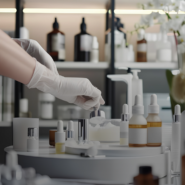
Rettre takes this idea into fragrance by using a brain scan to analyze the individual’s responses and create a scent based on the resulting data. The studio then translates the data into a one-of-a-kind scent tailored specifically to the visitor’s subconscious preferences.
A creator experiences Rettre’s personalized fragrance process in Seoul.
The magic lies in the fascinating blend of science, intrigue, and personal storytelling. Visitors aren’t just shopping, they are watching technology transform their inner emotions into a tangible, beautifully bottled perfume.
This experimental approach gives young consumers a unique reason to visit a physical store. The finished perfume could theoretically be sold online, but the process of discovering how it is created cannot.
Other businesses are applying a less technologically complex version of the same thinking to stationery and everyday objects, using customization to make the purchase feel more individual. The consumer has a role in producing the final result rather than simply selecting a finished product.
Retail Built Around Hobbies
Retailers are expanding beyond product customization by integrating separate spaces for visitors to engage in their hobbies.
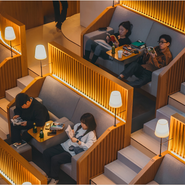
Sevi Haus Knitting Lounge and Cafe in Seongdong-gu combines a yarn and knitting business with spaces where visitors can actually spend time working on their projects. Its upper floors include lounge areas with books, music, coffee, and dedicated knitting seats. Whether visitors want to chat with fellow crafters at a communal table or curl up alone with a new project, the space embraces every style of leisure.
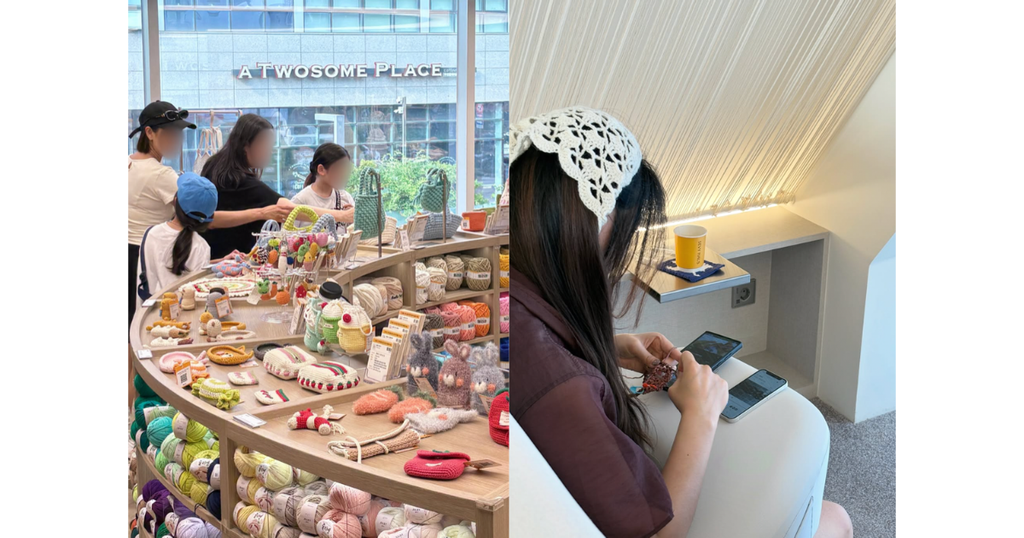
Image: @sevyhaus_seongsu
This creative setup completely changes how consumers interact with specialty stores. Someone can buy yarn and leave, but the business also gives that person a place to use it. The time spent there becomes part of the experience surrounding the product.
That matters for hobbies because most often someone buying knitting supplies is also buying into an activity, a skill, and potentially a community. A physical space can bring those elements together in a way an online product listing cannot.
It also accommodates a form of offline leisure that does not require social commitment. A person can leave home specifically to spend time alone while still being surrounded by other people doing something similar.
Turning Interests Into Destinations
Amid non-stop digital noise, innovative physical spaces offer a reason to slow down.
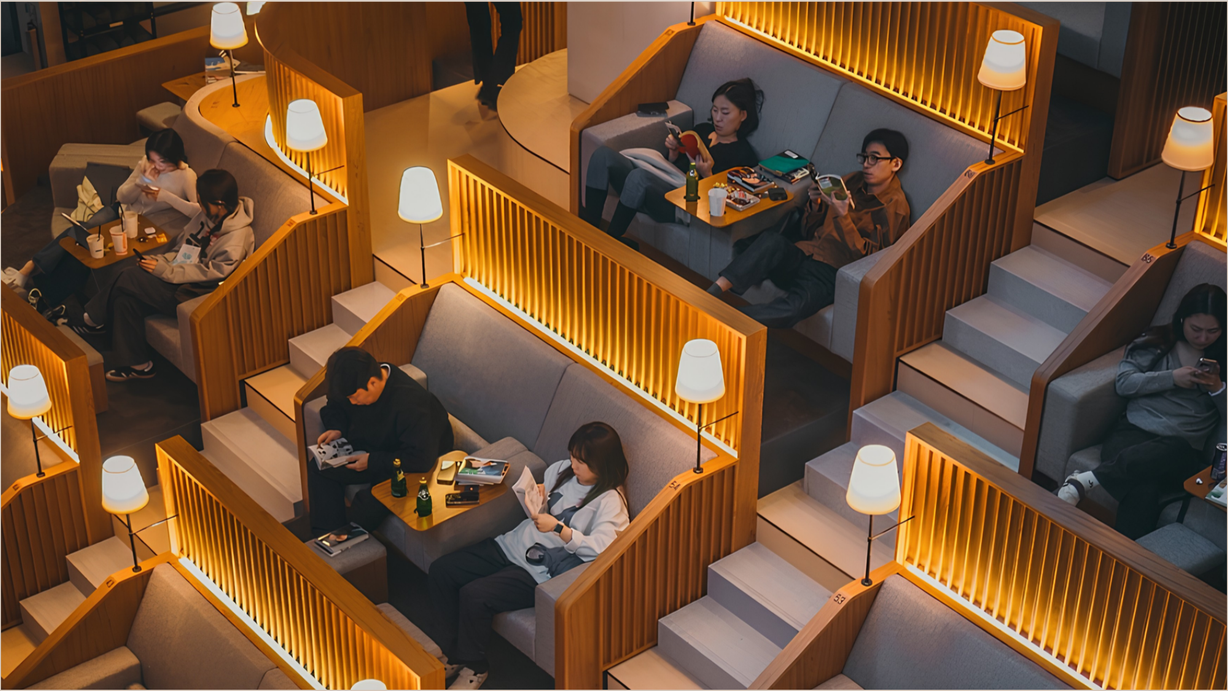
At Hyundai Card Music Library in Itaewon, music enthusiasts have access to a collection that includes more than 10,000 vinyl records, which visitors can browse and play on the library’s turntables. The appeal is not simply access to music, which is already available almost instantly through streaming. The space gives people a reason to slow down, explore, and spend time listening with other visitors that are doing the same.
Inside Hyundai Card Music Library in Itaewon, where visitors can browse and listen to a collection of vinyl records.
Across town in Songpa, graphic novel sanctuary, Graphic by Daishin, creates the exact same slow-living atmosphere for book lovers. Pairing thousands of graphic novels and art books with lush garden views, plush armchairs, ambient beats, and food like pizza and ice cream, the space encourages visitors to settle in for hours.
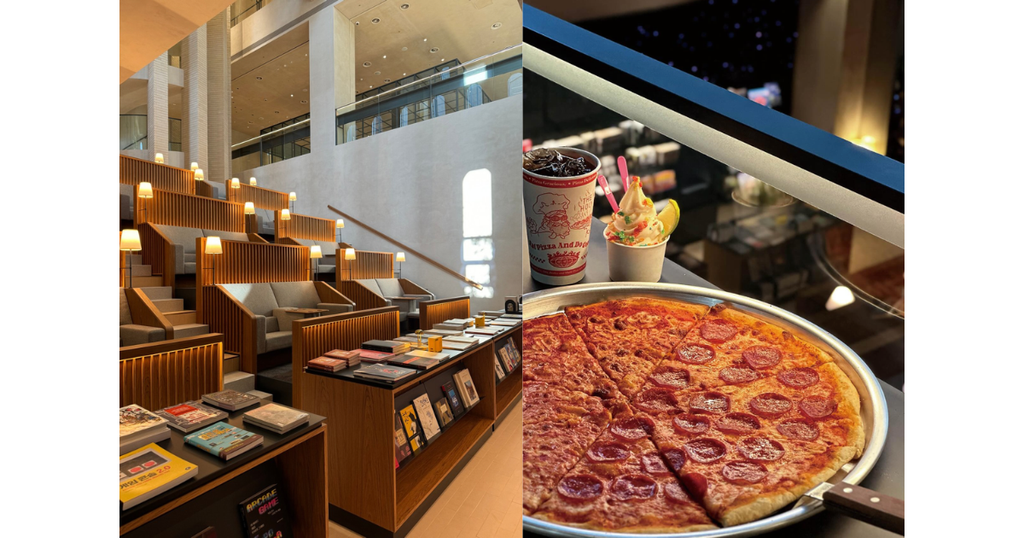
Image: Designhouse, @graphic.fan
While the core of both retailers is based on the product, the difference lies in how the physical environment converts passive media consumption into an active, destination-driven leisure experience.
From Pop-Ups to Permanent Spaces
This evolution builds directly on a retail market where active participation has become standard. In the first half of 2026 alone, retail platform Sweetspot recorded 2,130 pop-up openings—a 44.9% increase year-over-year—fueled by interactive formats like gaming, customization, hands-on workshops, and exclusive product testing.
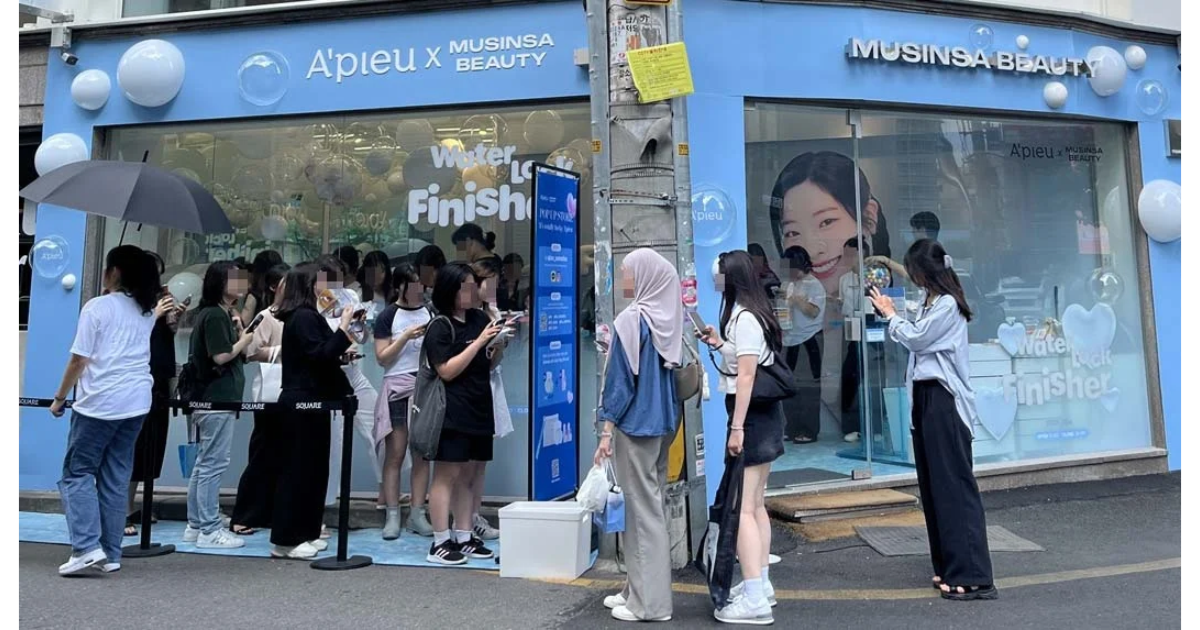
Image: Chosun Media
Having experienced spaces that transform traditional shopping into active participation, consumers now naturally expect physical retail to offer something to do, not just something to buy. Permanent stores can capitalize on this trend without relying on short-term campaign buzz, making an activity part of the reason people visit throughout the year.
Whether it’s a knitting shop hosting dedicated project sessions or a quiet reading space, the activity supports the merchandise rather than competing with it, offering consumers another genuine reason to engage with the brand.
What Makes a Store Worth the Trip
When products are already easy to buy online, physical retail has to offer something beyond access. The Korean businesses emerging around hobbies and activities are responding by giving consumers reasons to spend time in their spaces, whether that means making a fragrance, working on a knitting project, listening to records, or settling in with a book.
The appeal does not always have to be social. Some spaces create opportunities to meet people with shared interests, while others make it comfortable to pursue an activity alone. What connects them is a focus on how consumers want to spend their time, rather than simply what they want to purchase.
The New Offline Advantage
This creates a different role for physical retail. A store can become a place to learn, make something, practice a hobby, or experience a product in a way that is difficult to replicate online or at home.
For global brands, the opportunity is not necessarily to recreate Korea’s pop-ups or build elaborate interactive stores. It is to consider what consumers could do with the brand once they walk through the door, and whether that experience gives them a reason to make the trip.
As retailers in Korea increasingly build retail around activities and interests, the product remains important, but the time spent with it is becoming part of the value.
Looking at Your Brand Strategy
Uncovering the hidden signals in Korean consumer culture requires looking past surface-level trends. If you are exploring how Korean market shifts, consumer behavior, and category movements can open new opportunities for your business, Siseon works with global teams to turn these observations into strategic advantage.
To discuss custom research, field intelligence, or strategic advisory for your team, connect with us directly at hello@siseonhq.com or fill out the contact form.
Sources
- Statistics Korea, 2025 Social Survey — leisure, social participation, and consumer behavior data. https://www.kostat.go.kr/board.es?act=view&bid=219&list_no=439196&mid=a10301060100&ref_bid=218%2C219%2C220%2C10820%2C11815%2C11895%2C11816%2C208&tag=
- Hyundai Card, Music Library — collection and listening-space information. https://newsroom.hyundaicard.com/front/board/Hyundai-Card-Music-Library?country=en
- GRAPHIC, Branches — GRAPHIC and GRAPHIC BY DAISHIN locations, admission, and format. https://graphic-bookstore.com/en/branches
- Seoul Metropolitan Government, GRAPHIC BY DAISHIN — space and visitor experience. https://stage-kr.visitseoul.net/entertainment/2024-graphicbyds/KOPfynf9l
- Sweetspot, 2026 Pop-up Store Trend Report — Korean pop-up market scale and growth. https://www.sweetspot.co.kr/leadmagnet_2026trend