

When Korean Brands Stop Staying in Their Lane
Walk through Korea’s retail landscape right now and the boundaries between industries start to look surprisingly flexible. Beauty brands are borrowing from food culture, cafés are working with streetwear labels, convenience stores are turning automotive brands into limited-edition products, and lifestyle companies are finding ways to translate the identity of food brands into something consumers can actually buy and use. The individual collaborations are different, but together they point to a broader change in how Korean brands think about partnerships.
What makes this worth watching is not simply how unusual some of these pairings look. Korean brands are increasingly treating collaboration as a way to enter a different consumer world without having to build that world themselves.
None of this is entirely new. Korean brands have been collaborating for years, particularly through limited editions and character partnerships. What has changed is how far some of these partnerships are now willing to travel outside their original categories. GS25 and Hyundai Motor, Lotteria and Uniqlo, Hollys Coffee and Vans, and Wiggle Wiggle and Ottogi all put brands together that would have been difficult to pair through conventional category logic.
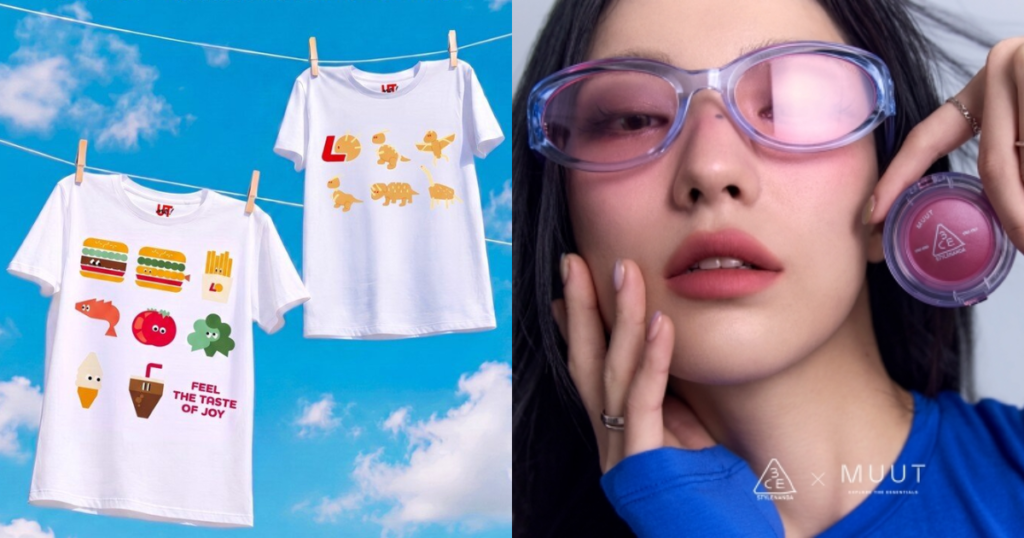
Image: Uniqlo, 3CE
That makes these collaborations worth looking at differently. The value is not simply that two logos appear on the same product. A well-chosen partner can give a brand access to a new audience, a new distribution channel, a different cultural association, or simply a reason for consumers to pay attention when another ordinary product launch might have been ignored.
And in Korea, where consumers are surrounded by an enormous volume of products, launches, and content, that extra reason to look can be commercially significant.
The more unrelated the brands become, the more useful the partnership can be for understanding what each side is actually trying to gain.
From Limited Editions to Cross-Industry Collaborations
Korean brand collaborations did not begin with pizza, cars, or skate shoes. For a long time, the formula was much easier to understand. A beauty brand would take an existing product and give it a character, seasonal theme, or special-edition package, creating a reason for existing customers to buy again while giving fans of the collaborator a reason to discover the brand.
Character collaborations remain extremely effective for exactly this reason. Rom&nd turned its Miffy partnership into a miniature childhood stationery concept, while athé collaborated with Sanrio’s Pompompurin for the character’s 30th anniversary. athé reportedly sold out its Lip Glow Balm and Clicker Keyring Set within two hours of launch. Etude has also worked with Manggeurijin Gom, while Wakemake has collaborated with Hello Kitty.
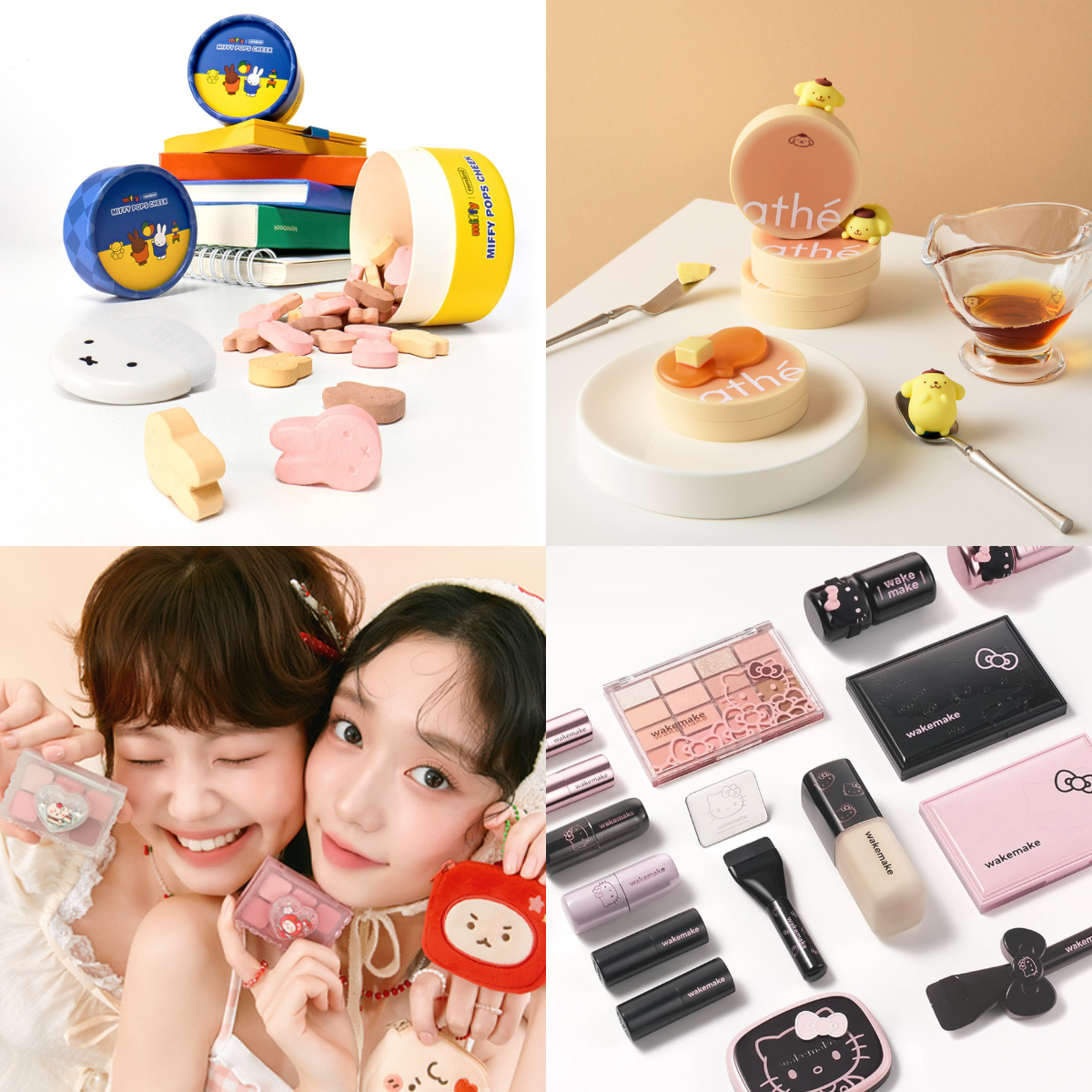
Image: Rom&nd, athé, Etude, Wakemake
There is a lot to like about this model. The character already has recognition, emotional familiarity, and a built-in community. The beauty brand gets to place an existing product into a world that consumers already enjoy.
But these collaborations are also relatively easy for consumers to understand. A person who loves the character can become curious about the makeup, while an existing beauty customer can be tempted by the character packaging. There is audience expansion, but the two worlds already have plenty of overlap.
That is what makes the newer cross-industry partnerships more revealing. When a makeup brand works with a pizza company or a café chain works with a skatewear label, the collaboration has to create the reason for the consumer to care. There is no obvious product connection doing the work for them.
That means the collaboration itself becomes part of the marketing strategy.
When the Collaboration Is the Product
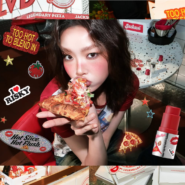
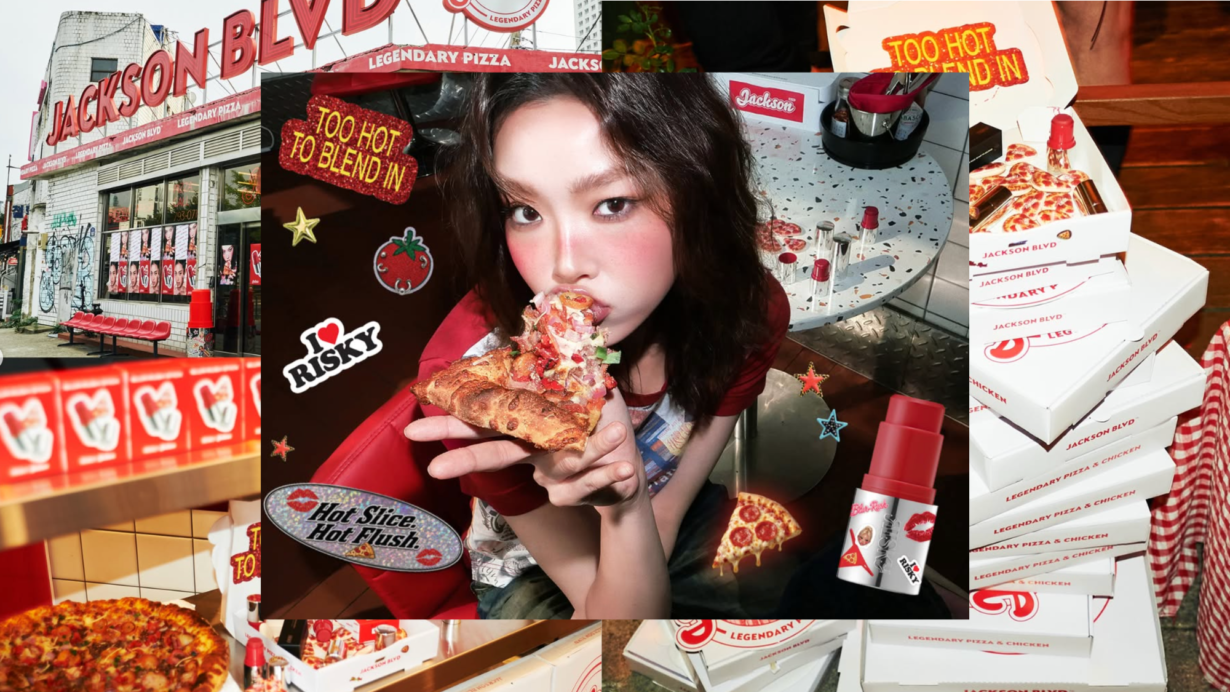
Risky Beauty launched in September 2024, entering Korea’s increasingly crowded indie makeup market with a deliberately bold visual identity. Jackson Pizza, meanwhile, has been building its Korean presence since 2014 around American-style pizza and a strong visual identity of its own.
Their collaboration works precisely because neither brand needs the other to make sense. The pairing creates a third thing that is more surprising than either brand would have been on its own.
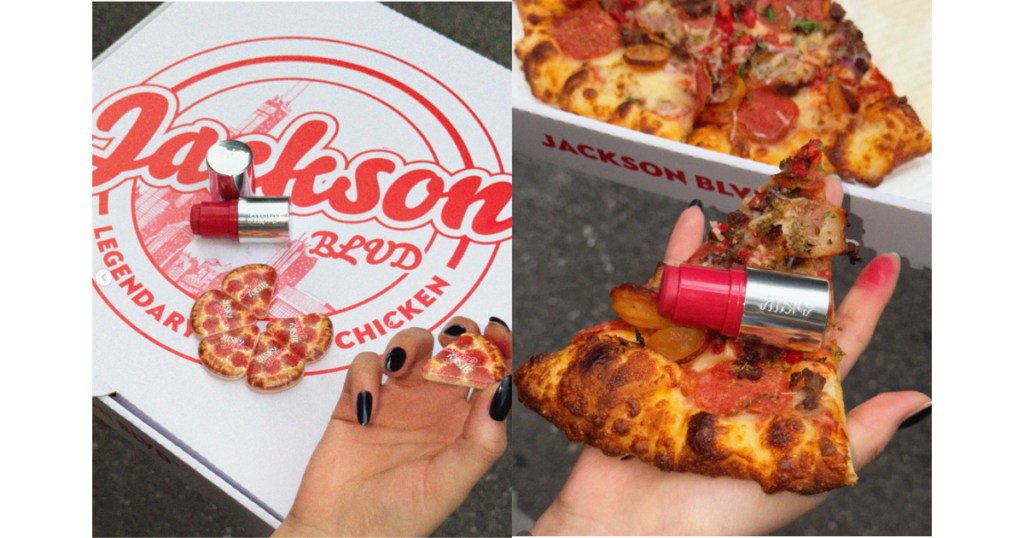
Image: Risky Beauty x Jackson Pizza
The RISKY × Jackson Pizza R.E.D. collaboration turned that idea into an actual product experience, including a red blush stick, mini pizza-shaped puffs, and other playful details. The pizza reference was not hidden in a small logo on the packaging. It became part of the product itself.
That kind of exaggerated novelty is particularly well suited to Korean consumers, who have shown a strong appetite for limited-edition objects, unusual packaging, collectible details, and products that are simply fun to own. A collaboration can therefore create something a conventional product launch cannot easily manufacture. It gives consumers a reason to stop scrolling, take a second look, photograph the product, talk about it, and decide that they want it even if they did not arrive looking for either brand.
This is also where the difference between a collaboration and an ordinary campaign becomes important. The pizza-shaped puff is not simply advertising for Jackson Pizza placed inside a makeup box. It is the reason the product feels worth sharing.
Beauty and food collaborations have already worked at a much larger scale. Fillimili, the Korean makeup brush brand, previously collaborated with Yeopgi Tteokbokki, one of Korea’s most recognizable spicy food chains. But the Risky and Jackson Pizza pairing adds another layer because both brands are relatively young compared with the major players that usually dominate these partnerships.
That makes the collaboration useful as a signal for smaller brands, too. A cross-industry partnership does not necessarily require two category leaders. Sometimes the appeal comes from putting two brands with distinct personalities together and letting the unexpected combination do the talking.
When Brands Borrow Each Other’s Strengths
The strongest cross-industry collaborations are rarely equal exchanges in exactly the same way. Each partner usually brings something the other would struggle to create alone.
Hollys Coffee and Vans make that particularly easy to see. Hollys already has the physical infrastructure and everyday consumer proximity that Vans does not. Vans, meanwhile, brings a very specific cultural identity around skateboarding, streetwear, youth fashion, and a more rebellious visual world. The collaboration allows Hollys to borrow some of that cultural energy while giving Vans access to a physical environment where consumers can encounter the brand during an ordinary part of their day.
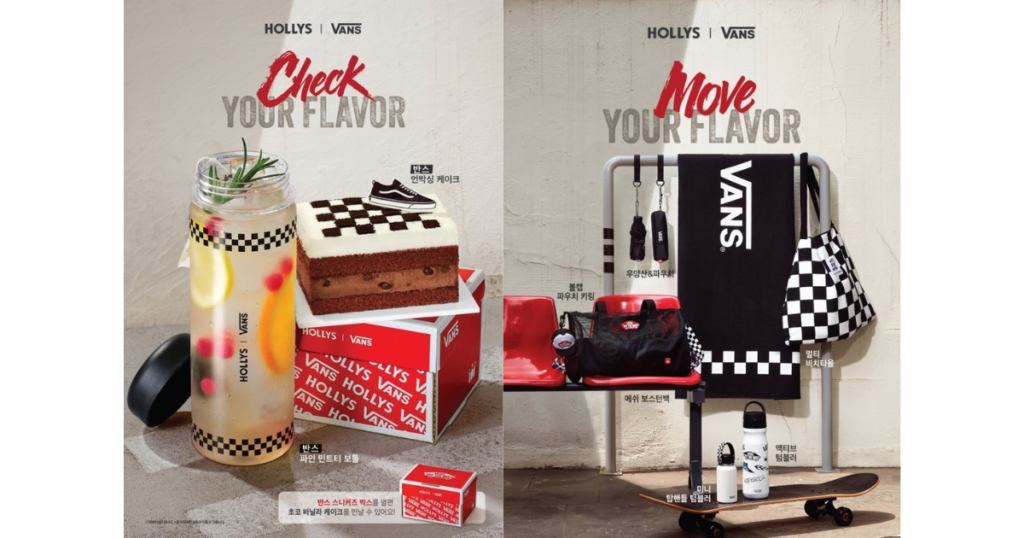
Image: Hollys x Vans
That exchange is important because neither side has to build the other asset from scratch. Hollys does not need to suddenly become a streetwear brand to reach a younger, more fashion-oriented audience. Vans does not need to open a nationwide café network to create more everyday offline touchpoints. The collaboration lets each brand temporarily enter territory that would be expensive or difficult to build independently.
The same logic appears in CU’s collaboration with Eider, an outdoor wear brand. Eider’s positioning around cooling technology and outdoor performance becomes much more tangible when its products are introduced through a convenience store environment, where consumers are already moving through daily routines in hot weather. The convenience store gives the technology a context. Eider gives the convenience store a product story that is more specific than simply selling another seasonal item.
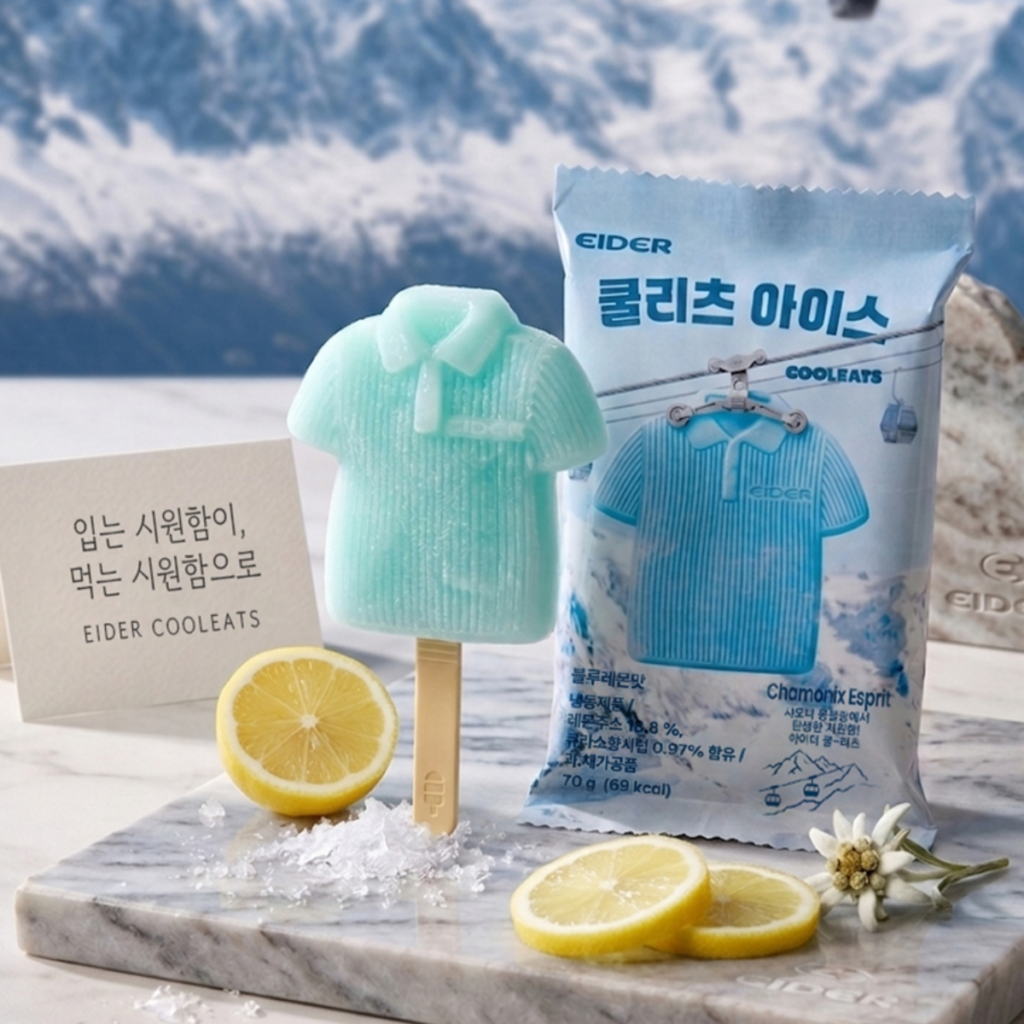
This is one reason increasingly unrelated collaborations can be commercially useful. The partner is not necessarily there to make the product look more interesting. They can provide an asset that would otherwise take years, significant investment, or a completely different business model to build.
Collaboration Opens Doors Brands Do Not Normally Have
Sometimes the partnership works because one brand can put the other somewhere it could not easily reach on its own.
No Brand and OUR Bakery provide a good example. No Brand brought OUR Bakery’s signature Dirty Choco concept into a much larger retail system, with the collaboration distributed through Emart stores, No Brand specialty locations, and SSG.com. OUR Bakery, which operates 25 locations nationally, suddenly had access to a distribution network that would be difficult to reproduce through its own physical expansion.
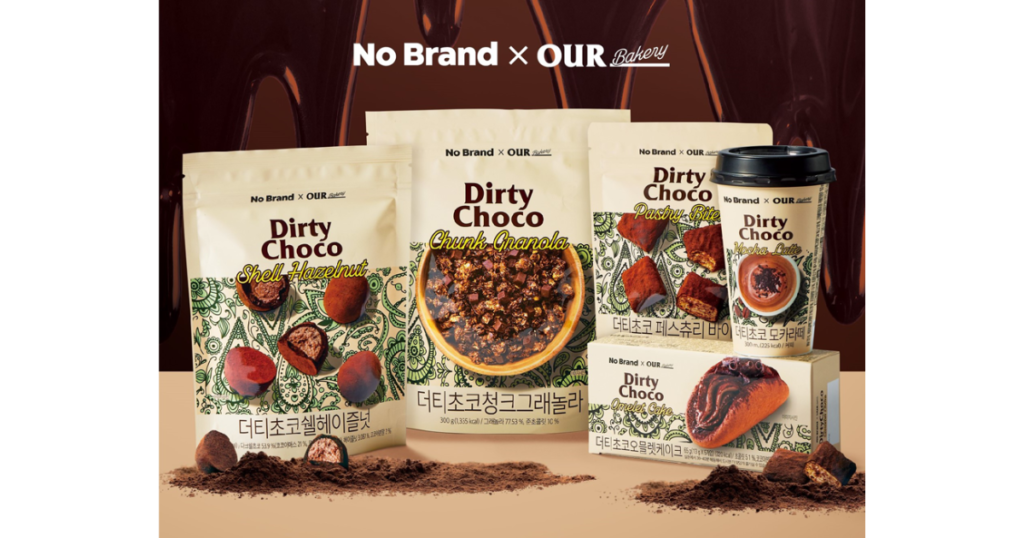
The exchange also works in the opposite direction. No Brand could borrow the premium bakery’s aesthetic and cultural credibility while putting the concept into a much more accessible retail environment. A collaboration can therefore change not only who sees a product, but where and in what context they encounter it.
The previous No Brand collaboration with Supermatcha shows why this can become particularly valuable. Five products sold more than 160,000 units within twenty days, while the customer data showed a younger audience than the category typically attracts. The collaboration was effectively functioning as a way to change the audience entering the retailer.
GS25 and Hyundai Motor show another version of the same idea. Their 2026 collaboration turned Hyundai’s previously fictional bakery concept into an actual ice cream sandwich sold through GS25, complete with collectible car-model sticker seals. Hyundai gained an everyday consumer touchpoint far removed from an automobile showroom, while GS25 gained a novelty product that could attract attention precisely because it came from somewhere consumers did not expect.
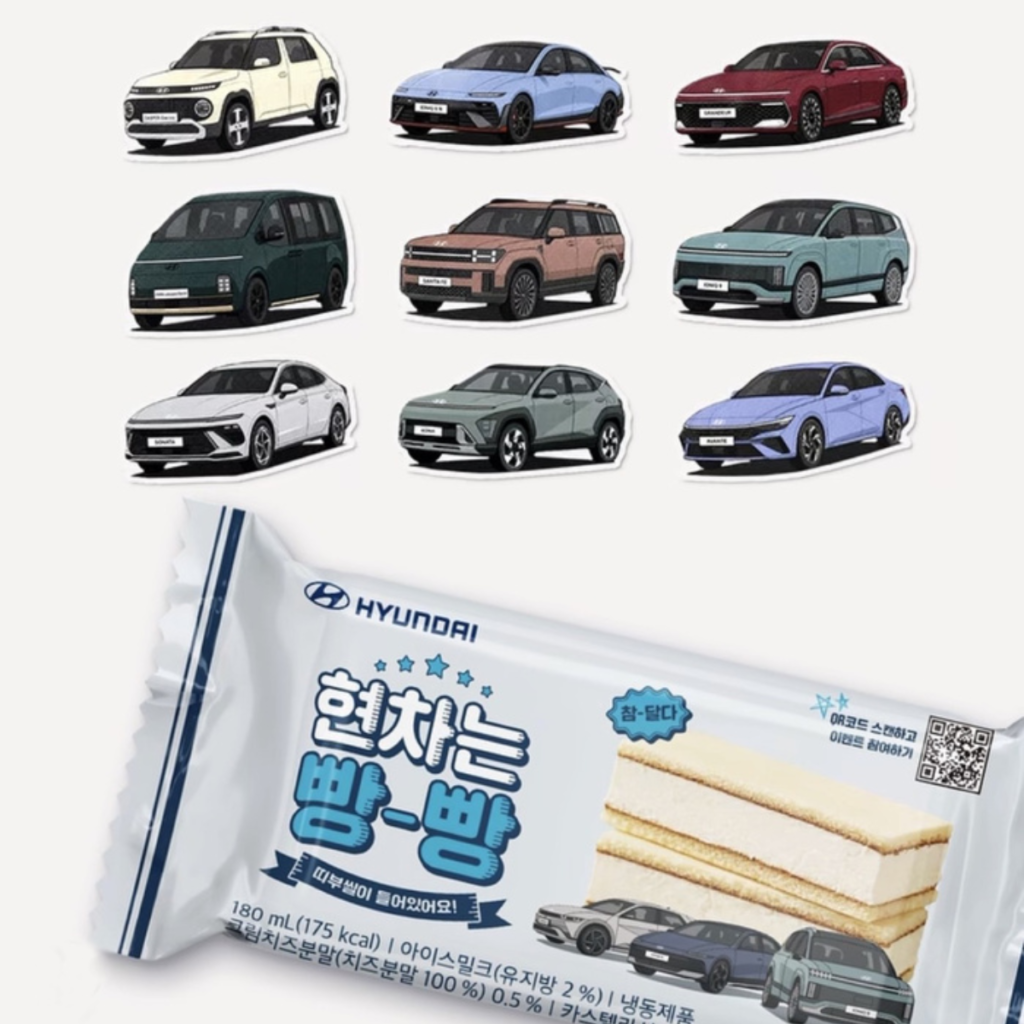
Image: 대한경제
That is where collaboration starts looking less like a campaign and more like a temporary market experiment. A brand can test how consumers respond to a new category, product format, distribution channel, or audience without having to commit to building an entirely new business around it.
For brands watching Korea, this may be one of the most useful parts of the trend. The collaboration can function as a low-risk way to ask, “What happens if we put our brand here?”
Why Korean Brands Keep Crossing Category Lines
Korea is an unusually good environment for this kind of experimentation because consumers are already exposed to an enormous amount of competition. New products appear constantly, brands compete for limited attention, and social media can turn a product launch into yesterday’s news within hours.
That changes what makes a collaboration valuable.
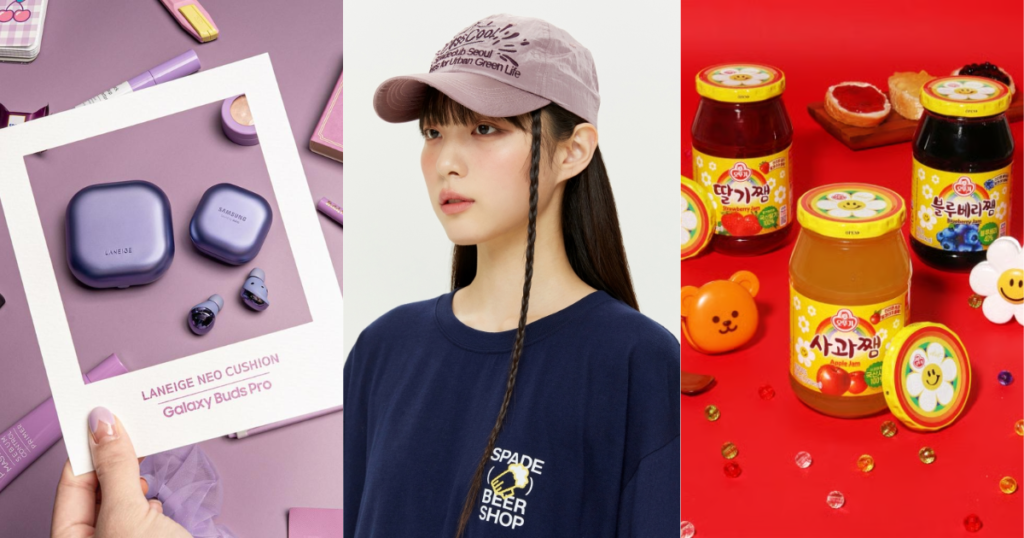
Image: Laneige x Samsung Galaxy, SPADECLUBSEOUL x Cass Beer, WIGGLEWIGGLE x Ottogi
A new product has to earn attention. An unexpected partnership can arrive with attention already built in because the pairing itself creates a question. Why is a makeup brand working with a pizza company? Why is a convenience store selling something connected to Hyundai?
Consumers do not need to know the answer before they click. The fact that they are curious is enough to start the conversation.
Novelty is especially powerful in Korea because limited-edition products are often treated as objects worth collecting, sharing, or simply owning because they are different. This is why collaborations frequently go much further than changing a logo or adding a second brand name to the package. The product itself becomes stranger, cuter, more exaggerated, or more unexpected.
That also gives brands another way to communicate who they are. A collaboration can reveal an aesthetic, an attitude, a social position, or a product benefit that would be harder to communicate through a conventional campaign.
Wiggle Wiggle and Ottogi can put two very different visual identities into conversation. CU and Eider can use a convenience-store collaboration to reinforce the message that Eider’s cooling apparel is relevant to everyday summer life.
An unexpected partnership can also travel through channels that neither brand normally controls. A beauty brand taps into a food lover’s feed, a fashion label takes over a café chain, and a niche bakery lands on supermarket shelves. The collaboration creates additional places for consumers to encounter the brand without requiring either company to build those channels independently.
That is why the most interesting question is not whether the industries make sense together.
It is whether each side has something the other can unlock.
The Next Collaborations May Make Even Less Sense
Once brands become comfortable looking outside their own categories, the list of possible partners gets much larger.
Beauty can borrow the technology and cultural relevance of consumer electronics, food brands can enter fashion, convenience retailers can turn partnerships into everyday consumer experiences, and coffee chains can tap into the visual language of fashion brands. Once brands realize that collaboration gives them access to capabilities and audiences they do not naturally possess, the list of possible partners becomes much larger.
The appeal is usually found in what the two sides can give each other. A brand looking to reach younger consumers may find that another company already has that relationship. A company with a powerful physical network can offer distribution that its partner does not have, while a visually distinctive brand can give a more established company a new way to communicate. Collaboration can also let a brand test a new category or consumer group without making the investment required to build it from scratch.
That creates a much larger collaboration map than the traditional “two brands with similar customers” model.
For global brands, this is where the Korean market becomes particularly useful to watch. The opportunity is to start looking at collaboration as a strategic tool for entering places a brand could not easily reach alone.
That could mean a new audience, a new retail environment, a new category, a new cultural association, or simply a new reason for consumers to pay attention.
When the Partnership Becomes the Strategy
The strongest collaborations work because each brand brings something the other would have difficulty creating alone. A makeup brush brand can borrow the cultural familiarity and novelty of a major food brand, while the food brand gets a way to enter beauty culture without becoming a beauty company. Hollys can use Vans to bring a younger, more streetwear-oriented image into its everyday retail environment, while Vans gains another physical touchpoint through a café network that reaches consumers outside its usual stores. GS25 and Hyundai take the idea even further, using GS25’s convenience-store infrastructure and Hyundai’s automotive identity to create an experience that neither brand would naturally build on its own.
That exchange is what makes these partnerships commercially useful. One side does not necessarily need to spend heavily building the capability, distribution, or cultural relevance that the other side already has. Instead, the collaboration allows both brands to borrow from each other’s strengths while creating something new enough to give consumers a reason to pay attention.
That is why the increasingly unrelated nature of Korean brand collaborations is worth watching. The strange pairings are not necessarily becoming stranger for the sake of novelty. Brands are discovering that the right partner can open a door into a market, audience, or consumer behavior that would be much harder to reach alone.
For brands operating in saturated categories, that is a useful shift in thinking.
The next growth opportunity may not come from finding another brand that looks like yours. It may come from finding the brand that can take you somewhere yours cannot.
Sources
- Financial News (fnnews.com) — “아떼, 산리오 폼폼푸린 협업 흥행… 한정판 잇단 완판” (athe × Pompompurin collaboration launch May 31, 2026; Lip Glow Balm sold out in 2 hours including reserve quantities; Tone-Up Sun Cushion 1st and 2nd batch sell-out; popup at Olive Young Seongsu and Gangnam; representative quote on diverse collaboration strategy): https://www.fnnews.com/news/202606090832146680
- Daum / News (v.daum.net) — “LF 아떼, 폼폼푸린 30주년 기념 협업…여름 한정 컬렉션” (collaboration detail: Pompompurin 30th anniversary, dessert picnic theme, product design including pancake case and character puffs, Olive Young exclusive early launch): https://v.daum.net/v/89c4UpYCjQ?f=p
- rom&nd official website — Miffy collaboration page (lip and eye products, Miffy stationery store concept, limited edition sets, finger puff gifts): https://romand.co.kr/project/%EB%A1%AC%EC%95%A4-%EB%AF%B8%ED%94%BC-%EC%BD%9C%EB%9D%BC%EB%B3%B4-open/690/
- rom&nd official website — Miffy collaboration coming-soon event page (consumer comments describing emotional connection between childhood Miffy memories and current brand relationship): https://romand.co.kr/article/%EC%9D%B4%EB%B2%A4%ED%8A%B8/13/182254/
- Instagram — 필리밀리 × 엽기떡볶이 collaboration reel (beauty brush brand × Korean spicy tteokbokki restaurant chain, 2025): https://www.instagram.com/reel/DRQyy-6DT9Z/
- beautypl.com — “감다살 콜라보템” (character and animation Korean beauty collaboration overview, July 2025; includes Espoir × Disney characters): https://beautypl.com/skin-care/2025/06/animation-collaborations-skincare-items/