




Jade Is Having a Moment in Korea
Not a huge one at least. Not yet.
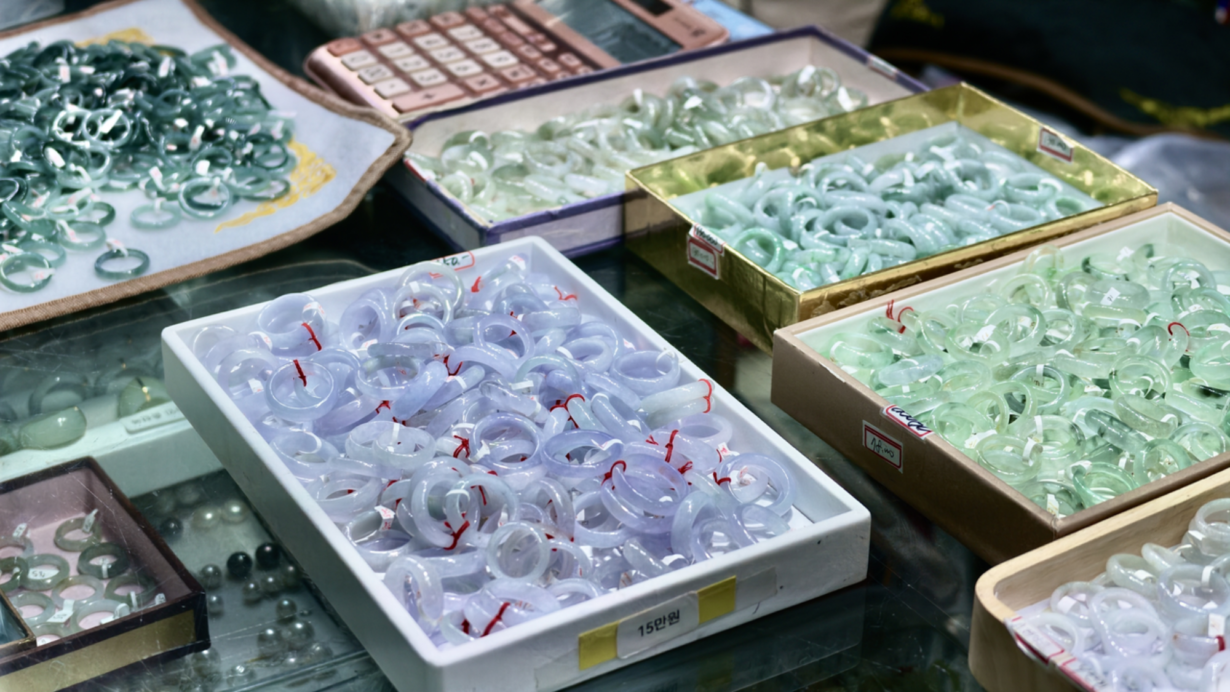
Young shoppers are heading to Seoul’s traditional jewelry district in Jongno, trading heavy, old-fashioned heirlooms for slender jade rings and unique hues.
Beyond summer fashion, brands are integrating the stone directly into contemporary daily life. Beauty brand Oksan100 bases its entire identity around white jade, translating the material into body tools, soaps, and fragrances.
This shift signals a broader cultural confidence across Korea. Rather than viewing traditional heritage as an outdated relic, younger consumers and local brands are actively re-engineering historical materials into desirable, modern lifestyle statements.
Jade may be less important as a trend in itself than as a preview of the kinds of Korean cultural references that could become commercially relevant next.
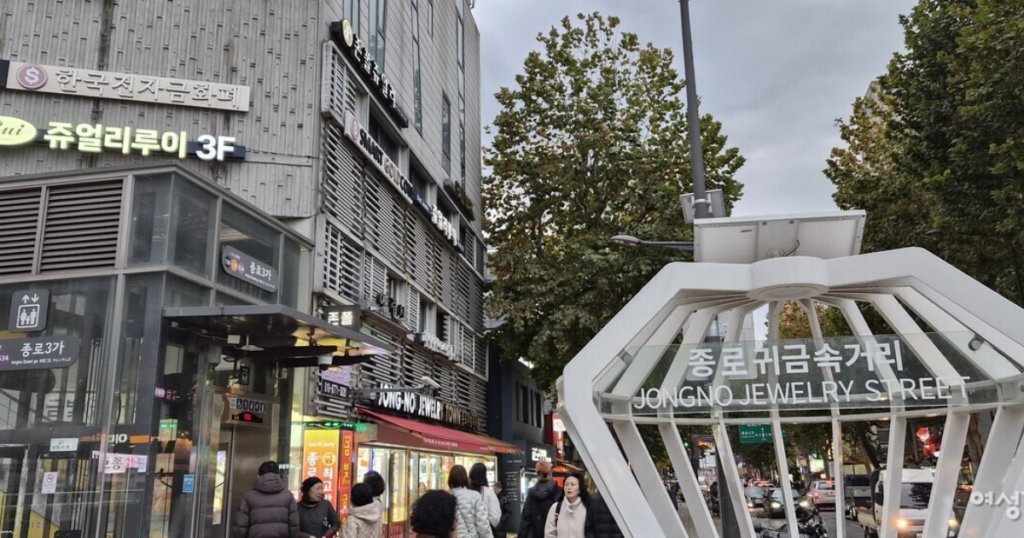
Image: Wolgok Jewelry Foundation
When Mint Starts Looking Like Jade
Korea’s recent fascination with cool mint hues opened an unexpected runway for traditional jade. Rather than remaining a fleeting seasonal shade, the color direction anchored itself in physical stone as young Seoulites began exploring Jongno, the capital’s gold and gemstone district since the 1930s.
Trading away the heavy, ceremonial jewelry of older generations, these buyers sought out gossamer-thin bands and soft pastel washes at legacy shops like Yeijak Jewelry.
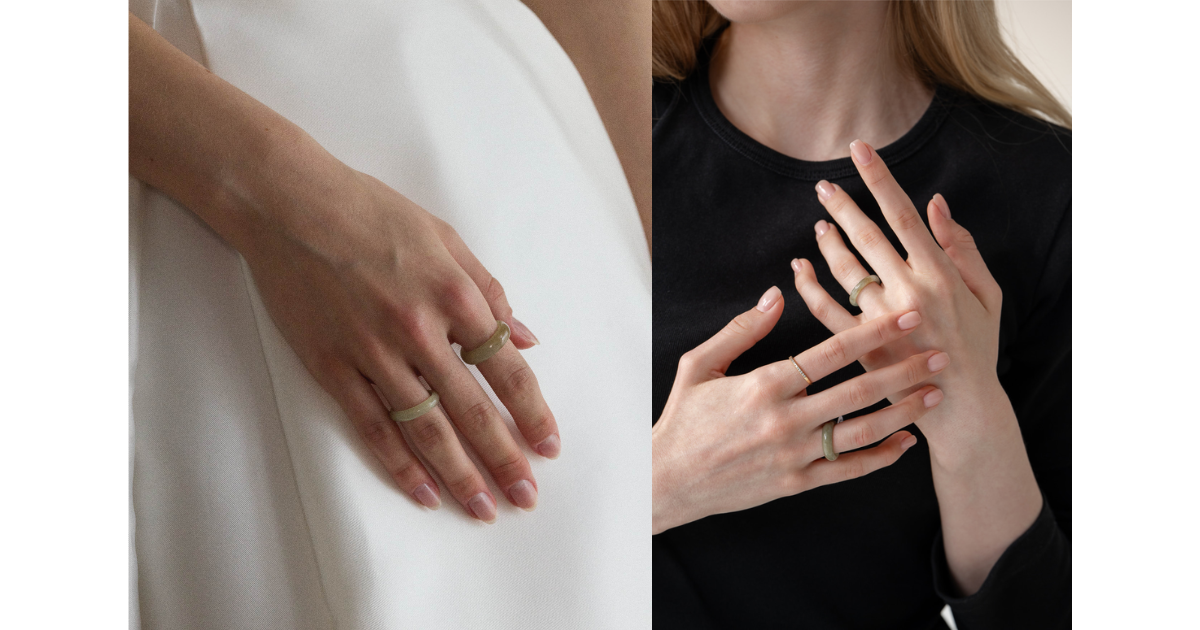
Image: Archive Scene, Yeijak Jewelry
The momentum reached an international tipping point when BTS member V wore Yeijak’s understated jade rings during the group’s landmark Gwanghwamun concert, sparking an immediate influx of global orders. Yet celebrity visibility merely ignited a flame that was already burning.
Jade succeeded because it gave a modern fashion trend what synthetic textiles never could: genuine history and a living link to Korean heritage.
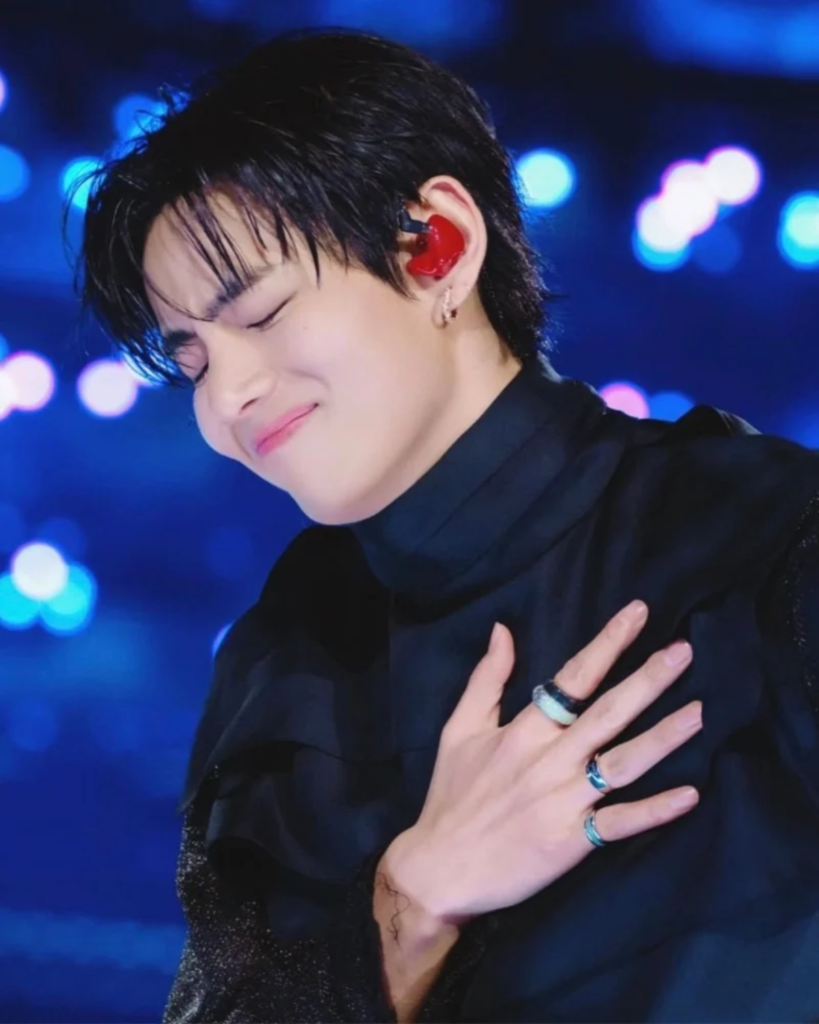
Jade Enters the Beauty Realm
The most compelling application of modern jade is unfolding across skincare and wellness.
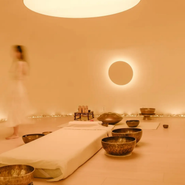
Emerging beauty and lifestyle label Oksan100 bases its core identity on white jade, formulating soaps, fragrance, and sculptured gua sha tools directly around the mineral.
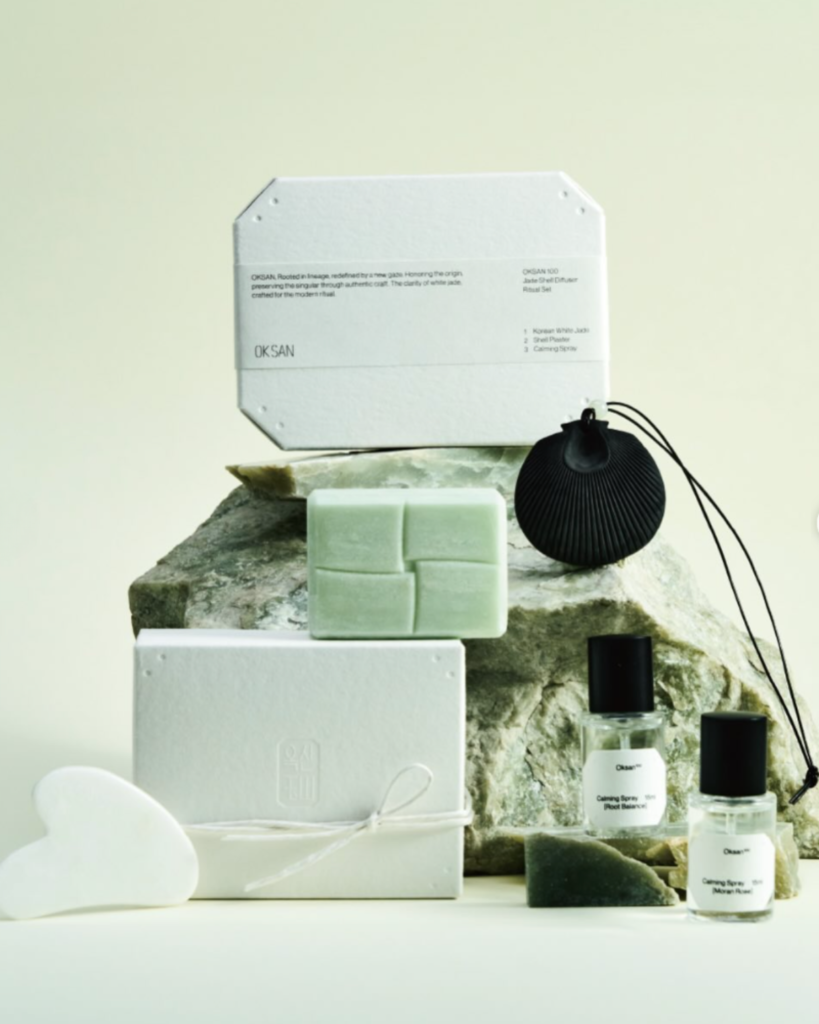
Image: Oksan100
Instead of applying heritage symbols as superficial packaging, Oksan100 relies on jade to define its product architecture and narrative worldview. The brand leverages white jade to evoke calm, tactile craftsmanship, and authentic domestic tradition.
This approach reframes traditional heritage from an aesthetic gimmick into an active brand methodology.
Small, agile labels like Oksan100 serve as key market measures, demonstrating that young Korean beauty brands are no longer using historical references as nostalgic decoration. They are converting regional materials into functional, high-value consumer products, proving that localized cultural history can drive authentic product differentiation in a crowded market.
Korean Heritage Becomes a Primary Design Language
The resurgence of jade reflects a broader movement across Korean consumer culture, where historical references are engineered directly into brand strategy.
Local history, regional architecture, and traditional crafts are moving from subtle background context to the center of product architecture.
CLIO’s collaboration with the Korea Heritage Service illustrates this evolution. Its K-Royal Heritage collection directly translated Joseon dynasty lacquerware, embroidery, and royal ceremonial artifacts into modern cosmetic formulations and packaging.
Repeat iterations prove that cultural heritage is no longer treated as a one-off gimmick, but as a repeatable, commercially lucrative strategy.
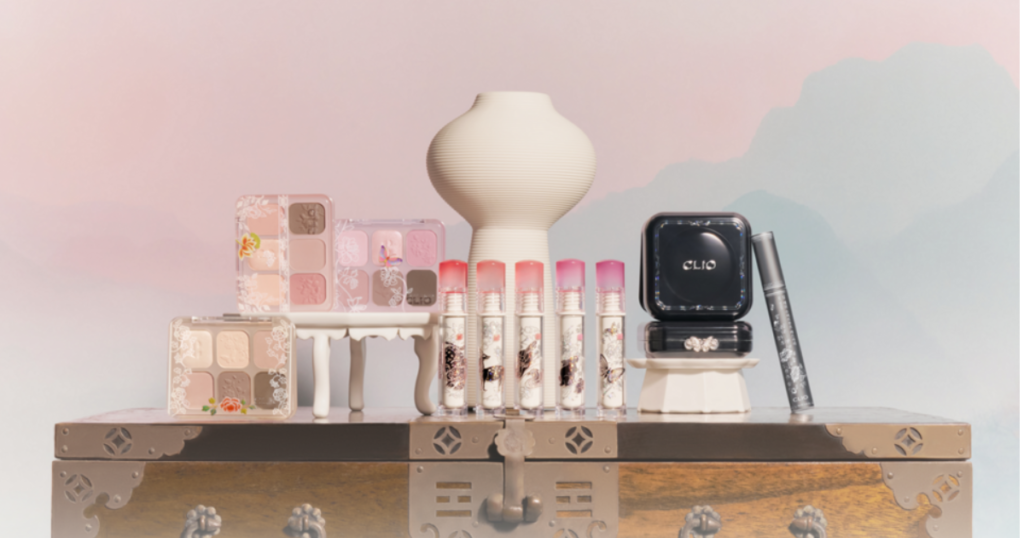
Image: Clio
In physical retail, Olive Young’s Gwangjang Market branch reimagines 1960s Korean aesthetics to turn local heritage directly into a experiential retail hook.
Rather than relying on generic K-culture associations, forward-thinking brands are isolating specific historic materials, places, and artistic techniques to craft sophisticated, modern lifestyle products.
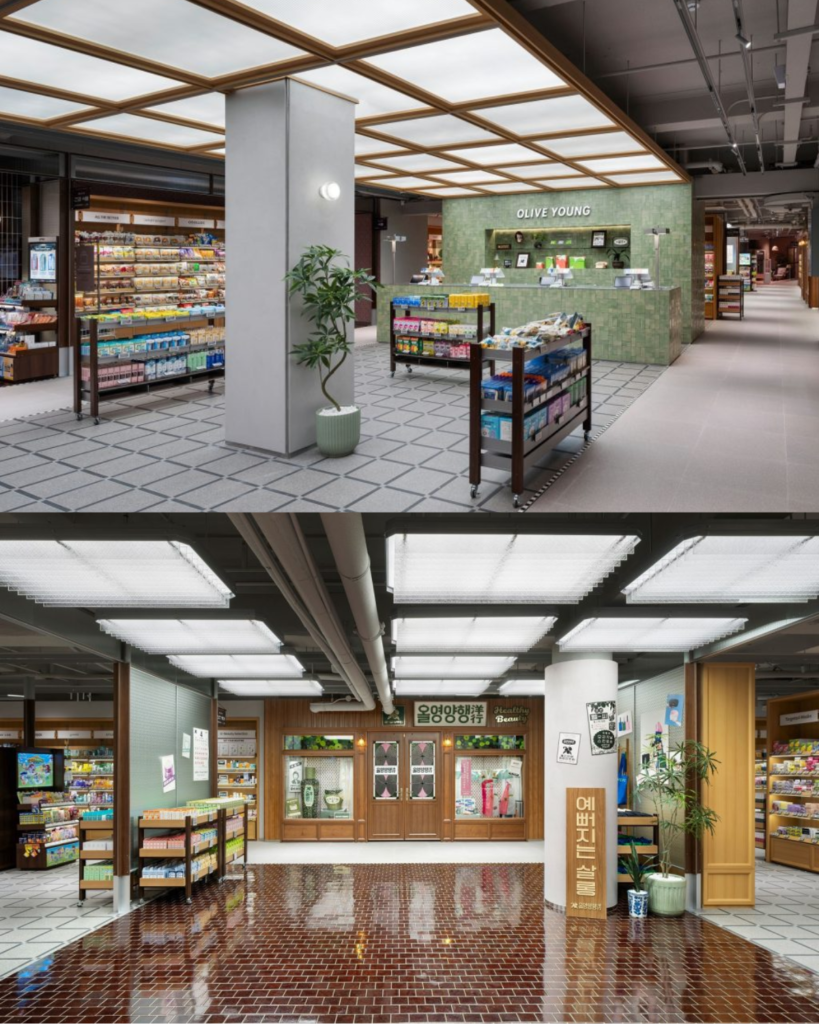
Image: CJ
The Korean Wave Has Changed What “Korean” Can Sell
Global familiarity with Korean culture has fundamentally altered what local brands can export.
A decade ago, international entry required broad generalization and softened cultural markers to ensure immediate comprehension. Today, a decade of K-pop, K-drama, and specialized beauty consumption has built a vast global baseline of cultural literacy.
Korean brands no longer need to translate every nuance for international audiences. Major cultural properties like KPop Demon Hunters and BTS framing major milestones around heritage themes like Arirang demonstrate that authentic Korean motifs are now the primary draw rather than an entry barrier.
An international buyer does not require a folklore lecture to appreciate a slender jade ring, but discovering its origin within Jongno’s jeweler legacy adds undeniable narrative value.
Moving beyond generic “Korean-inspired” marketing, brands can now ground modern products in concrete material histories, leveraging local specificity as a premier driver of global prestige.
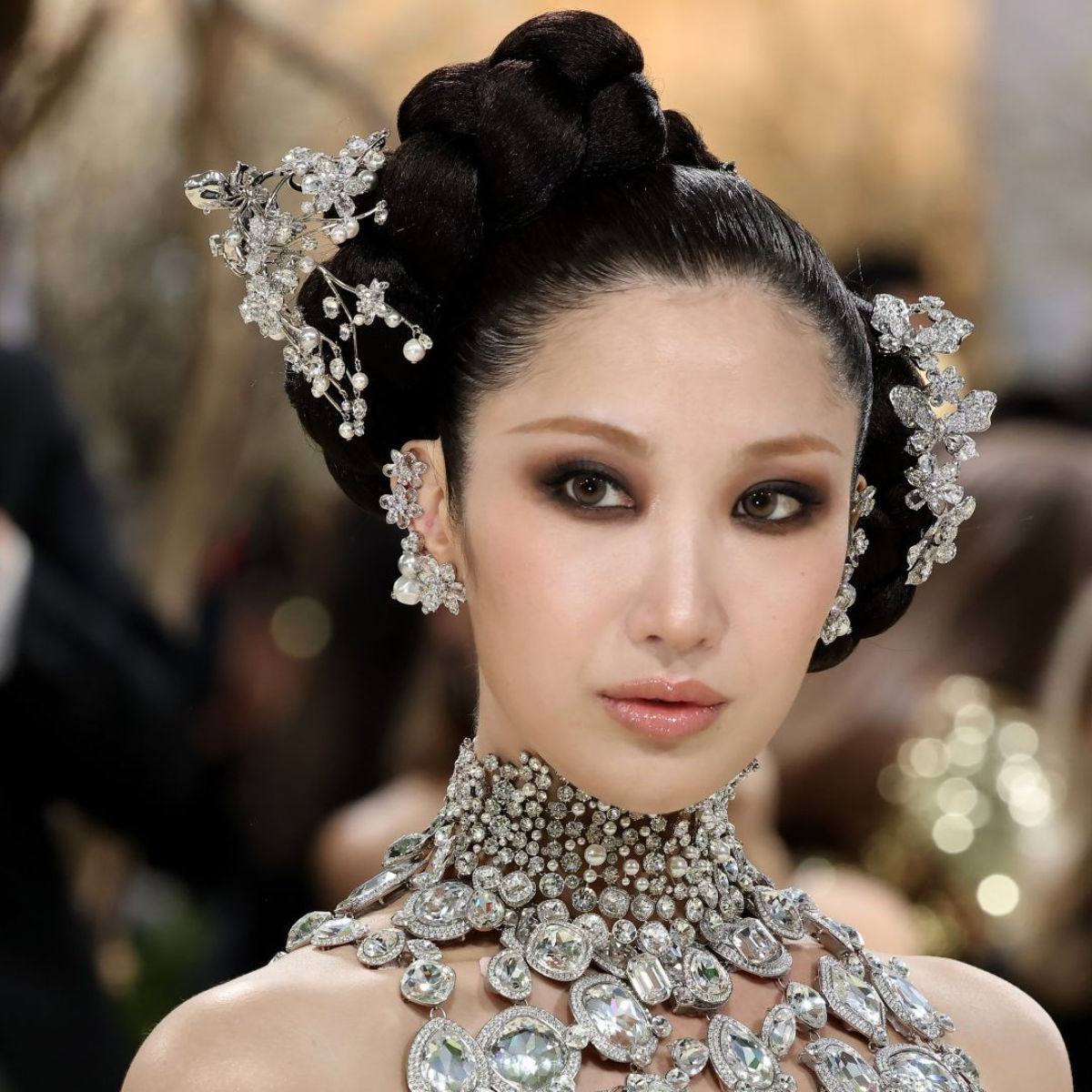
Image: Marie Claire
From Korean Trend to Korean Brand
Domestic consumer loyalty in Korea has undergone a structural shift, with local shoppers favoring homegrown labels in categories historically dominated by Western luxury.
Fragrance icons like Tamburins and Granhand prove that domestic brands can redefine premium markets through distinct visual and tactile storytelling. Eyewear houses like Gentle Monster executed a similar takeover.
This shifting dynamic creates fertile ground for heritage material revivals like jade. What begins as seasonal color interest in mint tones evolves as shoppers discover Jongno’s artisan jewelers, high-profile celebrity endorsements, and brand applications like Oksan100’s white jade beauty line. The path from temporary fashion trend to sustainable brand architecture now moves at remarkable speed.
For global brands, the commercial imperative is no longer copying a superficial aesthetic. Value is generated when cultural memory, modern design, and domestic brand execution converge to turn authentic cultural and material references into commercial products.
The Broader Signal Behind the Jade Revival
The true commercial value of Korea’s jade movement lies in the systemic pattern it exposes.
Across fashion, wellness, and spatial design, younger demographics are embracing traditional practices once viewed as generational relics. From modernized Hanbok cuts to premium bathhouse wellness formats, heritage is becoming an active design framework rather than a nostalgic relic.
Korean identity is no longer an abstract marketing backdrop; it is a high-margin product pipeline. As global markets look toward Seoul for the next wave of consumer innovation, the critical edge will belong to those who recognize which cultural references are quietly gathering momentum before they hit the mass market.
Jade serves as a premier case study for how rapidly a familiar cultural reference can gain fresh relevance. The next major market opportunity will rarely present itself as a conventional K-beauty drop or celebrity endorsement. It will emerge from within Korea’s existing cultural vocabulary, lying dormant until a shifting color palette, new retail format, or emerging consumer behavior transforms an old habit into an essential modern luxury.
Looking at Your Brand Strategy
Uncovering the hidden signals in Korean consumer culture requires looking past surface-level trends. If you are exploring how Korean market shifts, consumer behavior, and category movements can open new opportunities for your business, Siseon works with global teams to turn these observations into strategic advantage.
To discuss custom research, field intelligence, or strategic advisory for your team, connect with us directly at hello@siseonhq.com or fill out the contact form.
Sources
- The Korea Herald — Gen Z’s renewed interest in Korean jade and younger shoppers visiting Jongno jade stores: https://v.daum.net/v/20260710090230840?f=p&
- Korea JoongAng Daily — younger Korean consumers returning to jade and the changing customer base in Jongno: https://www.koreajoongangdaily.com/lifestyle/grandmas-jade-jewelry-is-back-in-vogue/12754316
- Yeijak Jewelry — brand history, contemporary jade positioning, product range, and Jongno location: https://en.yeijak.com/
- Oksan100 — official brand positioning and its use of white jade across contemporary beauty and lifestyle products: https://www.oksan.shop/
- CJ Olive Young — official announcement and concept details for the Gwangjang Market location: https://corp.oliveyoung.com/ko/news/132?category=&pg=2&
- Sulwhasoo / LEJE — official information on the K-heritage limited-edition collaboration: https://www.sulwhasoo.com/about-sulwhasoo/brand-news/archive/contents/2026/perfecting-cushion-limited-edition.html
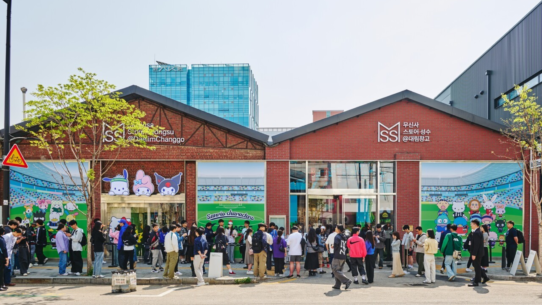
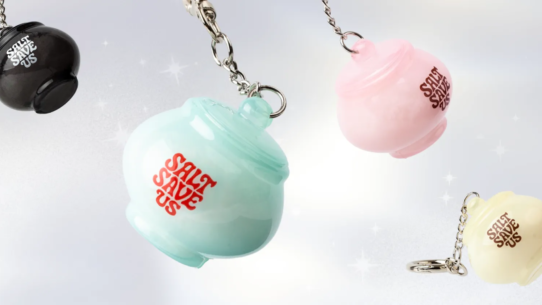

[…] retail innovators like Olive Young with its Gwangjang Market branch and upcoming retro dabang concept in Sincheon show how familiar Korean spaces can be translated […]