



The Power of Unlikely Partners
The blurring of industry boundaries within Korean retail signals a deliberate evolution in brand expansion strategy. Traditional retail collaborations relied on incremental category adjacency, such as two fashion labels co-designing outerwear or beauty brands partnering with character franchises. Modern partnerships intentionally reject category logic altogether.
GS25 and Hyundai Motor, Lotteria and Uniqlo, Hollys Coffee and Vans, and Wiggle Wiggle and Ottogi all put brands together that would have been difficult to pair through conventional category logic.
These unconventional pairings allow brands to bypass the capital expenditure and operational risk of organic category expansion. Instead of spending years attempting to build credibility in a foreign market segment, legacy and mass-market operators borrow a partner’s established audience, spatial touchpoints, and cultural status overnight.
In Korea’s fast-moving retail market, where consumers constantly demand novelty, unexpected brand mashups provide the exact cultural spark required to break through daily content fatigue.
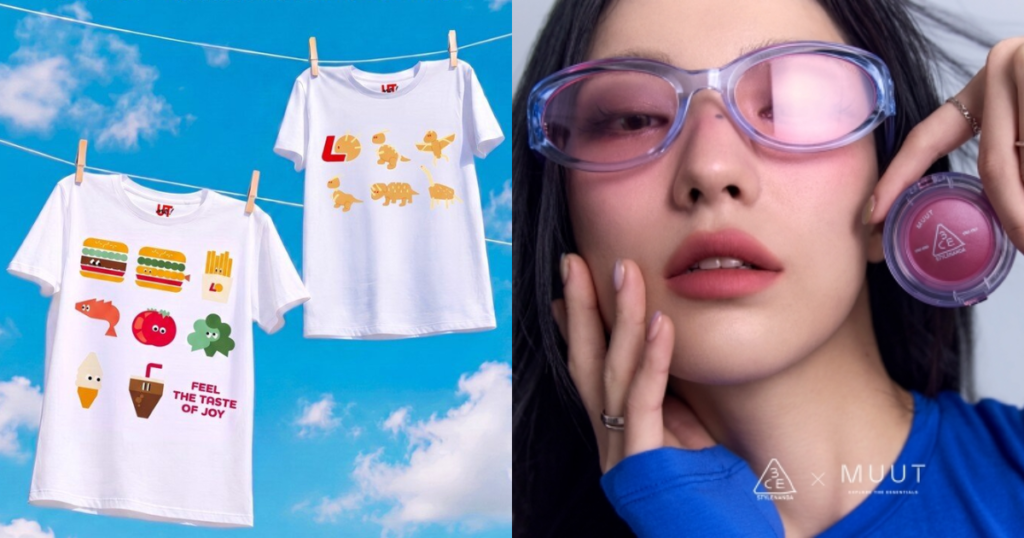
Image: Uniqlo, 3CE
From Limited Editions to Cross-Industry Collaborations
Character collaborations set the original standard for Korean retail partnerships, offering a reliable formula for instant sales spikes. By applying iconic pop culture figures to standard products, brands tapped into ready-made fan bases.
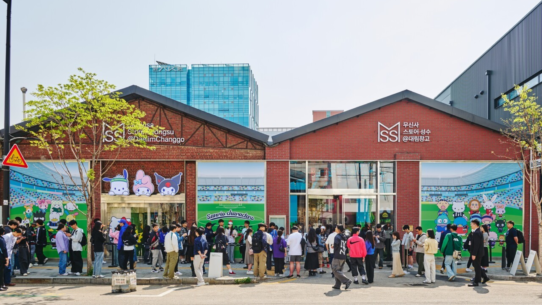
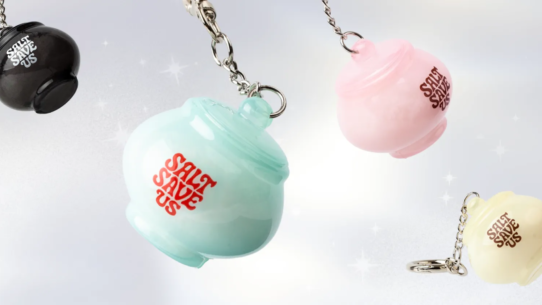
Modern examples prove the format’s continued strength. Rom&nd’s Miffy collection transformed cosmetics into retro stationery, while athé’s Pompompurin collection cleared its signature Lip Glow Balm and Keyring sets in just two hours.
Similar partnerships, like Etude with Manggeurijin Gom or Wakemake with Hello Kitty, validate the safety of character IP. Yet because audience overlap between character collectors and beauty buyers is already high, these drops rarely redefine a brand’s positioning.
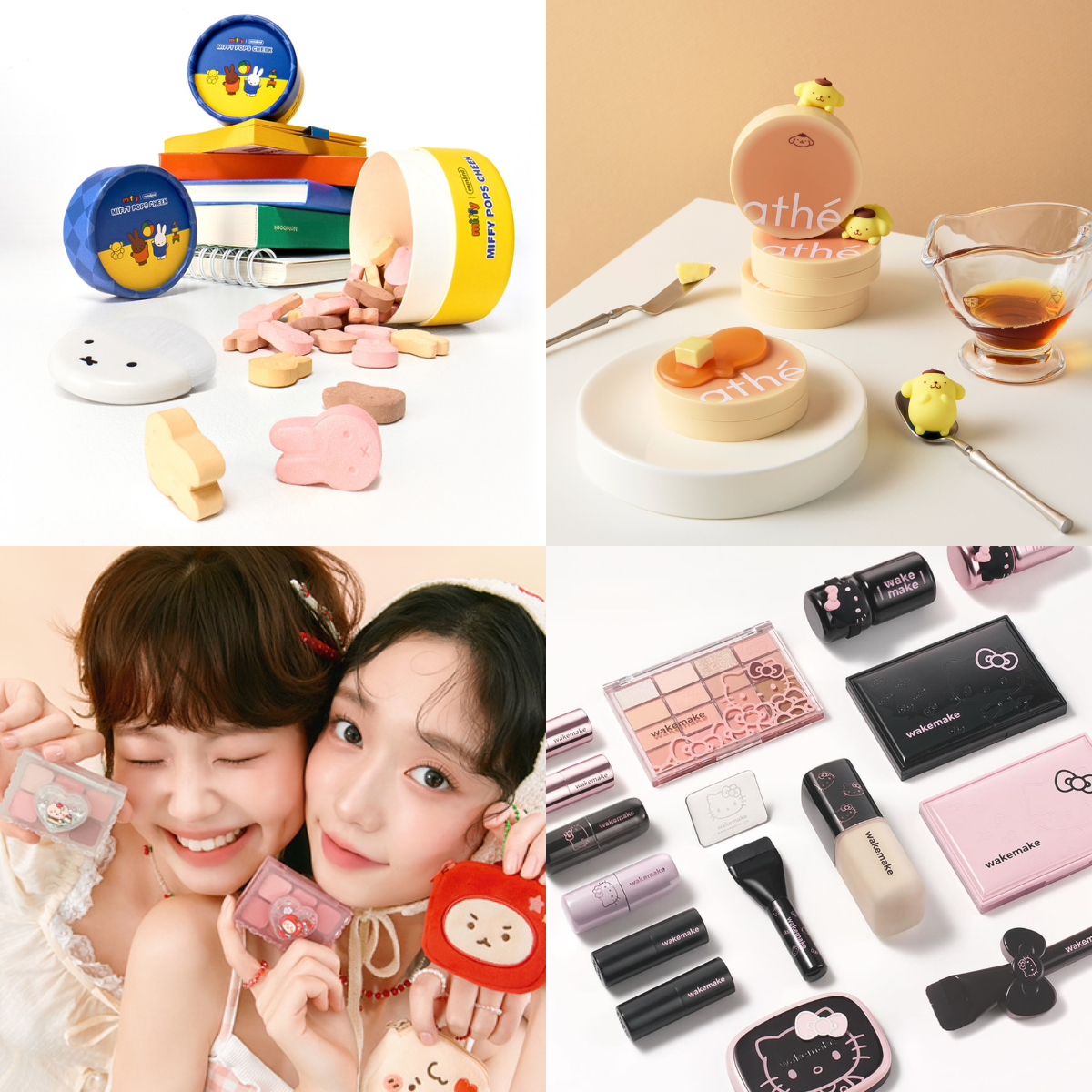
Image: Rom&nd, athé, Etude, Wakemake
Unlikely cross-sector partnerships tell a far more interesting story. Joining a cosmetic brand with a pizza chain or a coffee house with a skatewear label forces both partners to invent a fresh cultural context, transforming the collaboration itself into the primary marketing message.
Product-Level Novelty Drives Viral Social Discovery
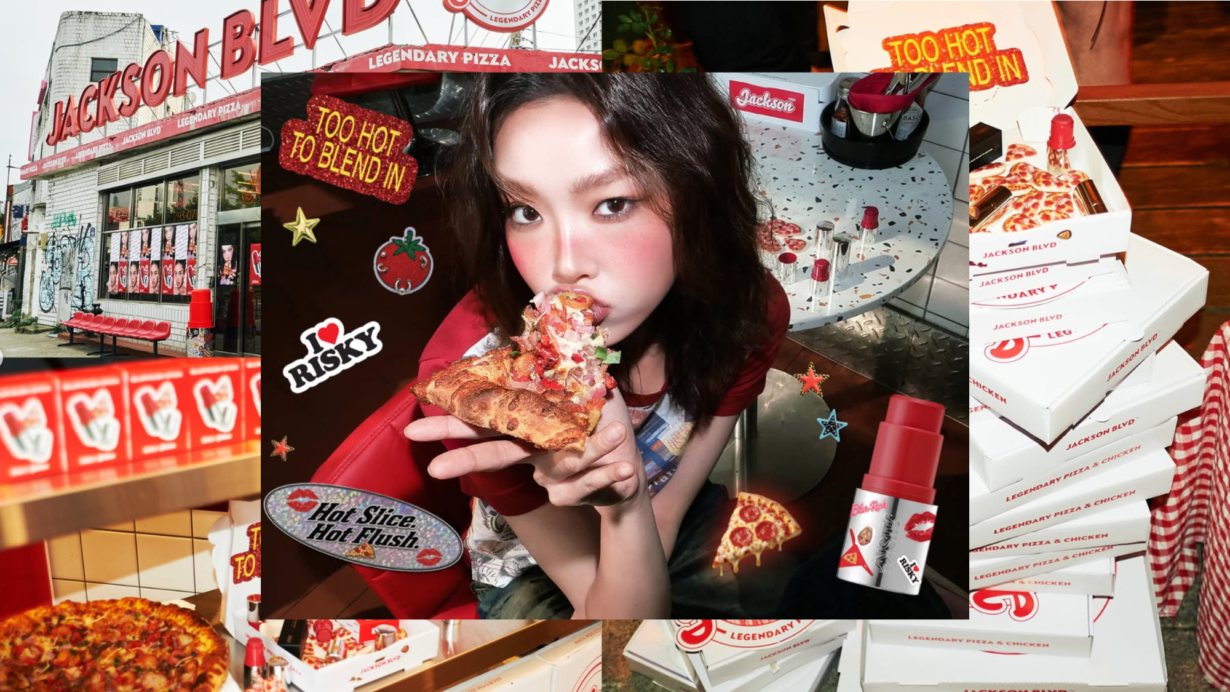
Emerging into Korea’s saturated indie makeup landscape, Risky joined forces with Jackson Pizza to execute the R.E.D. collaboration set.
The collaboration proves that unexpected brand pairings create powerful word-of-mouth momentum in modern retail. Risky Beauty and Jackson Pizza transformed a routine product launch into a highly visual, shareable event.
Rather than simply placing the pizza chain’s logo on the packaging, the beauty brand created pizza-slice makeup puffs and a dedicated red blush stick. That deliberate, playful physical design gave consumers a compelling reason to stop scrolling, photograph the set, and share it across social platforms.
While legacy brands historically led food and beauty mashups, this drop offers a clear blueprint for younger indie labels. By combining distinct visual identities, smaller brands generate organic content, capture social media feeds, and unlock high-impact discovery without relying on traditional advertising budgets.
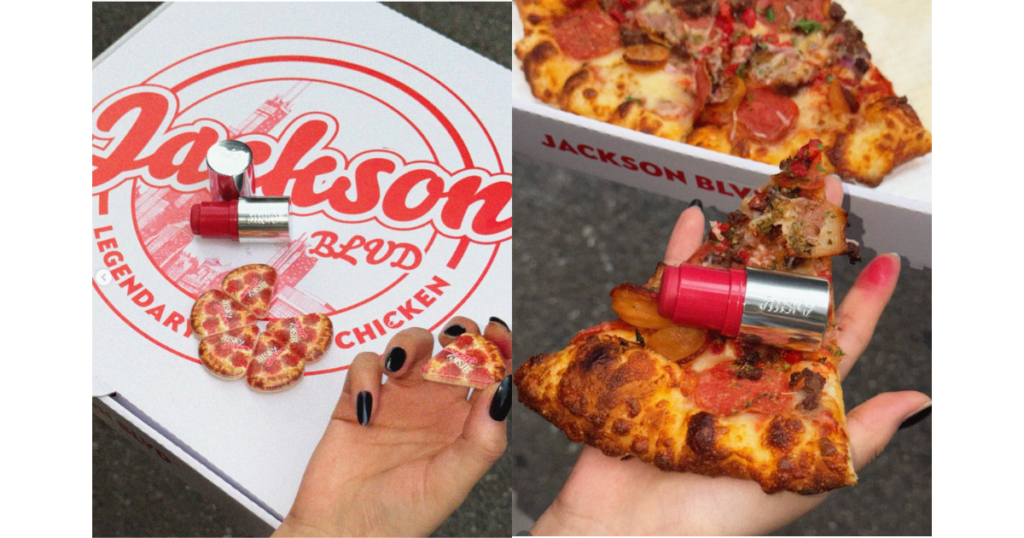
Image: Risky Beauty x Jackson Pizza
When Brands Borrow Each Other’s Strengths
The most effective brand collaborations succeed by swapping distinct operational strengths. Rather than building new business units from scratch, brands use cross-industry partnerships to trade capabilities.
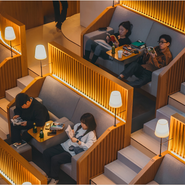
Hollys Coffee pairs its nationwide real estate footprint and daily consumer foot traffic with Vans’ subcultural authority across skatewear, streetwear, and youth fashion. Hollys absorbs cultural edge without re-engineering its core brand identity, while Vans secures physical exposure across daily consumer routines.
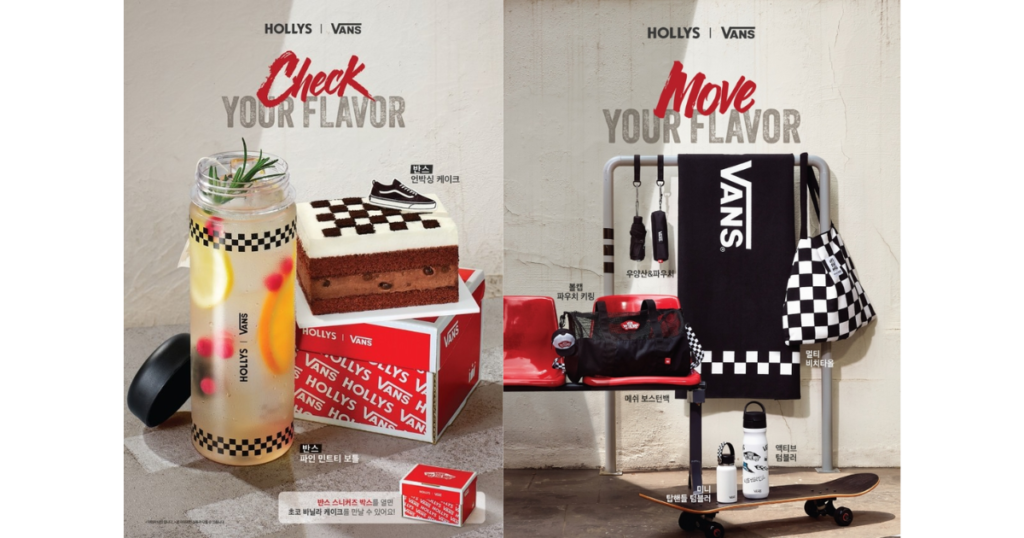
Image: Hollys x Vans
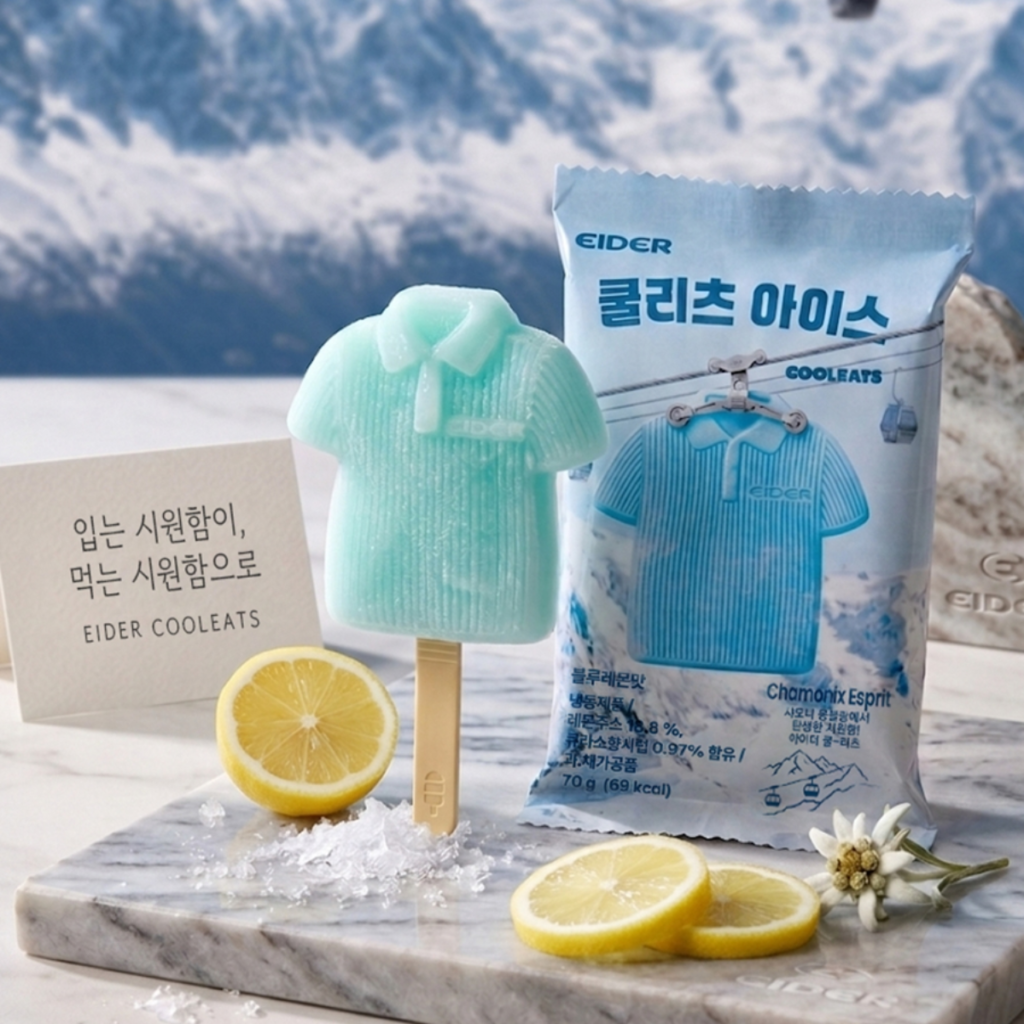
Convenience store leader CU’s partnership with outdoor wear maker Eider operates on the exact same principles. Eider’s cooling garment story gains immediate tangible context inside convenience stores during sweltering summer months, while CU gains a differentiated seasonal product narrative that stands out on overcrowded shelves.
These strategic alliances prove that cross-industry pairings do more than refresh brand visuals. They grant instant access to specialized audiences and distribution networks that would otherwise take years to cultivate.
Collaboration Opens Doors Brands Do Not Normally Have
The most effective retail collaborations act as low-risk market experiments, allowing brands to test new channels and demographics and expand categories without building fresh business units from scratch.
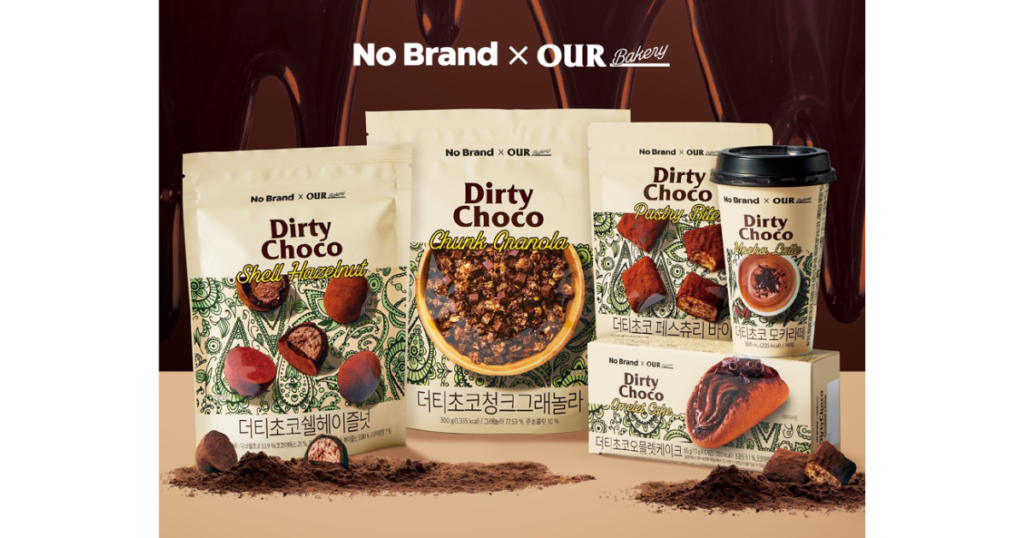
Mass retailer, No Brand, demonstrated this by partnering with OUR Bakery, transforming its popular Dirty Choco recipe from a local cafe staple into a nationwide retail hit, placing its product across Emart and No Brand stores as well as SSG.com.
OUR Bakery leveraged No Brand’s massive retail footprint to achieve national scale overnight, bypassing the capital expenditure required to open new brick-and-mortar locations. Conversely, No Brand absorbed the bakery’s cultural clout, elevating its own private-label perception.
No Brand achieved similar success with its Supermatcha collaboration, selling over 160,000 units in less than three weeks and drawing younger buyers into traditional grocery channels.
The 2026 partnership between GS25 and Hyundai Motor takes this strategic testing even further. The campaign converted Hyundai’s fictional bakery concept into a physical ice cream SKU stocked across GS25 convenience stores, complete with collectible car stickers.
Hyundai gained daily consumer contact far outside traditional car dealerships, while GS25 secured an unexpected novelty drop that drove store visits. These creative partnerships give forward-thinking brands a simple, low-risk way to test brand expansion into entirely new retail environments.
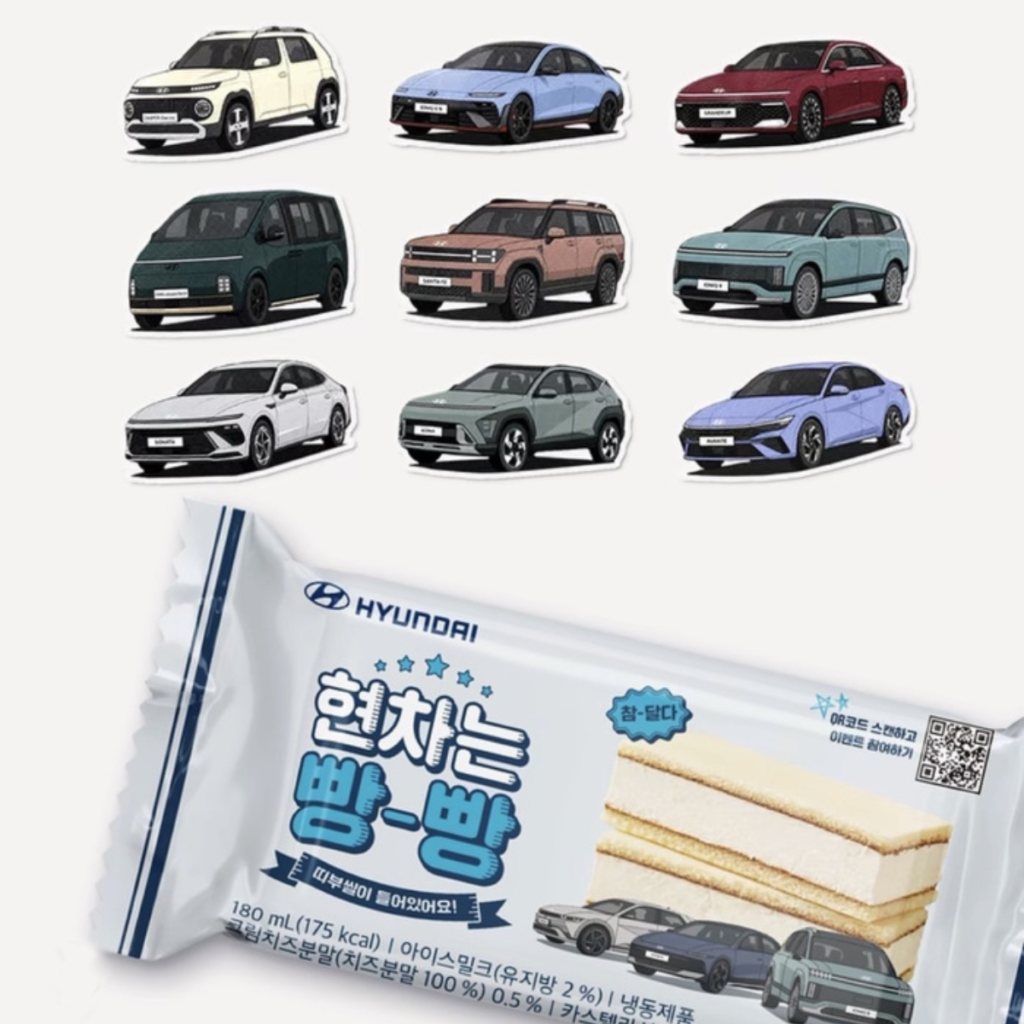
Image: 대한경제
Why Novelty Drives Sales
Korea’s retail environment provides the ultimate testing ground for brand experimentation.
In a market flooded with relentless product launches, standard advertising campaigns quickly fade into background noise. An unexpected partnership solves this problem by delivering built-in attention.
The sheer surprise of a makeup label teaming up with a pizza chain or a convenience store partnering with an automaker compels consumers to pause, click, and investigate.
Korean buyers actively seek out limited-edition drops, collecting and sharing products that offer genuine visual novelty. The Wiggle Wiggle and Ottogi alliance proves how merging two distinct visual worlds turns ordinary household goods into viral lifestyle items.
Unconventional pairings also create organic distribution paths. Beauty brands enter food enthusiast networks, apparel labels inhabit high-traffic coffee shops, and boutique bakeries scale into nationwide grocery chains. The primary goal of modern brand collaboration is not finding obvious category alignment, but discovering what strategic value two partners can unlock together.
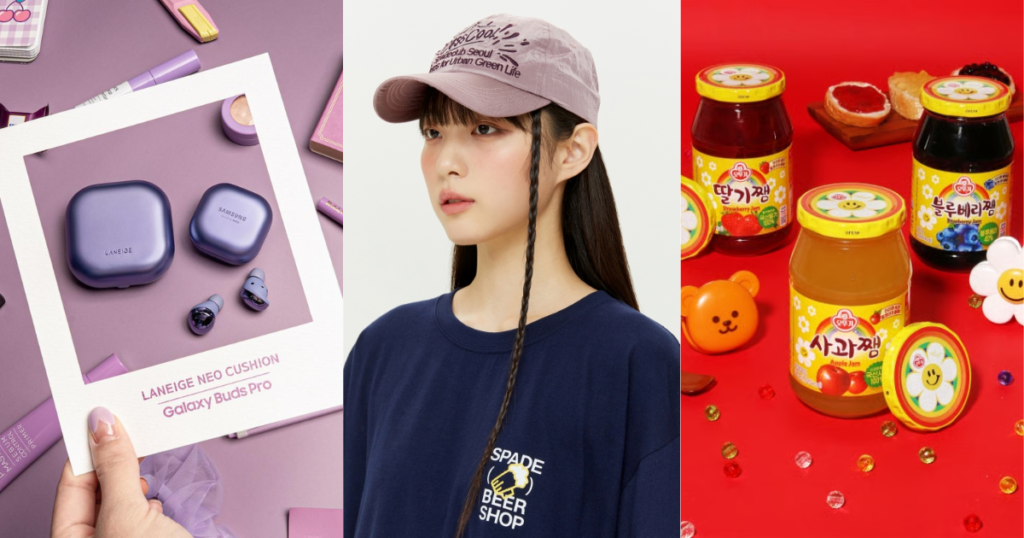
Image: Laneige x Samsung Galaxy, SPADECLUBSEOUL x Cass Beer, WIGGLEWIGGLE x Ottogi
A Low-Risk Strategy for Global Brands
Expanding beyond familiar category lines opens an endless grid of partnership opportunities. Cosmetic brands borrow consumer tech innovation, food manufacturers step onto streetwear, neighborhood convenience stores transform into daily lifestyle venues, and coffee chains adopt fashion aesthetics.
When brands realize that strategic partnerships unlock ready-made audiences and capabilities, traditional co-branding rules vanish. The core strength lies in trading complementary assets. A retail giant offers vast physical distribution, while a niche design studio delivers instant youth appeal. These temporary alignments also allow companies to test fresh product categories without making permanent capital commitments.
For global brand strategists monitoring Korean consumer behavior, this shift highlights a powerful strategy. Borderless collaborations provide a low-risk mechanism for reaching untouched retail environments, new consumer demographics, and immediate market attention.
Finding Growth Outside Your Own Category
High-impact collaborations succeed because each partner supplies an asset the other cannot efficiently build alone.
The exchange through partnerships enables companies to rent specialized capabilities, distribution networks, or cultural capital while bypassing years of internal development. Korea’s cross-category partnerships are not growing wilder simply for visual drama. Complementary partners open doors to new consumer demographics and retail environments that remain inaccessible through organic expansion. The smartest growth move is finding the partner that takes your brand somewhere entirely new.
Looking at Your Brand Strategy
Uncovering the hidden signals in Korean consumer culture requires looking past surface-level trends. If you are exploring how Korean market shifts, consumer behavior, and category movements can open new opportunities for your business, Siseon works with global teams to turn these observations into strategic advantage.
To discuss custom research, field intelligence, or strategic advisory for your team, connect with us directly at hello@siseonhq.com or fill out the contact form.
Sources
- Financial News (fnnews.com) — “아떼, 산리오 폼폼푸린 협업 흥행… 한정판 잇단 완판” (athe × Pompompurin collaboration launch May 31, 2026; Lip Glow Balm sold out in 2 hours including reserve quantities; Tone-Up Sun Cushion 1st and 2nd batch sell-out; popup at Olive Young Seongsu and Gangnam; representative quote on diverse collaboration strategy): https://www.fnnews.com/news/202606090832146680
- Daum / News (v.daum.net) — “LF 아떼, 폼폼푸린 30주년 기념 협업…여름 한정 컬렉션” (collaboration detail: Pompompurin 30th anniversary, dessert picnic theme, product design including pancake case and character puffs, Olive Young exclusive early launch): https://v.daum.net/v/89c4UpYCjQ?f=p
- rom&nd official website — Miffy collaboration page (lip and eye products, Miffy stationery store concept, limited edition sets, finger puff gifts): https://romand.co.kr/project/%EB%A1%AC%EC%95%A4-%EB%AF%B8%ED%94%BC-%EC%BD%9C%EB%9D%BC%EB%B3%B4-open/690/
- rom&nd official website — Miffy collaboration coming-soon event page (consumer comments describing emotional connection between childhood Miffy memories and current brand relationship): https://romand.co.kr/article/%EC%9D%B4%EB%B2%A4%ED%8A%B8/13/182254/
- Instagram — 필리밀리 × 엽기떡볶이 collaboration reel (beauty brush brand × Korean spicy tteokbokki restaurant chain, 2025): https://www.instagram.com/reel/DRQyy-6DT9Z/
- beautypl.com — “감다살 콜라보템” (character and animation Korean beauty collaboration overview, July 2025; includes Espoir × Disney characters): https://beautypl.com/skin-care/2025/06/animation-collaborations-skincare-items/