

The Wrong Starting Point
Brand strategists monitoring Korean pop culture and retail trends often start with a simple question, searching for the latest viral hit.
That approach misses the most strategic point. Korean retail consistently surfaces products and behaviors that resonate globally, but international success does not stem from Korean origin alone.
Korean beauty, fashion, and lifestyle concepts win globally not because of local branding alone, but because they solve consumer problems that exist everywhere. The trend origin provides a marketing hook, but the underlying consumer need drives the actual sales volume.
Watching surface trends keeps companies stuck in endless catch-up modes. Popular products are merely the visible outcome of deeper changes in consumer habits, daily routines, and lifestyle demands. Understanding those underlying changes gives brands a genuine competitive advantage.
Smart analysts stop asking what is trending in Korea and start asking if their home market shares the same unmet need. That perspective turns basic market monitoring into a powerful growth strategy. Shifted consumer expectations rarely arrive through one breakout product. They build quietly across store displays, social feeds, new app features, and changing customer feedback. Identifying those repeated signals reveals major commercial shifts before competitors notice.
The Difference Between a Trend and a Consumer Shift
At first glance, overnight lip masks, PDRN skincare, flip-flop socks, running clubs, private saunas, and social hobby groups appear unrelated. Some belong to beauty, others to fashion or wellness. Some became global successes, while others remain largely concentrated in Korea. Yet they all respond to pre-existing consumer problems.
A clear pattern emerges across the past decade of Korean innovation. Some concepts spread globally because they solve daily hassles that consumers face everywhere. Others stay in Korea because they cater to unique local habits. For brand strategists, the real task is separating a short-lived fad from a massive shift in consumer expectations.
Cushion foundations prove this point. The product did not win over global beauty shoppers by introducing a revolutionary formula. It won by making daily makeup touch-ups faster, cleaner, and more convenient. Once brands outside Korea recognized the universal demand, the format spread rapidly across global beauty markets.
Viral items come and go, but human expectations change slowly. Korea remains an invaluable market to watch because consumer needs turn into commercial products faster there than anywhere else. Rapid brand iteration, quick-turn manufacturing, and high consumer experimentation reveal major consumer shifts well before they show up in western markets.
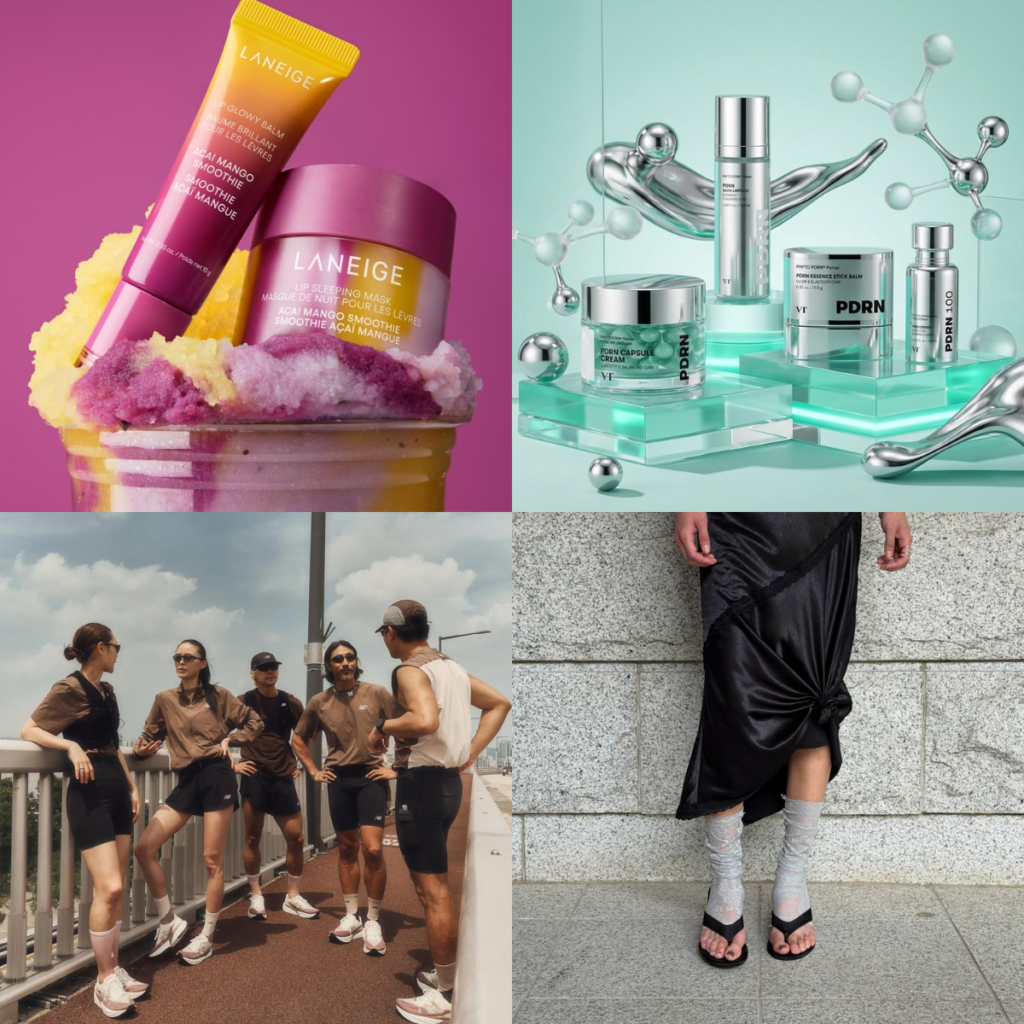
Image: Laneige, VT Cosmetics, jpak_dosa, W Korea
How to Spot Global Opportunities Behind Local Product Hype
Identifying the underlying consumer expectation reveals the essential filter, separating global growth opportunities from localized product gimmicks.
Take toner pads as an example. Consumers were not asking for plastic tubs filled with cotton pads, they wanted a quick, foolproof way to tone their skin without spilling liquid or wasting time. Korean brands created the pad to deliver that speed. Because busy consumers everywhere want effortless skincare, toner pads scaled rapidly across global beauty stores.
Laneige applied a similar logic to lip care. Rather than manufacturing artificial demand, the brand recognized that consumers were expanding their skincare routines while neglecting lip hydration. Positioned as an overnight facial step rather than a basic balm, lip treatments became an effortless addition to evening routines.
The Arencia Mochi Cleanser shows how routine care is becoming experiential. It went viral because consumers want basic washing routines to feel fun, luxurious, and sensorial. That demand for sensory enjoyment in everyday products is exploding across global beauty, wellness, and home care categories.
Color cosmetics require more strategic adaptation. Formulated for a relatively homogeneous domestic market, Korean color lines traditionally prioritized muted cool tones, softer pigmentation, and light shade ranges. As global volumes grew, progressive Korean brands expanded shade spectrums while continuing to serve an overlooked niche, delivering accessible cool-toned, olive-friendly, and muted neutral cosmetics that Western brands ignore. The ultimate growth opportunity rarely lies in importing the physical item itself, but in answering the underlying consumer expectation that the product addressed first.
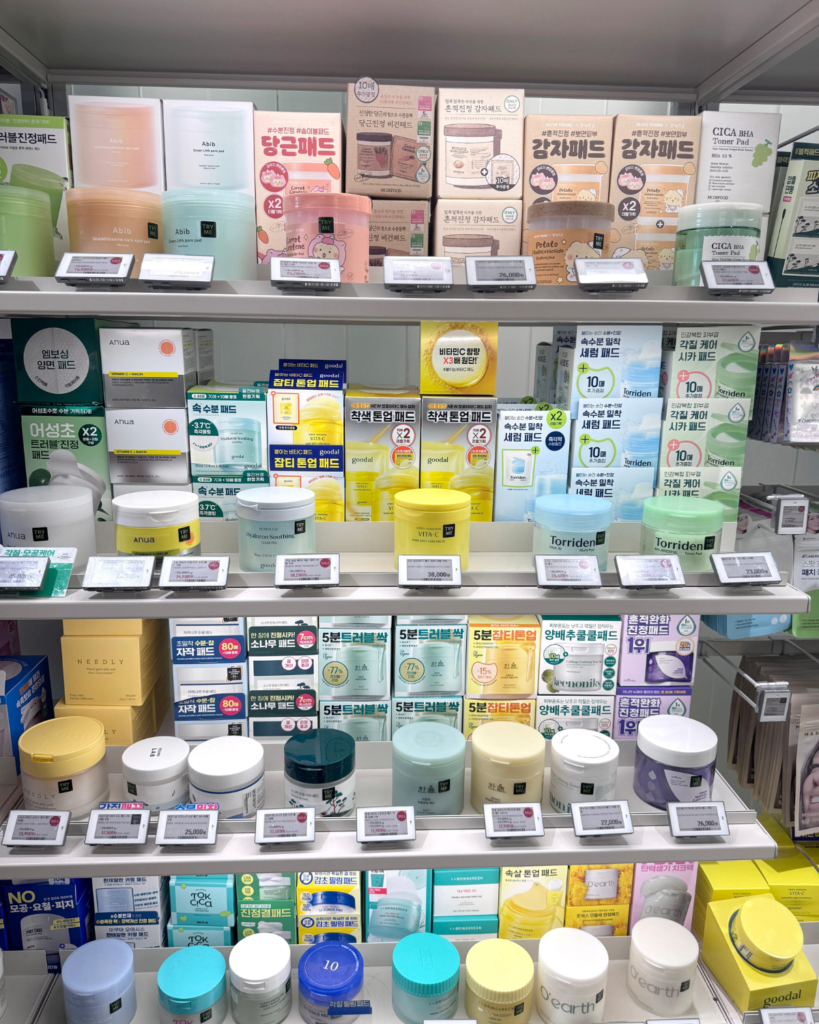
Image: goodhousekeeping
Look at the Conditions That Made It Possible
Market trends do not appear out of thin air. Sustainable consumer movements rely on a web of supportive factors rather than a single breakthrough product. Consumer readiness, creator education, retail accessibility, pricing strategies, and packaging design evolve together. Focusing only on the viral product makes success look like luck, while looking at the broader picture reveals the real growth strategy.
Korea’s booming wellness scene highlights this. Look at the surge in urban running crews and aesthetic private saunas taking over Korea. Running and saunas are far from new, but brands transformed them to match how Gen Z views self-care today. Instead of treating wellness as an expensive weekend splurge, younger consumers want affordable, everyday habits. Running clubs turn exercise into a cool social hangout, while private saunas offer quiet recovery in stylish, photo-worthy spaces. Different industries, but the same core expectation: accessible, feel-good routines.
Korean brands capture global attention because they excel at recognizing subtle behavioral changes and lowering the barrier to entry. Innovation in Korea rarely requires inventing an entirely new category. Instead, it involves taking an existing concept, refining the price point, overhauling the retail experience, and educating the market until mass adoption becomes effortless. Deconstructing that commercialization playbook yields far more value than simply copying the final product.
Olive Young’s creator recruitment program reflects how retailers actively partner with content creators to educate consumers, accelerate product discovery, and build emerging categories.
Separate the Product From the Opportunity
When a Korean beauty or lifestyle item goes viral, most brands focus entirely on the physical product. That mindset misses the bigger picture.
The real strategy lies in uncovering the massive market opportunity behind the product.
A viral item is just one brand’s attempt to meet a shifting consumer desire. The underlying desire itself is where the true value sits. Korean brands succeed at this because they are often the first to recognize a new customer habit and build a product around it. Once that product proves consumers want a solution, smart brands outside Korea ask how to solve that same problem for their own local consumers.
Retail environments, price expectations, and consumer habits vary across borders. Simply copying a Korean product forces you to compete directly with the brand that understood the customer first. Understanding the underlying expectation lets you create a tailor-made solution that fits your home market far better.
Seven Questions Before You Adapt a Korean Trend
Whenever a Korean trend begins attracting attention, ask these questions before deciding whether it’s relevant to your business.
Treat these questions as a sequence rather than a checklist. The answer to each one should determine whether it’s worth moving to the next.
1. What consumer problem is it solving?
Look past the aesthetic packaging and pinpoint the real customer frustration underneath.
2. Does that problem exist in your market?
A successful product doesn’t automatically mean the same consumer demand exists elsewhere.
3. Is this real consumer demand or hyper-funded creator hype?
Korean marketers lead the world in influencer campaigns and social buzz. Going viral on social feeds does not mean a product has built a loyal customer base.
Spotting Fake Trend Signals
Social hype can fool even experienced brand strategists. Influencer campaigns buy initial clicks, but real consumer shifts create repeat sales, rival knockoffs, mass retail distribution, and lasting lifestyle habits. High view counts show interest, but repeat orders prove long-term value.
4. Where does the real innovation lie?
Is the product introducing an entirely new solution, or is it taking an existing idea and making it easier, more affordable, better designed, or easier to understand?
5. What conditions allowed it to succeed in Korea?
Analyze the surrounding environment, including store access, creator tutorials, price points, and cultural trends.
6. Which of those conditions already exist in your market?
Separate the marketing conditions you can build yourself from structural market realities that take years to change.
7. How do you redesign the concept for your own target audience?
The goal isn’t to recreate the Korean product. It’s to solve the same problem in a way that feels native to your own market.
By the time you’ve worked through these seven questions, the decision usually becomes much clearer. Rather than asking whether a Korean trend looks exciting, you’re evaluating whether the same consumer conditions exist in your own market and whether your business is positioned to respond to them. That’s a much stronger foundation for strategic decisions than simply following whatever happens to be popular online.
The Right Thing to Watch
Brands often credit Korean retail trends with predictive power, assuming today’s Korea behaviors forecast tomorrow’s global habits.
That view is half right, but for the wrong reason. Korea surfaces changing consumer habits faster than other markets not because local brands invent the future out of thin air, but because hyper-competitive local conditions—vocal Gen Z shoppers, lightning-fast product drops, and seamless logistics—force hidden consumer needs into the spotlight early.
This distinction changes how brands should track international trends. Viral products come and go, app interfaces update, and breakout labels disappear overnight. Once a genuine consumer expectation takes hold, it stays. As shopping environments around the world become faster and more digital, consumers everywhere start demanding the same speed, convenience, and transparency.
Debating whether a viral Korean product will work in your home market is the wrong starting line. The smarter exercise is checking whether your local consumers are asking the same questions Korean shoppers asked three years ago.
The brands that succeed long term won’t be the ones shipping fast knockoffs from Korea. They will be the forward-thinking brands who spot the core expectation, confirm that their local market is ready, and build a tailored solution first.
Looking at Your Brand Strategy
Uncovering the hidden signals in Korean consumer culture requires looking past surface-level trends. If you are exploring how Korean market shifts, consumer behavior, and category movements can open new opportunities for your business, Siseon works with global teams to turn these observations into strategic advantage.
To discuss custom research, field intelligence, or strategic advisory for your team, connect with us directly at hello@siseonhq.com or fill out the contact form.
Sources
- Amorepacific — “Korea’s Cushion Boom Changes Global Beauty Trends” (cushion format R&D, global adoption, international sales trajectory): https://www.apgroup.com/int/en/news/2015-01-21.html
- Business of Fashion — “K-Makeup Couldn’t Go Global. Now It’s Trying Again.” (Korean colour cosmetics international adaptation, shade range evolution, Tirtir Ulta entry): https://www.businessoffashion.com/articles/beauty/k-beauty-makeup-couldnt-go-global-now-its-trying-again/
- Harper’s Bazaar Korea — “다이소에 이 화장품 보이면 꼭 사세요” (VT Cosmetics PDRN at Daiso, price-quality decoupling in accessible beauty): https://www.harpersbazaar.co.kr/article/1888751
- Korea Future Daily (한국미래일보) — “2030세대 주도 ‘러닝’ 열풍, 단순 스포츠 넘어 문화 코드로” (Korean Gallup running participation data: 23% to 32% between 2021 and 2023, 10 million estimated runners, running club culture analysis): https://koreafuture.co.kr/m/view.php?idx=23771
- Openads — “새로운 트렌드가 된 달리기의 진화” (running club community structure, social media role in running culture, ‘healshy pleasure’ framing): https://www.openads.co.kr/content/contentDetail?contsId=14690
- Wisdom Agora — “요즘 MZ세대가 뛰는 이유” (fashion and identity dimensions of running culture, brand response to running communities, creator role in running expansion): https://wisdomagora.com/요즘-mz세대가-뛰는-이유
- Vogue Korea — “근본적인 두피 관리를 도와줄 헤드 스파 6” (head spa conditions analysis, scalp literacy, service premium): https://www.vogue.co.kr/2024/03/23/
- Business of Fashion — “Unravelling the K-Beauty Paradox” (Korean domestic brand landscape, international expansion challenges): https://www.businessoffashion.com/articles/beauty/k-beautys-next-chapter/
- Euromonitor — “K-Beauty’s Global Footprint” (K-beauty performance by market, category distribution internationally): https://www.euromonitor.com/article/k-beautys-global-footprint-performance-presence-and-strategic-strengths