





Wellness Is Becoming a Lifestyle Category
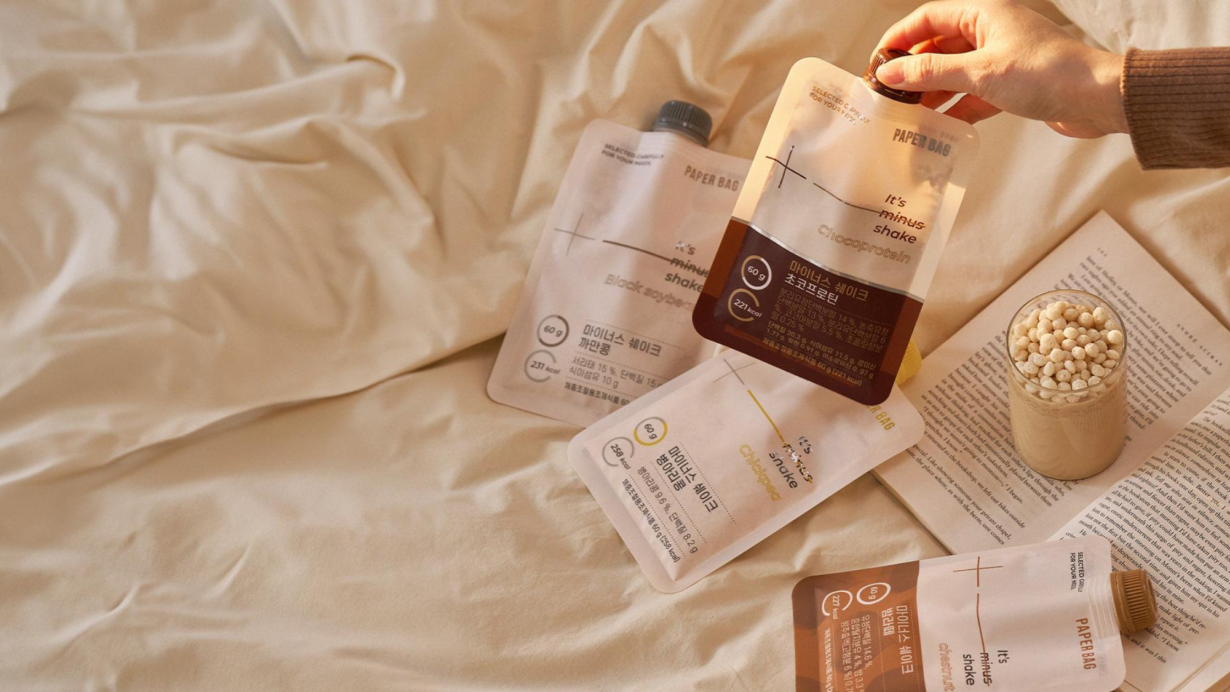
Walk through the wellness market in Korea today and it is easy to see how much the category has changed. Protein drinks, supplements, functional snacks, beauty drinks, and other wellness products are increasingly designed with the same attention to branding, packaging, and usability found across beauty and lifestyle products.
That change is particularly noticeable when compared with how wellness products were traditionally presented. Supplements and functional products were once strongly associated with pharmacies, where efficacy and professional recommendation played a major role in the purchase decision. Today, more of these products are reaching consumers through lifestyle-oriented retail environments and social media, where the product has to communicate what it is, who it is for, and how it fits into everyday life before a pharmacist or other intermediary does that work for it.
The growth of the category is part of the reason. As more brands enter wellness, they have more incentive to differentiate themselves, whether through formulation, flavor, format, packaging, or the lifestyle they associate with the product.
This has created a noticeable shift in Korean wellness. Products are still expected to work, but functionality is increasingly only the starting point. How a product fits into a consumer’s routine, how convenient it is to use, and whether it feels compatible with the lifestyle they want to build are becoming part of the value as well.
Understanding that shift offers a useful perspective on where Korean wellness is heading, and what global brands can learn from the way Korean consumers adopt products beyond traditional health categories.
Why Wellness Became More Lifestyle-Driven
Wellness in Korea has become more visible in everyday life, from exercise and nutrition to recovery, supplements, and products designed around specific health goals. As more consumers participate in these categories, wellness has become less of a specialized health activity and more of something incorporated into ordinary routines.
That change has created more opportunities for brands to compete. A growing wellness market gives consumers more choices, while giving brands more reasons to differentiate themselves through product design, formulation, flavor, format, and branding.
The result is particularly noticeable in categories such as protein, supplements, functional beverages, and wellness snacks. Products are increasingly designed around different types of consumers rather than a single idea of what a “health-conscious” consumer looks like. Some emphasize convenience and portability. Others focus on taste, beauty-related benefits, dietary goals, recovery, or simply making an everyday routine easier.
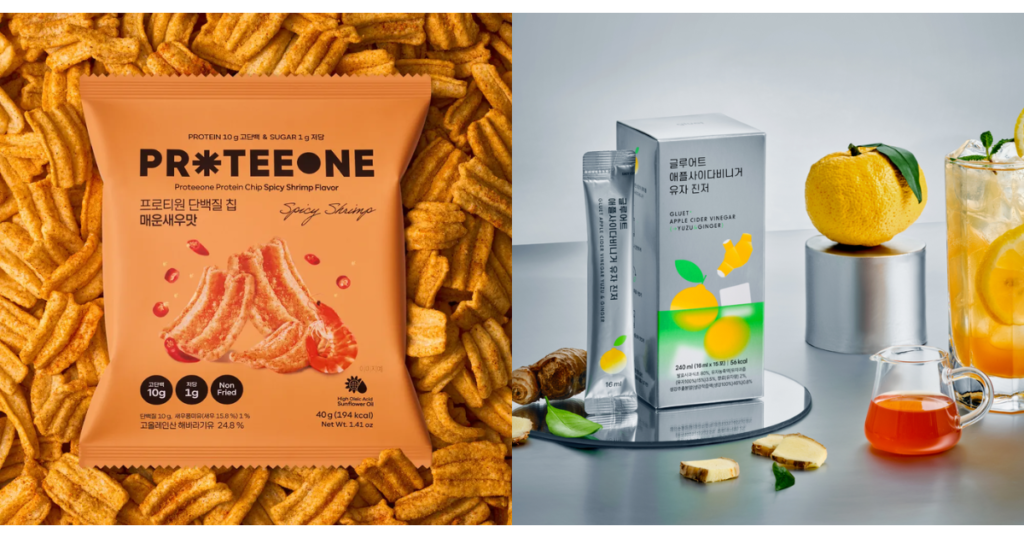
Image: Proteeone, Gluet
Another reason the category can expand relatively quickly is that wellness does not require Korean consumers to learn an entirely new consumer behavior. Health-conscious routines are already familiar, whether through supplements, functional foods, exercise, diet management, or products associated with specific health goals. The basic idea that an everyday product can be chosen deliberately to support a personal goal is already well established.
That creates a relatively low barrier when new products appear. Consumers do not necessarily need to be persuaded that supplementation, functional nutrition, or recovery products have a place in their routines. They are more likely to be evaluating which product fits their needs, preferences, budget, and lifestyle.
The same dynamic can be seen in Korean beauty. Consumers who have grown up with multi-step facial skincare are already accustomed to adding products when they believe a specific concern warrants it. The arrival of a body toner or serum therefore does not require consumers to learn why multiple steps exist. It extends a routine logic they already understand.
Wellness benefits from a similar foundation. New products can enter an existing culture of routine-based self-care rather than having to create that culture from scratch.
This is where the aesthetic shift becomes more interesting. It isn’t necessarily that Korean consumers suddenly began demanding beautiful wellness products. As more brands entered the category and more products competed for attention, there was greater incentive to make those products distinctive and appealing.
Wellness therefore began adopting some of the same competitive logic already familiar in Korean beauty. When functional claims become difficult to differentiate, brands have to find other ways to make consumers notice, understand, remember, and ultimately choose their products.
Wellness Products Are Being Designed for Everyday Life
The shift becomes even clearer when looking at the products themselves.
Protein is one of the most visible examples. The Korean market now includes products designed around very different consumer needs, from convenient daily nutrition to dieting, recovery, and general health management. The visual language varies accordingly. Some brands use clean, minimal packaging that fits easily into a lifestyle-oriented aesthetic. Others lean into cute characters, seasonal collaborations, or more energetic designs. Still others use bold colors and athletic imagery.
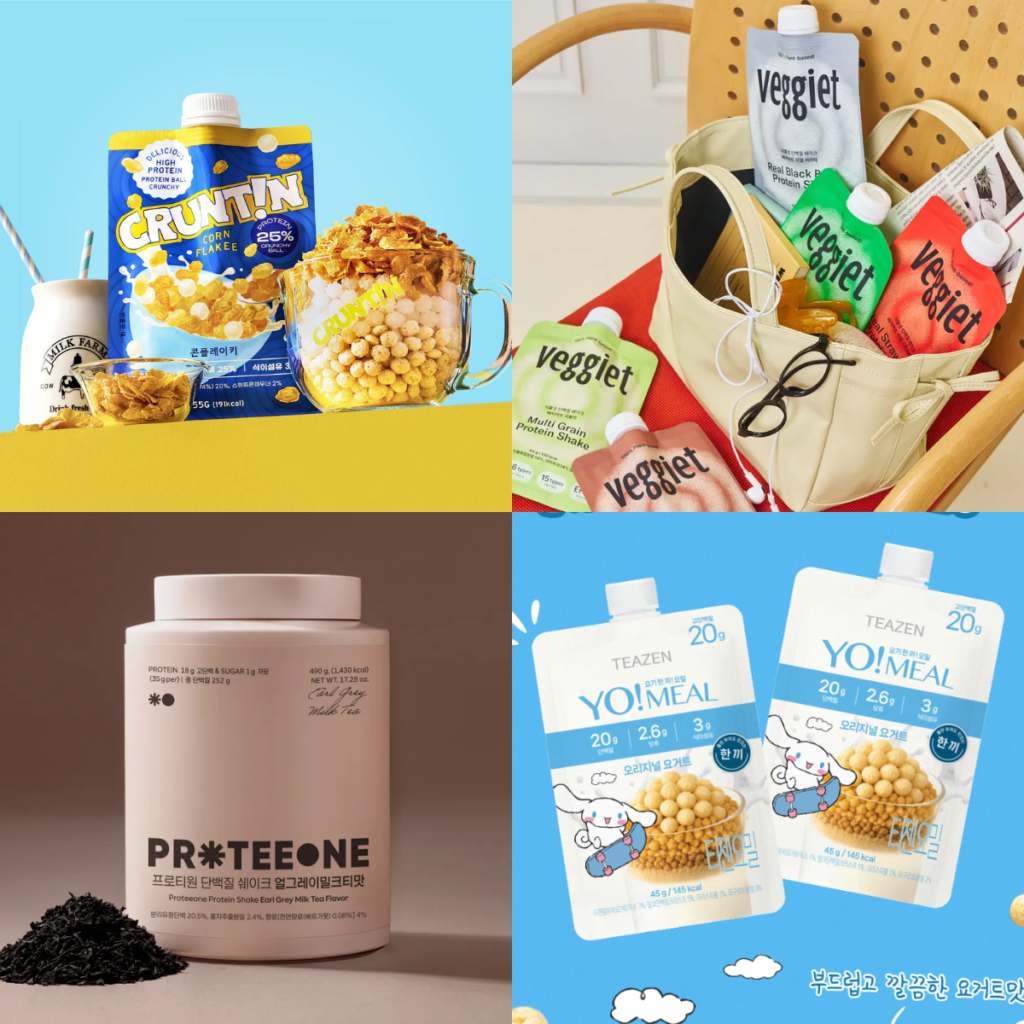
What matters is not that Korean wellness products have adopted one particular aesthetic. It is that brands increasingly recognize design as a way to communicate who the product is for.
Flavor has become another point of differentiation, particularly in protein and functional nutrition. Korean brands are not limited to the familiar chocolate, vanilla, or berry profiles that dominate many sports-nutrition categories. Products can take inspiration from familiar Korean foods and drinks, including injeolmi, ogok, misutgaru, corn castella, melon milk, and cereal-inspired flavors.
These choices do more than make functional products taste different. They make the category feel culturally familiar and give consumers more reasons to experiment. A protein product can be positioned around taste and novelty rather than only muscle building or nutritional efficiency, broadening its appeal beyond consumers who identify strongly with fitness.
This is another way Korean wellness is becoming more lifestyle-oriented. The product does not have to look or taste like a conventional health product to perform a functional role.
Format is evolving in ways that make wellness easier to incorporate without requiring consumers to change their routines. In Korea, many newer products are designed to be so portable and convenient that taking them becomes almost incidental. A single-serving format can stay in a handbag, work bag, desk drawer, or travel pouch until the moment it is needed, eliminating much of the preparation traditionally associated with supplements and functional nutrition.
This is particularly visible in protein products, where single-serving pouches are common alongside larger formats. Rather than asking consumers to measure powder at home and prepare a drink, these products can be carried and consumed wherever they happen to be. The same logic appears in liquid supplements packaged as small, single-serving sticks that can simply be torn open and consumed directly.
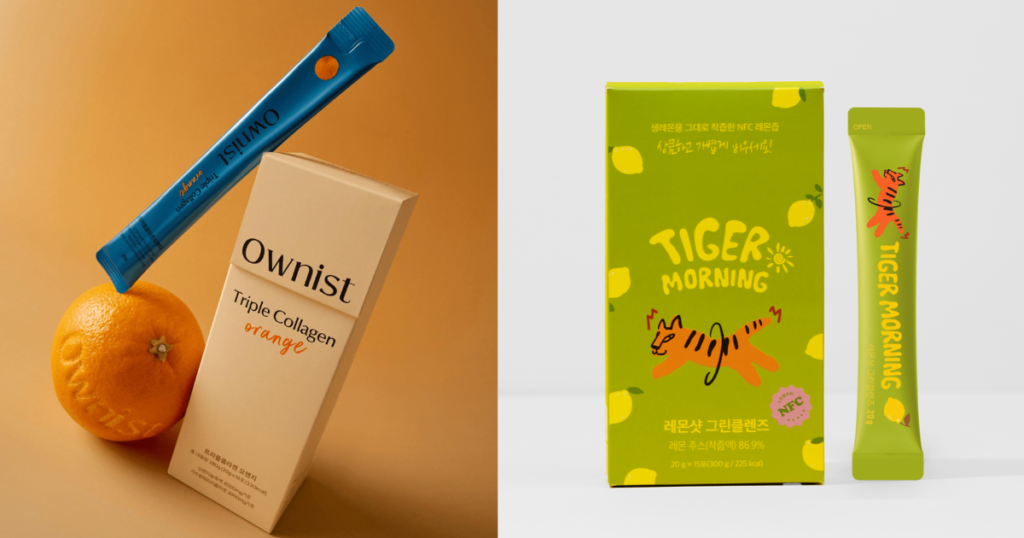
Image: Ownist, Tiger Morning
Ownist’s Triple Collagen Orange and Tiger Morning’s Lemon Shot Green Cleanse illustrate this approach. Both come in compact liquid formats designed for single use, turning what could otherwise feel like a separate supplementation ritual into something that can sit naturally within a morning, commute, workday, or travel routine.
The significance is less about convenience in isolation and more about how little disruption the product creates. When a wellness product is portable enough to keep with you at all times, there is very little reason not to have it available. The product becomes part of the consumer’s environment before it even becomes part of a deliberate wellness routine.
Other wellness products are designed around a different everyday gap. Some functional drinks and powders are positioned for consumers who feel they aren’t getting enough fruit or vegetables through their regular diet, turning nutritional supplementation into a convenient daily habit rather than a treatment for a specific health problem.
Fitness wear has followed a similar trajectory. Around a decade ago, consumers looking for aesthetically appealing Korean activewear had far fewer options and often turned to global brands for better design and variety. The Korean market has since expanded significantly, with brands offering a much wider range of silhouettes, materials, colors, and visual identities.

Image: Xexymix
The important shift is not that every Korean wellness product now looks luxurious or minimal. It is that wellness brands have more reasons to think beyond function alone. Taste, format, portability, design, convenience, and cultural relevance can all become part of how a product distinguishes itself.
Where Wellness Products Find Their Consumers
Wellness products were historically associated with pharmacies and other environments where consumers often relied on professional recommendations or established perceptions of efficacy. As supplements, functional foods, drinks, and other wellness products became more available through beauty, lifestyle, convenience, and online retail, the consumer’s role in choosing between products became more prominent.
That creates a different competitive environment. A consumer who visits a beauty-focused retailer to purchase skincare may also encounter supplements or functional drinks while already thinking about self-care. Someone actively searching for wellness products through lifestyle-oriented retail channels is also likely to have expectations around convenience, design, and brand identity shaped by the other products they regularly purchase.
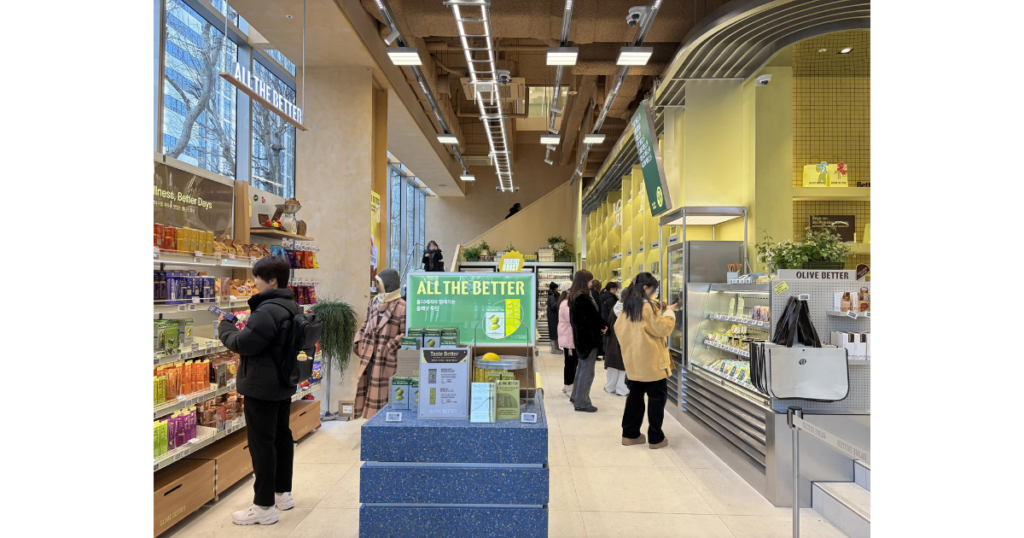
Image: realpacking
The product therefore has to communicate more than what it does. Its packaging, format, flavor, and overall identity can help consumers understand whether it belongs in the kind of routine they are trying to build.
Retail has not created this shift on its own, but it has amplified it. As wellness products reach consumers through more channels, brands have more opportunities to differentiate themselves and more reasons to consider the complete experience surrounding the product.
When Wellness Became Easier to Share
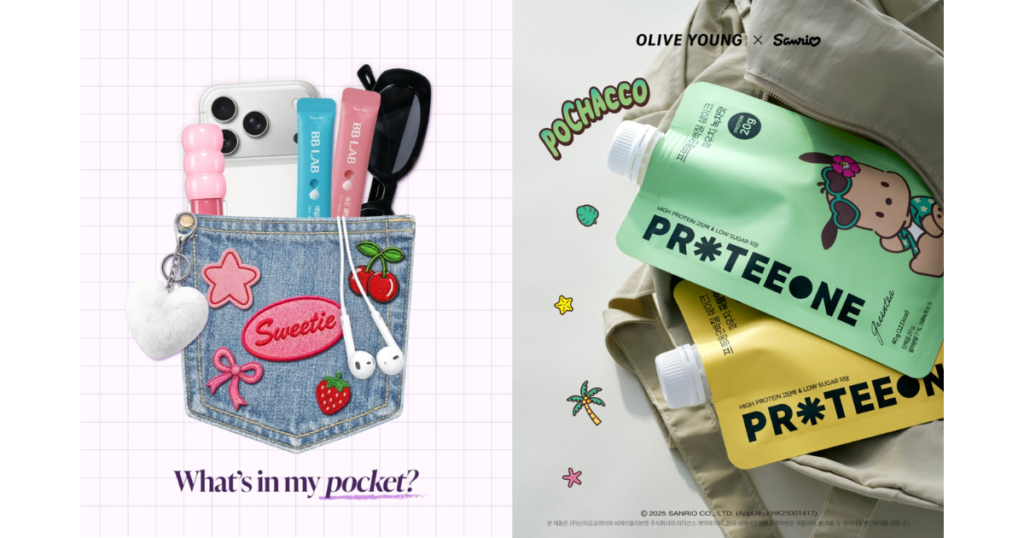
Image: BB Lab, Proteeone
Over the past decade, wellness marketing has moved increasingly toward creators, short-form video, product reviews, routines, and lifestyle content. A supplement or functional drink no longer has to be convincing only at the moment of purchase. It also has to be easy for someone to understand, demonstrate, recommend, or incorporate into content.
This visibility is particularly relevant in Korea because wellness products are already embedded in everyday conversations and routines. Influencers and creators do not always need to introduce the concept of a product before recommending it. Protein, supplements, functional drinks, and similar products are already familiar enough that they can appear naturally in morning routines, fitness content, diet recommendations, or everyday lifestyle posts.
Recommendations also extend beyond paid content. Products can circulate through friends, colleagues, family members, and online communities because consumers are already accustomed to discussing what they take, eat, or use to support a particular goal. That gives new products multiple pathways to discovery before a brand has built significant awareness.
For brands, the implication is important. A product that fits naturally into an existing routine is easier for consumers to demonstrate, recommend, and pass along. Its usefulness creates the reason to talk about it, while its format, flavor, or design can make that recommendation more memorable.
A protein pouch can appear in a morning routine. A portable supplement can become part of a “what’s in my bag” content or office routine. A recovery drink can become something a creator naturally includes in a fitness or wellness video. The product becomes easier to communicate because its use is visually understandable.
This has changed what differentiation can look like. A brand does not necessarily need a completely new health benefit to stand out. A more convenient format, a memorable flavor, a distinctive package, or a product designed around a particular lifestyle can give consumers a reason to notice it.
For wellness brands, that creates a different kind of product challenge. The question is no longer only whether the product works. It is also whether consumers can immediately understand how it fits into their lives.
Market Insight
Watch Korea’s Wellness Packaging
Korea’s wellness market is worth watching because it shows what happens when health-conscious consumer behavior becomes mature enough to support a much broader range of products.
The significance is not simply that Korean consumers buy more supplements, functional foods, or wellness products. It is that a mature consumer base creates room for brands to experiment with how familiar products are presented. Once consumers already understand the purpose of a protein product, supplement, functional drink, or recovery product, differentiation can move into other parts of the consumer experience.
Packaging is one of the clearest signals to watch.
Korean wellness products increasingly show how format and visual identity can help a familiar product reach a different consumer, fit a different routine, or create a different reason to try it. Single-serving pouches can make protein feel more accessible to someone who does not identify as a serious fitness consumer. A portable liquid supplement can turn supplementation into something that can be carried alongside everyday essentials. Unusual flavors can make a familiar functional product feel novel without changing its underlying purpose.
For global brands, this makes Korean wellness interesting not necessarily as a source of new ingredients or health claims, but as a market where established health behaviors create room for experimentation around the product itself.
The next useful signals may therefore come from the details that are easiest to overlook. How small is the package? Can it be carried without preparation? What flavors are being introduced? Who does the visual identity appear to be speaking to? What established wellness behavior is the brand making feel new?
These details can reveal where Korean brands see room for growth in a category that consumers already understand.
What Korean Wellness Signals Next
Korean wellness is still fundamentally about health. What is changing is the range of ways consumers can participate in it.
As the category continues to expand, wellness is likely to become increasingly fragmented around different goals, lifestyles, and moments of everyday life. Protein can serve fitness, dieting, convenience, or general nutrition. Supplements can be positioned around specific concerns or simply become part of a daily routine. Functional foods and drinks can appeal to consumers who want to make small changes to their diet without adopting an entirely new lifestyle.
For global brands, this is perhaps the most useful signal from Korea. A mature wellness market does not necessarily become less interesting once consumers understand the category. It can become more interesting because that familiarity gives brands more room to specialize, experiment, and appeal to different types of consumers.
Korea’s wellness market is still evolving, but its direction is becoming clearer. The next stage is likely to be less about convincing consumers that wellness belongs in everyday life and more about determining what form that participation takes.
Sources
- CJ Olive Young — “2026 트렌드 키워드 리포트” (functional beverage growth, wellness category, retail category expansion): https://corp.oliveyoung.com/ko/trend/insight-studio/8
- CJ Olive Young — “2026 트렌드 키워드” (Functional wellness growth and the broader wellness trend): CJ Olive Young — 2026 Trend Keywords
- CJ Olive Young — “올리브베러 1호점 개점”: CJ Olive Young — Olive Better Launch
- CJ Olive Young — “올리브베러 론칭 100일”: CJ Olive Young — Olive Better 100 Days
- CJ Olive Young — “헬스+ 출시”: CJ Olive Young — Health+ Launch
- U.S. Commercial Service — South Korea Health Functional Food: U.S. Commercial Service — South Korea Health Functional Food Market
- Seoul Economic Daily — “Korean Pharma Firms Expand Health Supplement Sales Beyond Pharmacies”: Seoul Economic Daily — Korean Pharma Firms Expand Health Supplement Sales Beyond Pharmacies
- Ownist — Triple Collagen Orange: Ownist — Triple Collagen Orange
- Tiger Morning — Lemon Shot Green Cleanse: Tiger Morning — Lemon Shot Green Cleanse
- Siseon — “Korean Summer Products That Actually Solve Hot Weather Problems”: Siseon — Korean Summer Products That Actually Solve Hot Weather Problems
- Siseon — “Korean Head Spas Are Selling More Than Scalp Care”: Siseon — Korean Head Spas Are Selling More Than Scalp Care