

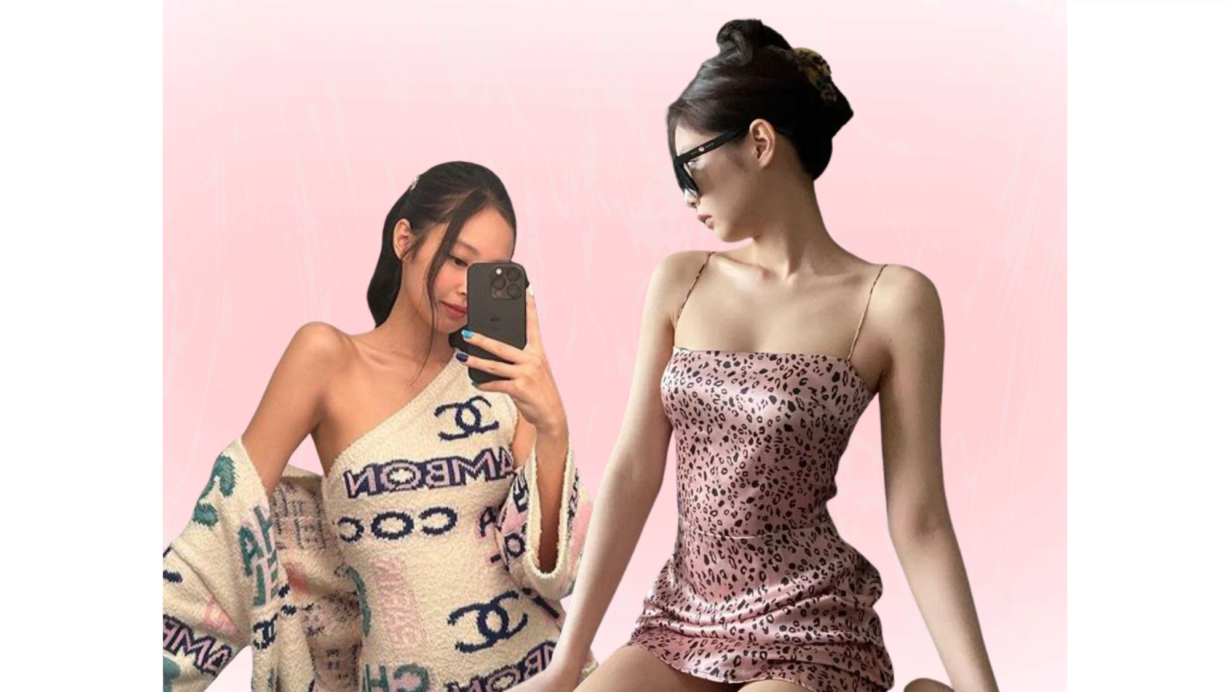
Not long ago, a camisole was considered underwear in Korea. Wearing one outside was a statement, and not always a comfortable one. Tube tops, tanks, and off-shoulder cuts were fashion-forward choices that drew attention partly because they were still slightly transgressive.
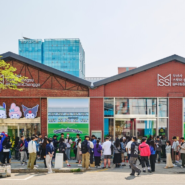
That modesty standard has broken down. Walk through Seongsu or Hongdae on a warm afternoon and strapless tops sit alongside everyday tees as standard summer uniforms. Exposed shoulders has transitioned from a social statement to a completely neutral wardrobe baseline.
And once a body part becomes visible on a daily basis, Korean beauty culture does what it always does: it gets to work.
What’s Happening
The normalization of bare-shoulder fashion in Korea didn’t happen overnight. It’s been building since roughly the mid-2010s, when off-shoulder tops and camisoles started moving from idol stage wear into everyday wardrobes. K-pop aesthetics gave Korean women a sustained visual reference for what bare shoulders could look like, and slowly the look lost its edge.
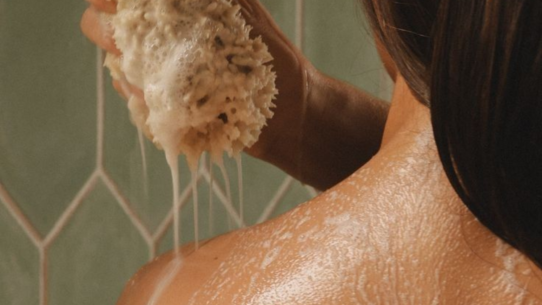
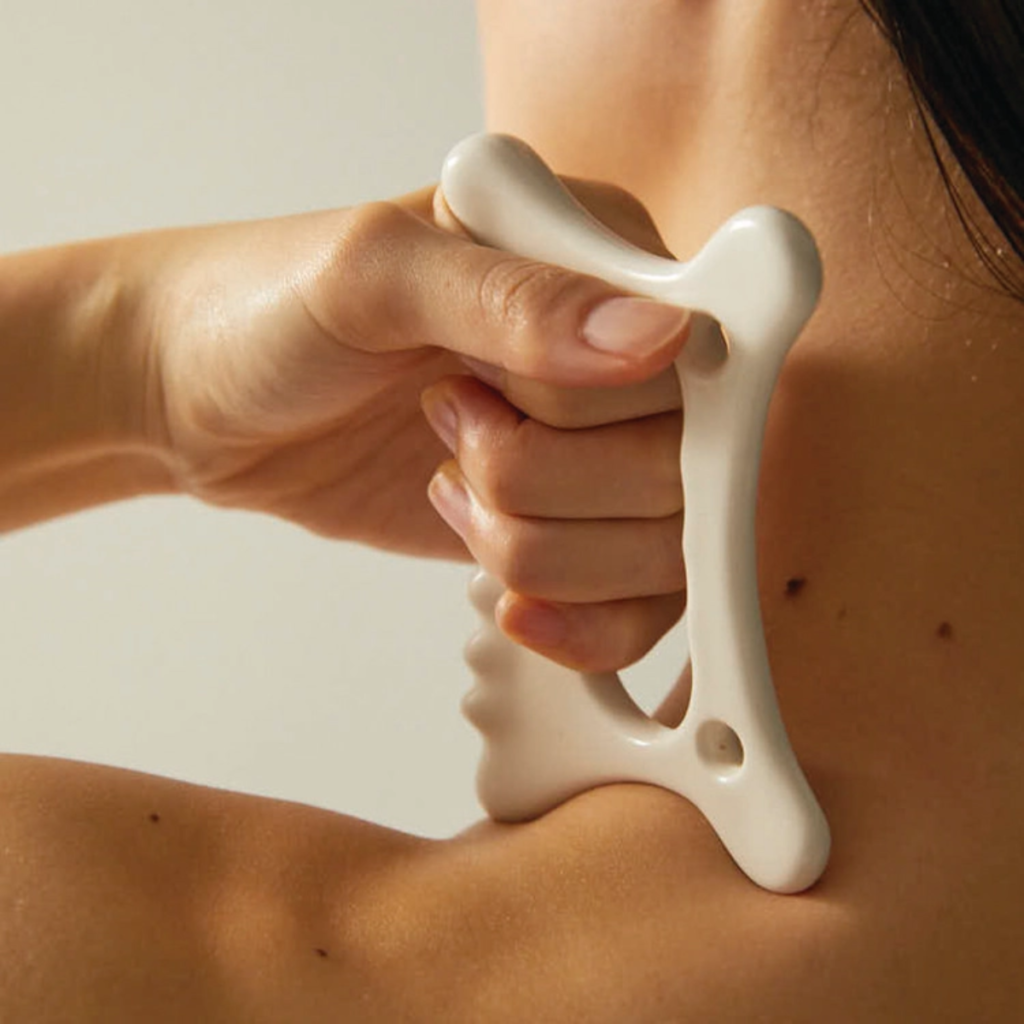
In response to this, a distinct body care behavior has formed around the shoulder, collarbone, and upper arm area. On the at-home end, gua sha tutorials specifically targeting the shoulder and collarbone have accumulated significant traction on YouTube and Korean social media. ITZY member Lia published a video titled “Lia’s Square Shoulder Care Routine” walking through her gua sha technique along the trapezius, explaining that contracted shoulder muscles cause the collarbone to become less visible and the shoulder to round inward. The routine, practiced before performances, has been widely replicated by fans and general viewers alike.
The target aesthetic here is specific. Korean beauty culture has developed a term for it: 직각 어깨 (jikgak-eokkae), which translates roughly as “right-angle shoulders” or “square shoulders.” It refers to a shoulder line that runs straight across rather than sloping downward, a posture-related look that makes tube tops and strapless garments sit better and makes the shoulders more defined.
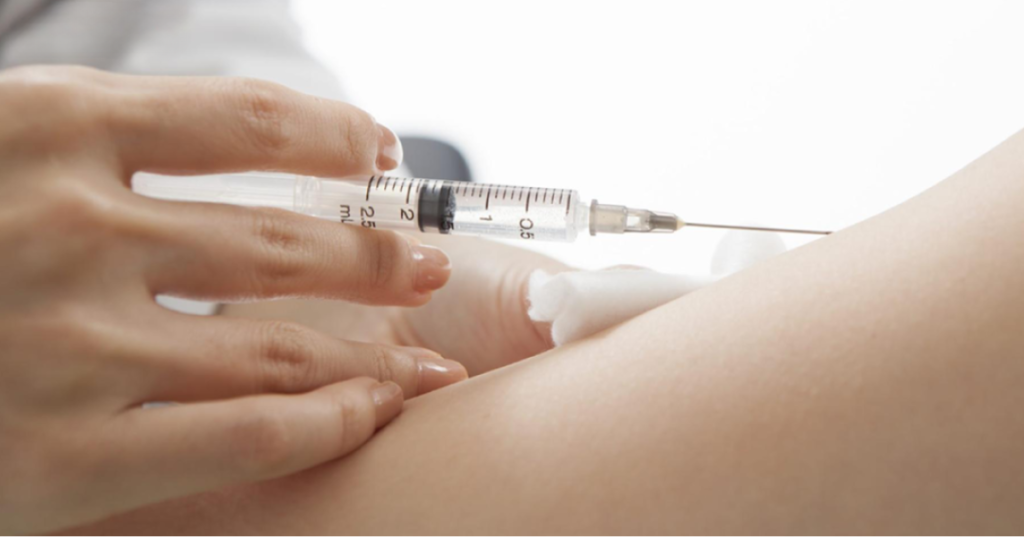
On the clinic side, aesthetic treatments have started to follow the same direction. Fat-dissolving injectables, which Korean aesthetic medicine has long used on the face and chin, are increasingly being requested for the upper arms and bra line area. Body-focused lifting treatments, historically concentrated on the face and neck, are being marketed for the upper body. Korean medical aesthetics publications have noted the extension of non-invasive body contouring into these areas as part of a broader shift toward body-specific treatment demand.
Why It’s Happening
The simplest driver is visibility. When a body part is consistently on display, you think about it more. Korean women are wearing camisoles and tube tops not for special occasions but for regular days, which means the shoulder and upper arms are now an everyday concern rather than a seasonal one.
But there’s a cultural underpinning worth understanding too.
Korean beauty philosophy has always been zone-specific. The face gets its serum, its essence, and its targeted treatments. The body has historically been less examined, but that’s been changing as K-beauty’s meticulous approach to skin gradually extends downward. The shoulder and arm area is the newest addition to the body map that Korean women maintain.
The square shoulders ideal also connects to something specific in how Korean aesthetics think about posture and proportion. The ideal silhouette is not defined by heavy muscle definition or dramatic thinness. Korean women are pursuing a clean, upright frame that elevates a simple camisole into an intentional style statement. That’s an achievable and highly visual goal, which makes it easy to pursue through gua sha at home or with help from a clinic.
The creator economy has amplified this considerably. When an idol publishes a collarbone gua sha routine, it doesn’t just educate. It creates aspiration and normalizes the behavior at the same time. Home tutorials on arm fat massage and shoulder lymph drainage have also spread widely on YouTube and Naver, with viewers adopting the routines as part of their regular self-care.
Why It Matters
The rise of shoulder and arm care is creating opportunities beyond traditional body care. As more Korean consumers treat the body with the same attention once reserved for the face, brands are expanding into categories that have historically received little focus, including dedicated body sunscreens designed for everyday wear.
A similar shift is emerging in body cosmetics. While still a niche category, products such as body shimmers are beginning to appear as brands respond to growing demand for healthy, radiant skin beyond the face. Together, these developments suggest that body care is becoming Korean beauty’s next area of innovation.
What We’re Watching Next
The square shoulders trend is still in its early content phase, which means the product and treatment infrastructure is only beginning to catch up. Watch for dedicated shoulder and trapezius tools and products from Korean beauty brands, and for aesthetic clinics to begin marketing arm and shoulder-specific treatment packages more explicitly.
Looking at Your Brand Strategy
Uncovering the hidden signals in Korean consumer culture requires looking past surface-level trends. If you are exploring how Korean market shifts, consumer behavior, and category movements can open new opportunities for your business, Siseon works with global teams to turn these observations into strategic advantage.
To discuss custom research, field intelligence, or strategic advisory for your team, connect with us directly at hello@siseonhq.com or fill out the contact form.
Sources
- Namu Wiki — “민소매” and “캐미솔” entries (cultural history of sleeveless and camisole fashion in Korea, shifting perception from underwear to outerwear): https://namu.wiki/w/%EB%AF%BC%EC%86%8C%EB%A7%A4 and https://namu.wiki/w/%EC%BA%90%EB%AF%B8%EC%86%94
- Komedi (코메디닷컴) — “잇지 리아, 직접 밝힌 ‘직각 어깨’ 만드는 법은?” (ITZY Ria’s gua sha shoulder routine, collarbone massage technique): https://kormedi.com/2821814/
- GQ Korea — “팔 아래로 출렁이는 팔뚝살 주물러서 제거하자, 마사지법 3” (arm fat massage tutorial, lymph circulation method for upper arms): https://www.gqkorea.co.kr/2024/05/24
- Signature Medical Group — “울쎄라부터 덴서티, 소프웨이브까지 — 2025 핫한 리프팅 시술 비교” (body lifting treatment landscape, non-invasive expansion beyond the face): https://www.signaturemg.co.kr/news_view.php?idx=3526
- Elle Korea — “2025년 뷰티 트렌드 결산” (home care device expansion, democratization of clinic-level treatments): https://www.elle.co.kr/article/1892801
- Vogue Korea — “2025년 뜨는 뷰티 트렌드 키워드” (lifting and tightening demand growth, 20–30s entering clinic culture): https://www.wkorea.com/2025/01/31/2025년-뜨는-뷰티-트렌드-키워드