





Korea has spent years building one of the world’s most accessible beauty ecosystems. Whether it’s skincare, makeup, haircare, fashion, or aesthetic treatments, consumers can now find products and services at nearly every price point, often delivered the next day and supported by an endless stream of creator tutorials explaining everything from foundational techniques to the latest trends. Looking polished still requires intention, but it no longer requires exceptional access.
Once appearance becomes easier to achieve, consumers naturally begin looking for new ways to express individuality. Increasingly, fragrance has become one of those ways—not because skincare or makeup matter less, but because scent communicates something visible products cannot.
The numbers suggest that this shift is already underway. Korea’s fragrance market grew by more than 30% between 2019 and 2023, reaching approximately $580 million, and is projected to break $1.2 billion over the next decade. Much of that growth has come from niche fragrance brands, suggesting consumers aren’t simply buying more perfume—they’re actively searching for scents that feel more personal and distinctive.
Fragrance has become more than another beauty category. It offers a window into how Korean consumers think about identity once appearance itself becomes increasingly standardized.
From Luxury Purchase to Everyday Category
Not long ago, buying perfume in Korea meant going to a department store, standing at a counter lit for maximum discomfort, and choosing between the same international houses like Chanel, YSL, and Acqua di Parma, that anchored fragrance departments everywhere else in the world. Buying perfume wasn’t something people casually did. It was something you planned for.
That began to change for several reasons, mainly through distribution. Fragrance is no longer confined to department store perfume counters or duty-free shopping. Korean consumers now encounter fragrance through the retail ecosystems they already use every day. Olive Young continues expanding its fragrance assortment alongside skincare, makeup, and wellness. Naver Shopping allows consumers to compare hundreds of reviews before purchasing. Kakao Gift has made sending perfume as effortless as sending coffee. Creator-led content on YouTube, Instagram, and other platforms also lowered the knowledge barrier, introducing consumers to fragrance notes, scent families, and new launches in ways that felt approachable rather than intimidating.
Fragrance gradually stopped feeling like an occasional luxury purchase. It became something consumers could browse, compare, gift, and discover as part of everyday life. Rather than committing to a single signature scent for years, many Korean consumers now approach fragrance with the same curiosity they bring to skincare or fashion, continuously discovering new brands, seasonal releases, and different scent profiles.
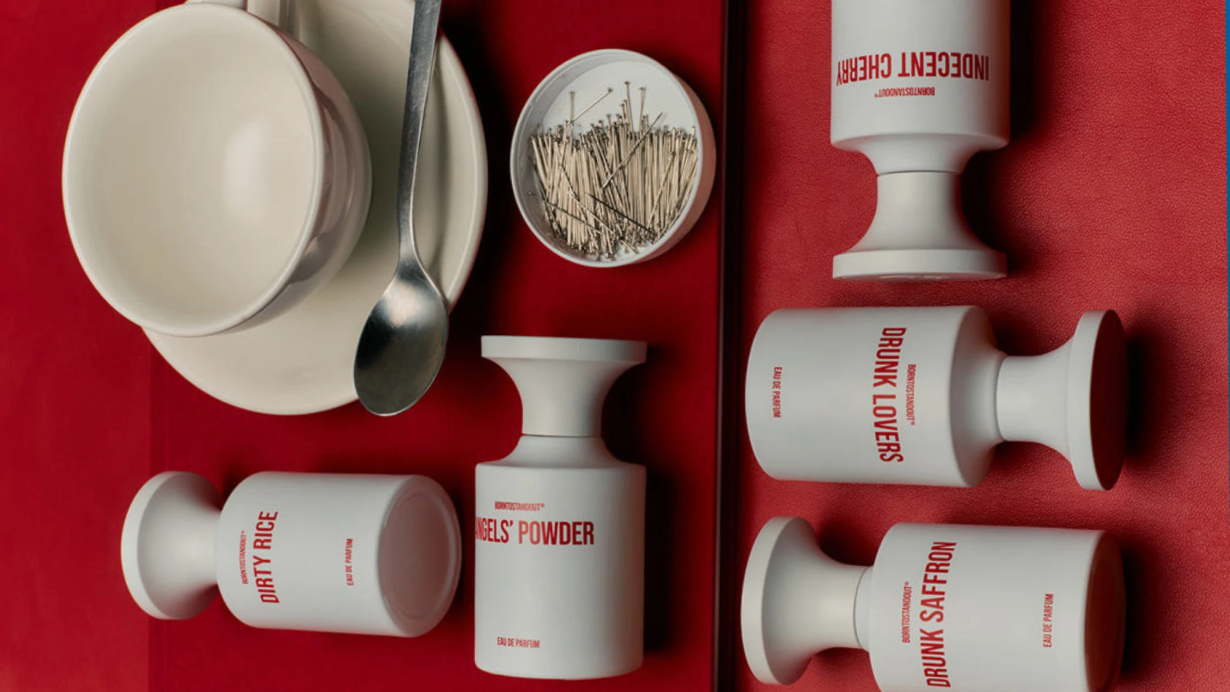
Domestic brands arriving at accessible price points also brought new consumers into the category. Korean fragrance brands now span a wide range, from Forment and Tenui at the accessible-premium end to Tamburins and Borntostandout positioned as genuinely aspirational. Shinsegae International reported that its online fragrance sales grew over 68% year-on-year in the beginning of 2026, driven partly by its portfolio of niche international brands and partly by rising consumer interest in the category generally.
The market didn’t simply become larger. Consumers began thinking about fragrance differently. It became something they explored continuously rather than a purchase they revisited every few years.
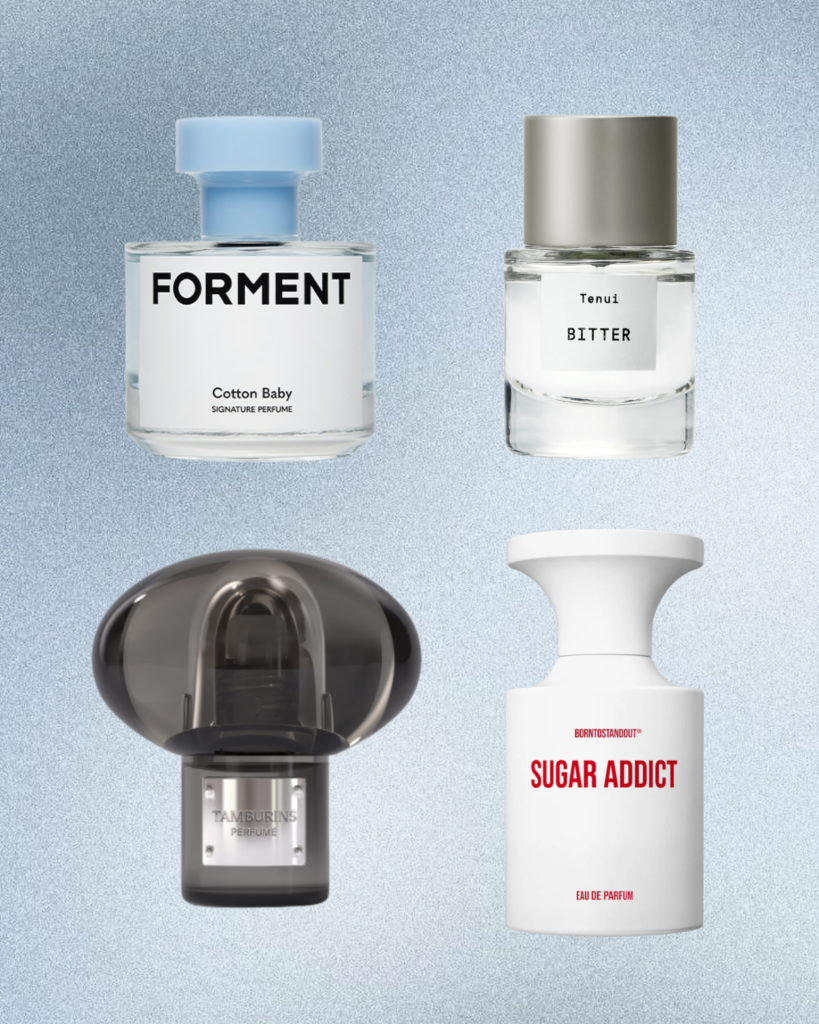
Image: Forment, Tenui, Tamburins, Borntostandout
How Tamburins Reshaped What a Korean Fragrance Brand Could Be
Among the domestic brands that have shaped the current landscape, Tamburins occupies a specific and influential position.
Tamburins launched in 2017 as a second brand from iiiCombined, the Korean company that also operates Gentle Monster eyewear. This connection is important because Gentle Monster had already established a model for how to build an aspirational Korean brand without competing on price. Its flagship stores were gallery spaces that rotated artistic installations with each new collection, making a visit feel like an event rather than a shopping trip. Tamburins carried that sensibility directly into beauty.
The brand’s flagship store opened before the brand officially launched, a showroom that gave visitors the feeling of entering a gallery rather than a cosmetics counter. Every product felt like part of a larger creative narrative. Buying a hand cream at Tamburins felt less like a functional purchase and more like acquiring a piece of the brand’s world.
The Chain Hand cream became the product through which many consumers first encountered what a domestic Korean fragrance experience could feel like. It was not cheap for a hand cream, and it was not pretending to be. The formulation was distinctly scented in a way Korean skincare typically avoids, while the packaging reflected the brand’s carefully developed visual identity. It felt considered, premium, and unmistakably different from what Korean consumers had come to expect from domestic beauty brands. It demonstrated that a consumer existed who was willing to pay for a domestic brand’s interpretation of luxury, not just the imported version.
Tamburins expanded into perfumes, solid perfumes, room sprays, mood perfumes, and most recently, in April 2026, a hair collection. In September 2022, a campaign with BLACKPINK’s Jennie introduced a new product line and a new pop-up store that generated significant consumer attention. By late 2025, the brand had opened its first Southeast Asian flagship in Bangkok’s ICONSIAM, suggesting that its appeal is not limited to Korean consumers alone.
Tamburins proved that a domestic Korean fragrance brand didn’t need to imitate European luxury to command premium prices. Consumers weren’t only buying scent, they were buying a point of view. Once that became commercially viable, other Korean brands had permission to build distinctive fragrance worlds of their own. Many of today’s Korean fragrance brands start from the same assumption that consumers aren’t only choosing how they want to smell, but also what kind of world they want to belong to.
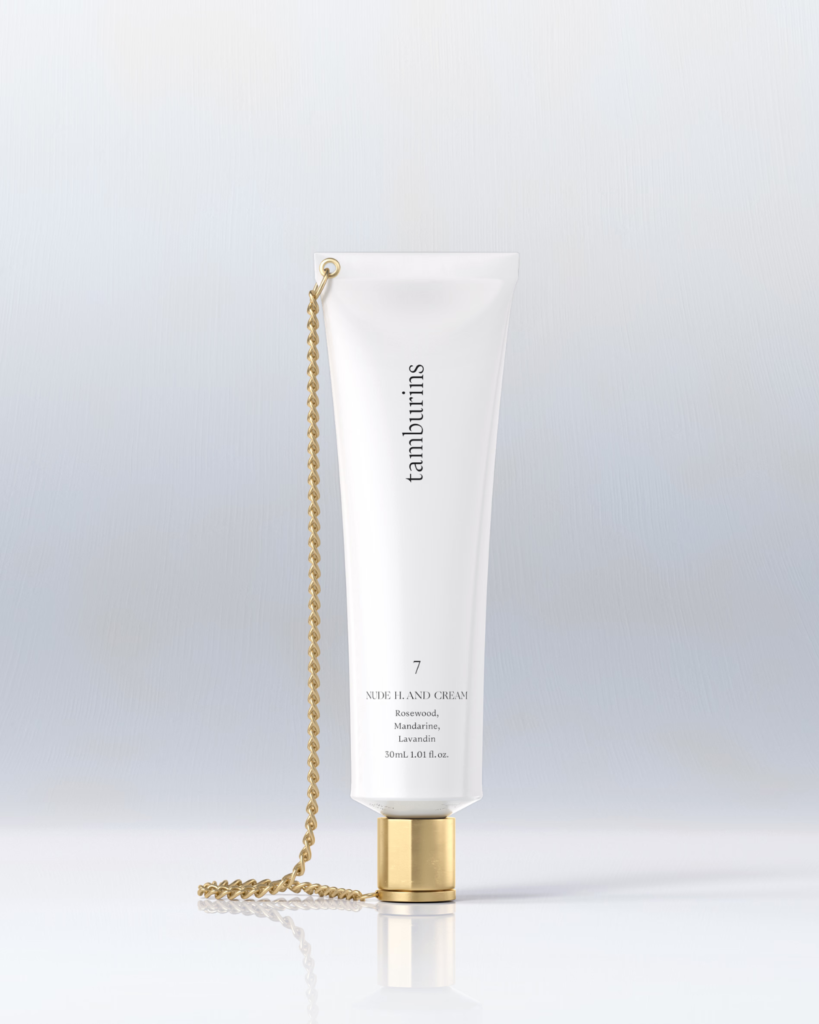
Image: Tamburins Chain Hand Cream
Fragrance Has Expanded Beyond Perfume
One of the clearest signs that fragrance has become a meaningful lifestyle category in Korea is that consumers are no longer encountering it only through perfume bottles.
Domestic fragrance brands increasingly build entire product ecosystems around a scent rather than treating perfume as the final product. The same fragrance can now appear as a hand cream, body lotion, body wash, room spray, reed diffuser, fabric spray, candle, or hair perfume. Consumers aren’t simply choosing a scent to wear. They’re choosing how that scent becomes part of different moments throughout their day.
Fragrance is becoming woven into everyday routines. A scent no longer belongs only on the body. It can define a home, accompany travel, or become part of an evening ritual just as naturally as skincare.
Korea’s physical environment has also shaped what consumers expect from fragrance itself. Most people move through densely populated cities using subways, buses, elevators, cafés, and offices where personal space is limited. In these environments, fragrances that project aggressively can quickly become intrusive.
That has created demand for scents that sit closer to the skin. They tend to be cleaner, softer, and more restrained than many traditional luxury perfumes developed for different social environments. Korean fragrance brands recognized this expectation early, building collections designed for everyday wear in close proximity rather than dramatic projection.
That expectation has shaped the market itself. The fragrances succeeding in Korea aren’t necessarily the loudest or longest-lasting, but rather the ones that fit naturally into everyday life.
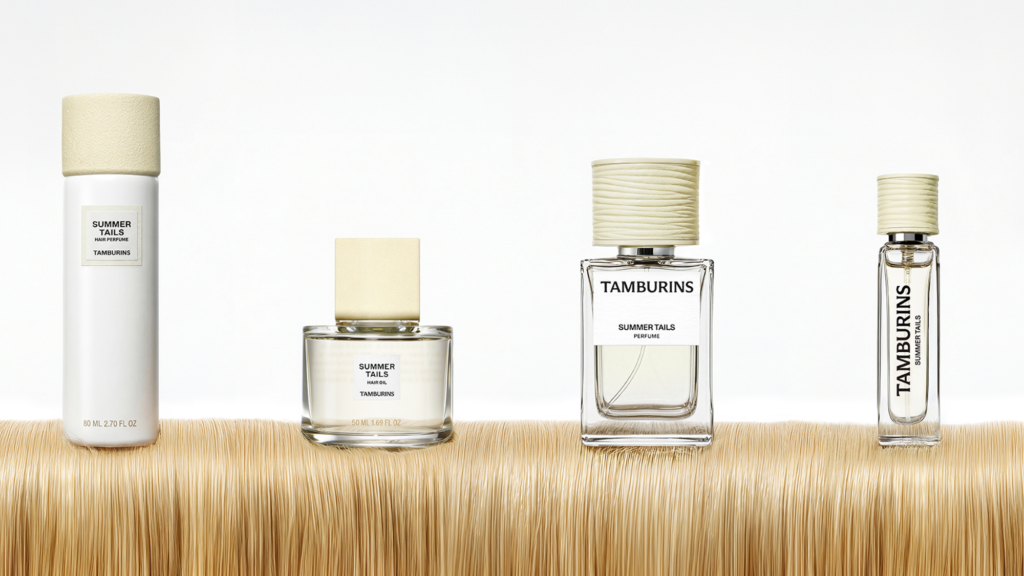
Image: Tamburins
Scent as Self-Expression
Better distribution and stronger domestic brands explain why more Koreans are buying fragrance. They don’t fully explain why the category has become so culturally meaningful.
The deeper shift is that fragrance offers a form of personal expression that isn’t immediately visible, making it something increasingly difficult to find elsewhere.
In a market where skincare, makeup, fashion, and grooming have become highly accessible, looking put together is no longer unusual. Fragrance allows consumers to communicate something appearance alone cannot, making that subtlety precisely its appeal.
The consumer wearing a considered perfume is not displaying a choice in the way a bag or a coat displays one. They are offering an experience to the people they encounter, and withholding it from people they don’t. That’s a different relationship between consumer and identity than most visible categories allow, and it speaks to something real about what younger Korean consumers are currently seeking. They want ways to communicate personality that don’t rely on what others can immediately see.
Korean creators have built genuine communities around this dimension of fragrance. YouTube channels and social accounts dedicated to fragrance reviews have developed audiences that engage with scent as a personal language, exploring what a particular note communicates, how a fragrance develops throughout the day, and what distinguishes a scent that works for its wearer from one that simply smells good in a bottle.
Unlike skincare tutorials that teach consumers what to do, fragrance creators help people discover what they personally enjoy. That keeps consumers exploring long after they’ve bought their first bottle. That kind of content-driven discovery sustains a category over time because the consumer doesn’t simply find a fragrance and stop. They continue to refine, to add, and to choose as an expression of who they are at a given moment.
Consumers increasingly value products that allow them to communicate personality rather than simply improve appearance. Fragrance is one of the definitive examples of a category built precisely to do that. For brands operating in any category, not just beauty, that shift in consumer demand presents a vital insight worth acting on.
Many Korean fragrance enthusiasts no longer own just one signature scent. Building a collection has become part of exploring different moods, seasons, and personal identities.
What Fragrance Reveals About Korean Consumers
Fragrance offers a surprisingly useful window into where Korean consumers are headed next.
Emotional value matters more.
A bottle of perfume doesn’t solve a practical problem in the way sunscreen or moisturizer does. It creates atmosphere, memory, confidence, or comfort. During periods of economic uncertainty, categories that deliver meaningful emotional experiences without requiring the commitment of a major luxury purchase often remain surprisingly resilient. Fragrance fits that role well.
Domestic expertise has become aspirational.
Choosing Tamburins, Nonfiction, or Granhand over a traditional European fragrance house is no longer perceived as settling for a local alternative. Increasingly, domestic brands are chosen because consumers believe they better understand Korean tastes, lifestyles, and aesthetic preferences. This reflects a broader shift visible across beauty, fashion, and wellness, where local brands are competing on creative vision rather than price alone.
Consumers are designing experiences, not buying products.
Fragrance today rarely exists as an isolated purchase. It becomes part of a home through candles or room sprays, part of travel through portable formats, or part of daily routines through hand creams and body care. Consumers are building environments that reflect how they want to feel, not simply how they want to look.
These shifts reveal something larger than the growth of a single category. They suggest Korean consumers increasingly reward brands that create emotional resonance, fit naturally into everyday life, and understand that identity is expressed through experiences as much as products.
Beyond the Bottle
Rather than a story about perfume, Korea’s fragrance market is at first glance a story about what consumers begin looking for once the fundamentals become easy to achieve. The changing market reveals what consumers begin seeking once appearance is no longer enough to differentiate them.
As those barriers have fallen, beauty has become less about achieving a certain standard and more about expressing an individual point of view.
Fragrance answers a different need than skincare or makeup by focusing on mood, memory, atmosphere, and personality rather than correction or enhancement. In allowing consumers to communicate an invisible yet deeply personal identity, the Korean fragrance market offers insights that extend well beyond Korea.
Rather than expecting every market to adopt the same brands or scent preferences, the key lesson is that consumers fluent in one category will inevitably seek new forms of expression elsewhere. Korea simply makes that transition visible earlier than many markets because consumer expectations evolve quickly and brands respond just as fast.
Rather than recreating Korean fragrance brands or scent preferences, businesses should pay attention to the shift behind them—examining what happens when appearance becomes accessible, what makes a premium product feel worth paying for, and how consumers express what traditional products fail to communicate.
Looking at Your Brand Strategy
Uncovering the hidden signals in Korean consumer culture requires looking past surface-level trends. If you are exploring how Korean market shifts, consumer behavior, and category movements can open new opportunities for your business, Siseon works with global teams to turn these observations into strategic advantage.
To discuss custom research, field intelligence, or strategic advisory for your team, connect with us directly at hello@siseonhq.com or fill out the contact form.
Sources
- Euromonitor / 뷰티누리 — Korean domestic fragrance market ₩793 billion in 2023, ₩603.5 billion in 2018, ₩1 trillion projected for 2025: https://www.beautynury.com/news/view/101588/cat/10
- 이투데이 (eToday) — Korean niche fragrance market 30% growth, niche accounts for 90% of market, Shinsegae International online fragrance +60.6% YoY: https://www.etoday.co.kr/news/view/2316257
- H&I Global Research / IMARC Group — Korean fragrance market $754.71M in 2024, projected $1.17B by 2033 at 5.01% CAGR: https://www.globalresearch.co.kr/insight/perfume-market-imarc/
- 뷰티누리 x Trendier — Olive Young fragrance brands +6.74%, products +3.45%, reviews +4% (Oct 2024 to Mar 2025); Naver fragrance products +9.49%: https://www.beautynury.com/news/view/107890/cat/10
- 매일일보 — Shinsegae International fragrance portfolio (Diptyque, Byredo, Memo Paris), MZ fragrance demand: https://www.m-i.kr/news/articleView.html?idxno=1080663
- Tamburins (나무위키) — brand history, 2017 founding by iiiCombined (Gentle Monster parent), September 2022 Jennie campaign, December 2025 Bangkok ICONSIAM flagship, April 2026 hair collection launch: https://namu.wiki/w/%ED%83%AC%EB%B2%84%EB%A6%B0%EC%A6%88
- Brunch.co.kr — Tamburins brand analysis, gallery-format flagship stores, “products as content” philosophy, Jennie collaboration: https://brunch.co.kr/@smalltalkk/24
- Tamburins official — Shell Perfume Hand product description, brand positioning (“explores anomalous beauty”): https://www.tamburins.com/en/
- 디지털투데이 — Small luxury trend, MZ niche fragrance demand, fashion industry entry into fragrance: https://www.digitaltoday.co.kr/news/articleView.html?idxno=517934
- Korean fragrance content creator example — YouTube fragrance review/discovery channel illustrating growing consumer expertise community: https://www.youtube.com/watch?v=LTm4j6UxXkQ