

Korea’s Trend Radar Expands
Korean consumers have long looked outward for inspiration. Japanese lifestyle labels, European luxury houses, and American beauty brands historically set the standard for what filled Korea’s wardrobes, retail concepts, and social media. But the freshest ideas hitting Korean feeds right now aren’t coming from the usual fashion capitals.
Recently, edgy Vietnamese fashion labels are suddenly dominating K-pop music videos and magazine covers. Thai design houses are landing high-profile celebrity collabs and landing space in Seoul’s coolest concept stores. Meanwhile, boutique body care, niche perfumes, and home goods picked up on trips to Ho Chi Minh City or Bangkok are quietly reshaping Korean beauty routines.
The global cultural pipeline has fundamentally changed. Korea is no longer just exporting its own culture—it now operates as Asia’s ultimate curator, where regional ideas are discovered, refined, and validated for the rest of the world.
K-Pop Looks to Southeast Asia
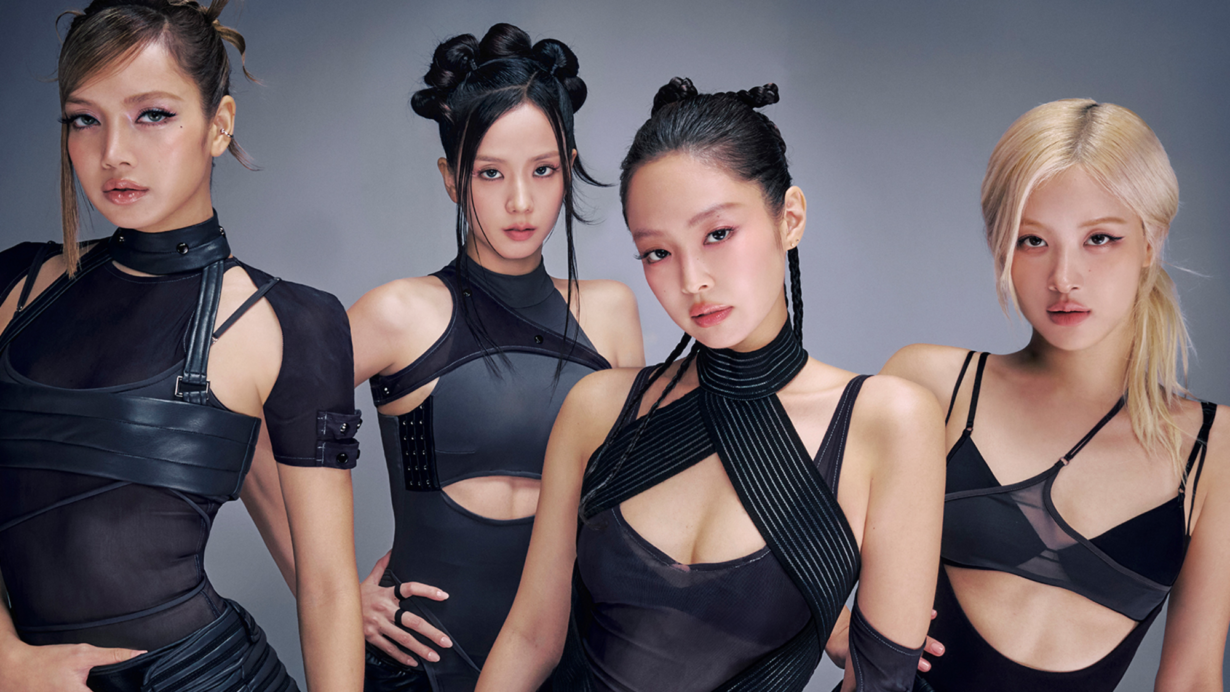
In Korea’s fast-moving style economy, there’s no faster way to blow up than landing on a K-pop idol. A single outfit worn during a music video or airport arrival can send shockwaves through an entire ecosystem of stylists, moodboard accounts, magazine editors, and avid shoppers.
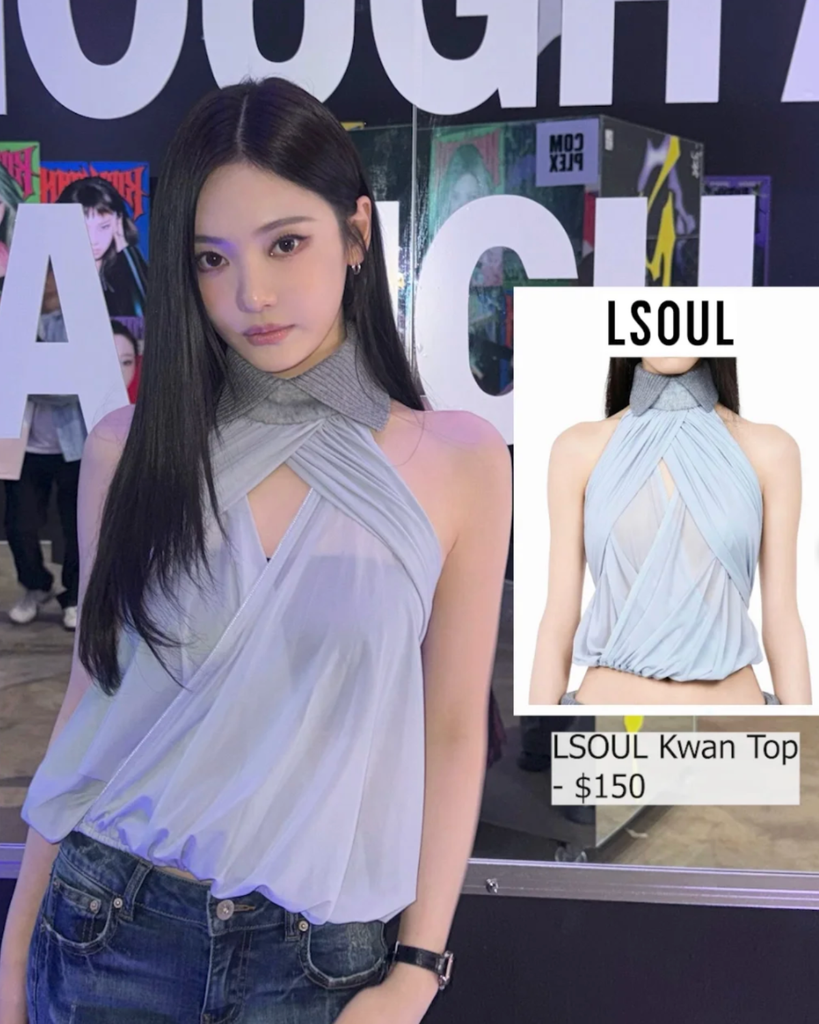
Image: @look.steal.inc
Vietnamese fashion labels are currently reaping the rewards of this viral pipeline.
Powerhouse brands like FENG and LSOUL went from niche favorites to global search terms after getting co-signed by BLACKPINK members and fellow mega-idols. At the same time, rising indie labels like Latui Atelier, Huelley Huelley, and Pradies are expanding the footprint of Vietnam’s contemporary fashion scene into Korean editorials across W Korea, Harper’s Bazaar Korea, and Cosmopolitan Korea.

Image: aespa
The influence extends far beyond a single outfit. Celebrity styling functions as an endorsement of a broader aesthetic, legitimizing new silhouettes, hair and makeup techniques, and accessory choices. Because Korean consumers heavily rely on celebrity signals to evaluate emerging trends, social platforms accelerate the transition from stage concept to commercial retail demand.
Thai labels are scaling through identical channels with distinct positioning. BLACKPINK Lisa’s high-visibility partnership with Thai streetwear brand IWANNABANGKOK via her LLOUD GYM project expanded the label’s international reach, while her endorsement of PIPATCHARA showcased premium Thai craft and sustainable material design.
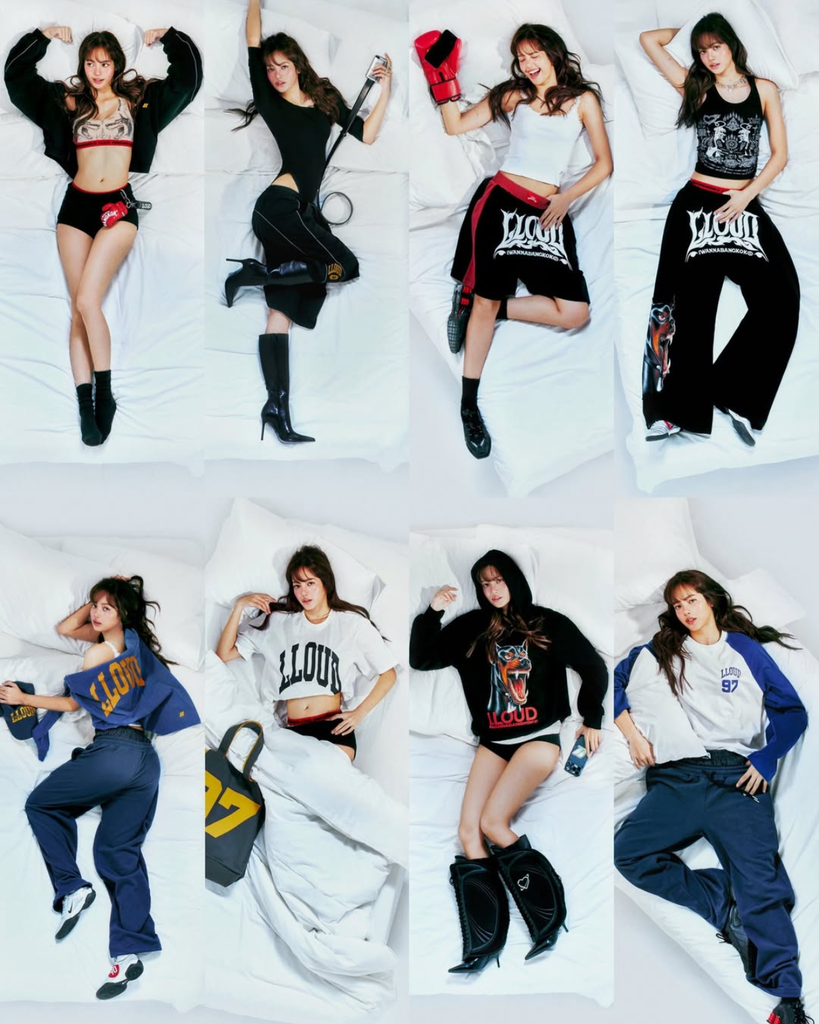
Image: @wearelloud
Ultimately, the impact goes deeper than isolated viral moments. Repeated visibility across music videos, magazine spreads, and style feeds transforms unfamiliar regional labels into legitimate fashion brands in the eyes of Korean consumers—shifting perception from travel souvenirs to aspirational wardrobe staples.
Travel Becomes Discovery
There is a distinct structural reason why Vietnam and Thailand enjoy a unique advantage in Korea. Korean consumers already travel to both destinations in massive numbers.
Vietnam pulled in an incredible 4.3 million Korean travelers in 2025, claiming the spot as its second-biggest tourist market. Meanwhile, Thailand recorded 1.56 million Korean visits, keeping Korea firmly in its top five international travel markets.
This travel volume creates a direct consumer discovery pipeline that few other foreign markets can match.
Korean travelers have perfected the art of destination shopping itineraries. Just as a trip to Tokyo calls for a midnight run to Don Quijote or a sweep of neighborhood convenience stores, trips to Bangkok and Ho Chi Minh City now come with their own non-negotiable shopping wishlists.
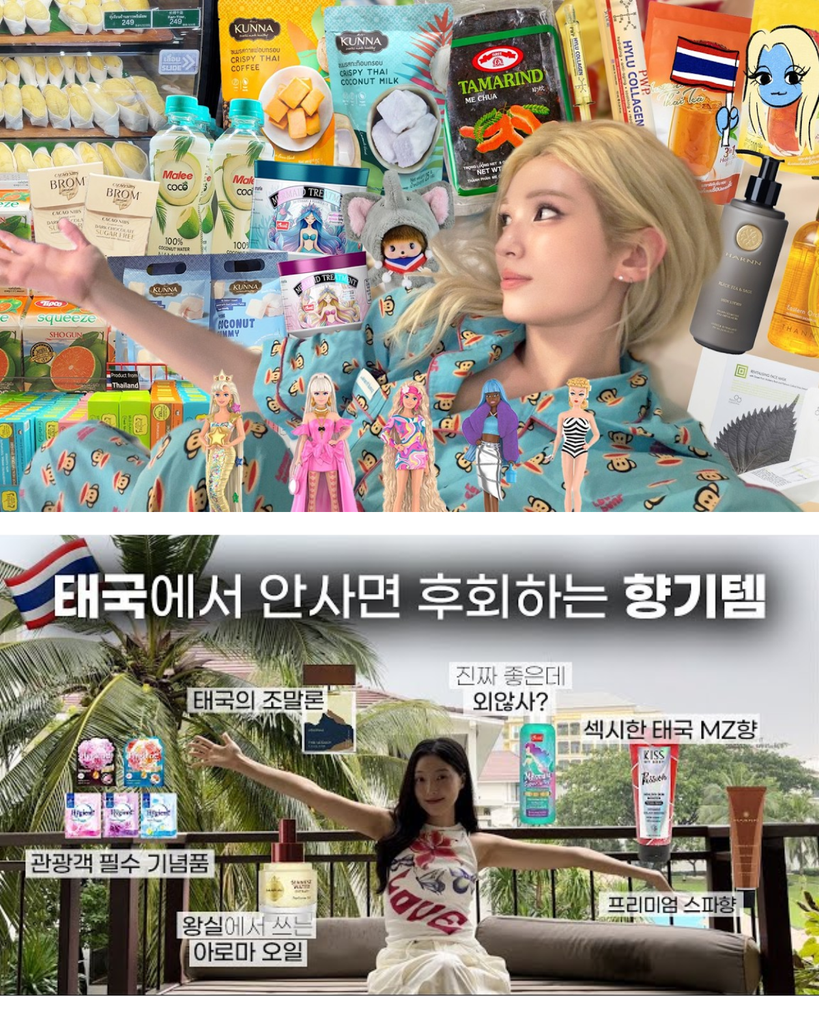
Image: IMOS Youtube Channel, 미지의세계 MIJI YouTube Channel
Search feeds in Korea are packed with ultra-specific travel guides detailing niche Thai fragrance houses, viral Vietnamese fashion finds, and secret beauty haul spots. Creators hit local boutiques, film haul reveals, test the products on camera, and tell their followers exactly what is worth packing into a suitcase. Viewers save those clips and follow the exact same shopping routes for their next trip.
This travel-driven media ecosystem helps to push an actionable retail guide for the next wave of visitors, allowing local brands to achieve consumer awareness, product trial, and brand equity in Korea prior to executing formal international distribution or physical retail expansion.
From Visibility to Discoverability
Spotting an idol in an overseas label is one thing. Actually buying that piece in Korea without paying import fees is where the evolution from concept to accessibility comes to life.
Enter SOAP, the trendsetting Seoul-based curated platform discovering emerging womenswear labels across the Asia-Pacific. Thai favorite Girlfriend Comfort now lists SOAP as an official stockist right alongside its home boutiques in Bangkok, giving Seoul’s stylish shoppers direct local access.
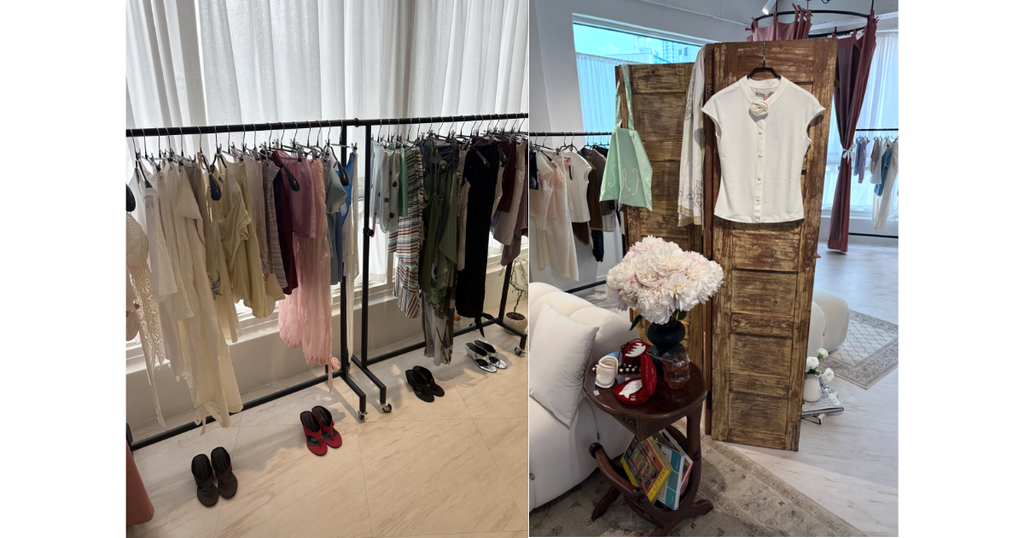
Image: @soap.the.shop
This retail presence changes how tangible non-regional trends can become. While a K-pop idol wearing a regional label builds passive brand awareness, a localized select shop stocking the inventory creates active discoverability and a direct path to purchase. Consumers no longer have to depend on international shipping or future travel to Bangkok.
Korea’s media endorsements are also making sure everyone knows where to shop. Cosmopolitan Korea ran a July 2026 feature breaking down Southeast Asian fashion brands co-signed by K-pop group, aespa, featuring rising brands like FENG, LSOUL, and Girlfriend Comfort while steering readers straight to SOAP.
The integration of celebrities, editorial validation, and localized stockists creates a scalable distribution model that embeds Southeast Asian fashion houses into Korea’s core retail ecosystem.
From Fashion to Fragrance
Beyond regional fashion brands, the retail pipeline is replicating across fragrance, body care, and wellness categories.
PAÑPURI brings modern luxury to ancient Thai wellness rituals with body oils and soothing room scents. PRIN pushes the boundaries of niche perfumery with wild, complex, and uninhibited scent profiles. In Vietnam, d’Annam bottles local nostalgia, turning daily cultural staples like lotus tea and Saigon streets into elegant fine fragrances.
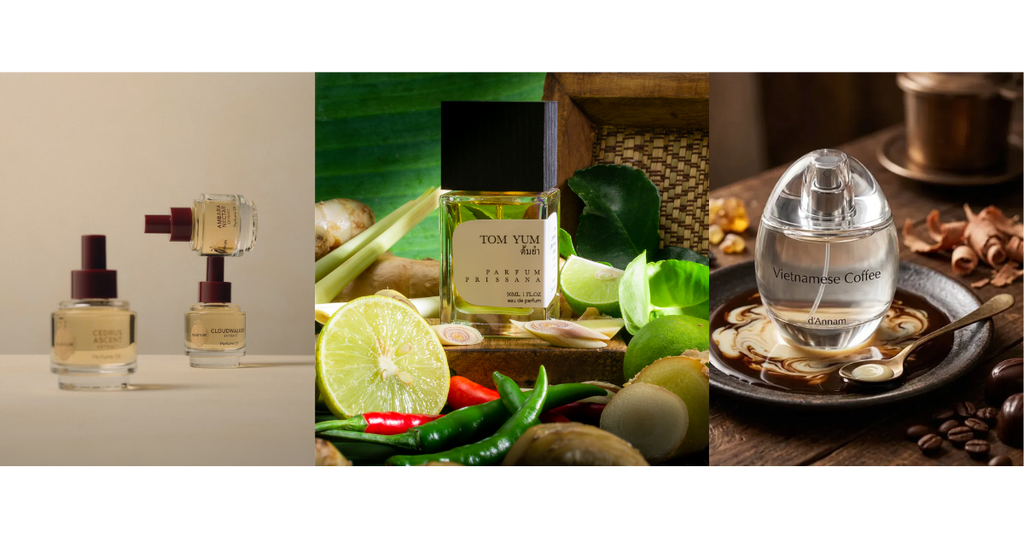
Image: PAÑPURI, PRIN, d’Annam
For Korean consumers, these brands deliver a sensory contrast that domestic brands rarely offer. Rather than reproducing familiar Western or East Asian olfactive templates, Southeast Asian fragrance houses build formulas directly around local botanicals, tropical microclimates, and regional heritage.
This distinctiveness positions fragrance as the ultimate souvenir. While Korea’s domestic perfume market rapidly matures around personal scent and home wellness, travelers routinely encounter these houses inside Bangkok luxury hotels, high-end spas, and boutique apothecary shops.
Once brought home, a bottle transitions from a vacation memory into a daily ritual. As creators feature these bottles in vanity tours and unboxing content, a simple travel keepsake evolves into an established benchmark for the next wave of visitors.
Korea as a Filter for Asian Trends
While long recognized as a trend exporter, Korea is increasingly operating as a regional filter. The same dynamic observed in beauty is expanding across fashion, wellness, and consumer culture.
Emerging Southeast Asian brands do not need massive Seoul storefronts to capture attention. A single travel haul, a celebrity look, or a travel creator’s shopping tour can spark immediate domestic demand. A well-curated select shop then make the product locally accessible.
This filtering mechanism extends far beyond apparel. Makeup techniques, hairstyles, body care rituals, and sensory fragrance profiles pass through the same rapid evaluation loop. Some imports stay localized to niche travel culture, while others get completely reinterpreted through the polished, fast-moving lens of Korean taste. A select few gain enough commercial momentum to export globally a second time.
That refining process makes Korea an essential accelerator market. When a Thai or Vietnamese aesthetic breaks through Korea’s hyper-discerning consumer landscape, it has cleared one of the world’s most demanding test markets. What captures the Korean market today offers a clear preview of what will dominate global feeds tomorrow.
Looking at Your Brand Strategy
Uncovering the hidden signals in Korean consumer culture requires looking past surface-level trends. If you are exploring how Korean market shifts, consumer behavior, and category movements can open new opportunities for your business, Siseon works with global teams to turn these observations into strategic advantage.
To discuss custom research, field intelligence, or strategic advisory for your team, connect with us directly at hello@siseonhq.com or fill out the contact form.
Sources
- Harper’s Bazaar Korea (May 4, 2026) — “Which bodysuits did aespa and BLACKPINK wear? FENG SYSTEM” with full celebrity listing: https://www.harpersbazaar.co.kr/article/1902006
- W Korea (May 8, 2026) — “Which Vietnamese brands are hot celebrities paying attention to?” covering FENG SYSTEM and broader Vietnamese brand visibility: https://www.wkorea.com/2026/05/09/%ED%95%AB%ED%95%9C-%EC%85%80%EB%9F%BD%EB%93%A4%EC%9D%B4-%EC%A3%BC%EB%AA%A9%ED%95%98%EB%8A%94-%EB%B2%A0%ED%8A%B8%EB%82%A8-%EB%B8%8C%EB%9E%9C%EB%93%9C%EB%8A%94
- Cosmopolitan Korea (July 18, 2026) — “New sensation needed? 5 Southeast Asian fashion brands even aespa loves” covering FENG SYSTEM, ordering guidance, SOAP Seoul as stockist: https://www.cosmopolitan.co.kr/article/1906392
- DSCENE / Trendhunter (March-April 2026) — LLOUD × IWANNABANGKOK GYM Collection, ComplexCon Hong Kong March 21-22 2026, Muay Thai silhouettes, Thai amulet graphics, Y2K aesthetic: https://www.designscene.net/2026/04/lisa-lloud-gym.html
- SOAP Seoul — @soapseoul Instagram (57K followers, Itaewon-ro 217 B2 location): https://www.instagram.com/soapseoul/
- FENG SYSTEM official — https://fengofficiel.com/
- IWANNABANGKOK — based in Bangkok, founded 2013 PAÑPURI — Thai luxury wellness and fragrance brand: https://panpuri.com/
- d’Annam — Vietnamese fine fragrance: https://dannam.co/