


Introduction
Before many Koreans even leave for the airport, they’ve already spent weeks preparing for the trip. They’ve bought products specifically for sleeping on the plane, reorganized their skincare routine into travel sizes, watched creators share what’s in their carry-on, and made one last stop at Daiso for anything they might have forgotten.
None of this feels unusual in Korea. Travel preparation has become part of traveling itself.
South Korea is one of the world’s most enthusiastic travel nations. In 2023, Koreans took approximately 27 million international trips, a figure that recovered rapidly after the pandemic and continues to climb. For a country of 51 million people, that’s a remarkable level of outbound travel. Few countries generate that level of outbound travel relative to population, helping explain why travel has become a meaningful consumer category rather than an occasional seasonal event.
Annual leave in Korea tends to be limited. Most workers have fewer vacation days than their counterparts in Europe or Australia, which means each international trip carries real weight. A week in Japan or two weeks in Europe isn’t just a holiday: it’s a carefully budgeted allocation of time that doesn’t come around often. When a trip matters that much, getting it right matters too.
That logic has produced an entire ecosystem of preparation. Products, systems, content, and retail behavior have all developed around the idea that a well-prepared trip is a better trip, and that most travel inconveniences are avoidable if you think about them in advance. This isn’t a niche habit. It’s mainstream consumer behavior, and it reflects something important about how Korean consumers think about comfort, efficiency, and the value of their own time.
Preparing for Situations That Haven’t Happened Yet
What separates Korean travel preparation from ordinary packing is the orientation toward possibility. More accurately, Korean consumers tend to have a lower tolerance for preventable inconvenience. Rather than assuming small disruptions are simply part of traveling, many would rather anticipate them beforehand if a simple product can eliminate them.
Most people pack for what they know they’ll need. Clothes for the weather. A phone charger. Sunscreen. Korean travelers tend to extend that logic considerably further, preparing not just for what they’ll definitely need but for what might go wrong, and for the ways in which their normal comfort could be disrupted if they don’t plan ahead.
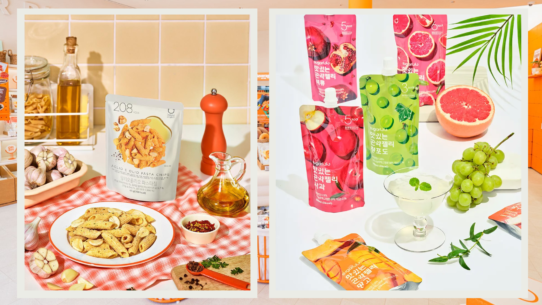
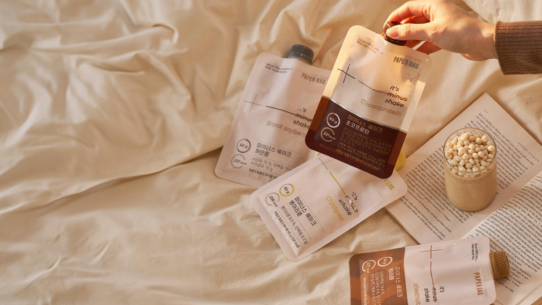
A heated eye mask designed specifically for sleeping on airplanes isn’t something most travelers consider essential. Korean consumers increasingly treat it as standard. The reasoning is straightforward: long-haul flights are uncomfortable, sleep makes them less so, and if a product solves that specific problem, why not pack one? The same logic extends to fatigue-recovery supplements, humidifying masks designed for dry cabin air, electrolyte powders, digestive medicine packed “just in case,” and melatonin for long-haul flights. None of these products solves a major problem. They’re intended to prevent small inconveniences from becoming larger ones once the trip begins.
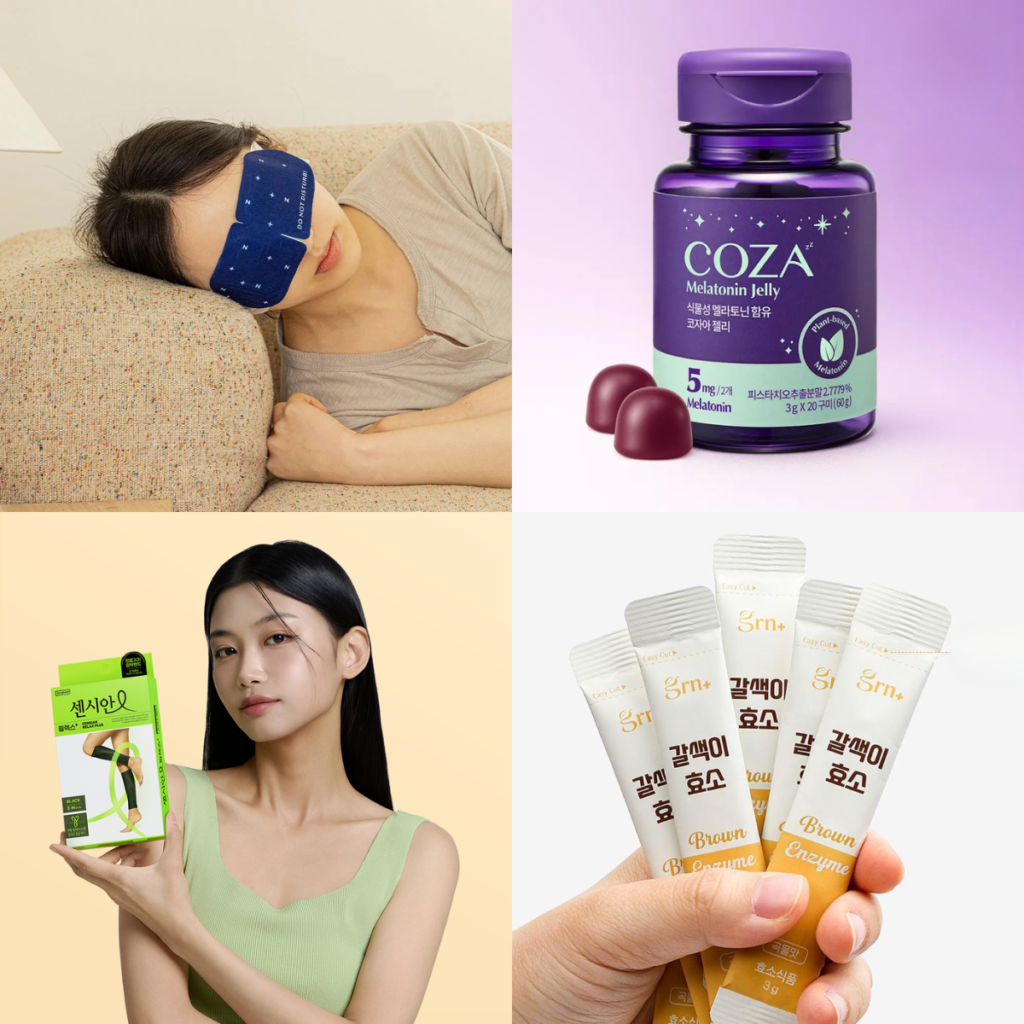
Image: Bareun Saenggak, Coza, Censian, grn+
It’s less about packing more than everyone else and more about reducing the number of avoidable problems that can interrupt a limited vacation. When international trips are relatively infrequent, preserving comfort becomes part of maximizing the experience.
Preparation, in this framing, isn’t anxiety. It’s a form of optimization, reflecting the same consumer mindset that appears across Korean beauty, wellness, and lifestyle: the assumption that most inconveniences have solutions, and that finding them in advance is worth the effort.
How Creators Made Preparation Culture Visible
Much of this culture has become visible through content, and not only through dedicated travel channels.
Beauty creators upload their travel skincare systems. Lifestyle creators share what’s in their vacation pouch. Celebrities post their airport bag organization alongside their airport outfits. The format crosses platforms and audiences because the underlying interest is genuinely widespread. Beauty creators, lifestyle creators, celebrities, and everyday travelers all participate in this format. Packing videos have become popular not because viewers are always preparing for a trip themselves, but because they’re curious about better systems, useful products, and practical ideas they can remember for later.

Image: IMOS YouTube channel
Viewers watch packing videos even without upcoming trips, in the same way that kitchen organization or closet-building content has developed its own following entirely separate from immediate practical need. Preparation has become entertainment, and that entertainment has shaped purchasing habits and product discovery in ways that conventional advertising often can’t match.
More importantly, creators transformed preparation from a private habit into something consumers could observe, compare, and continuously refine. In doing so, they accelerated both product discovery and consumer expectations around what “being prepared” should look like.
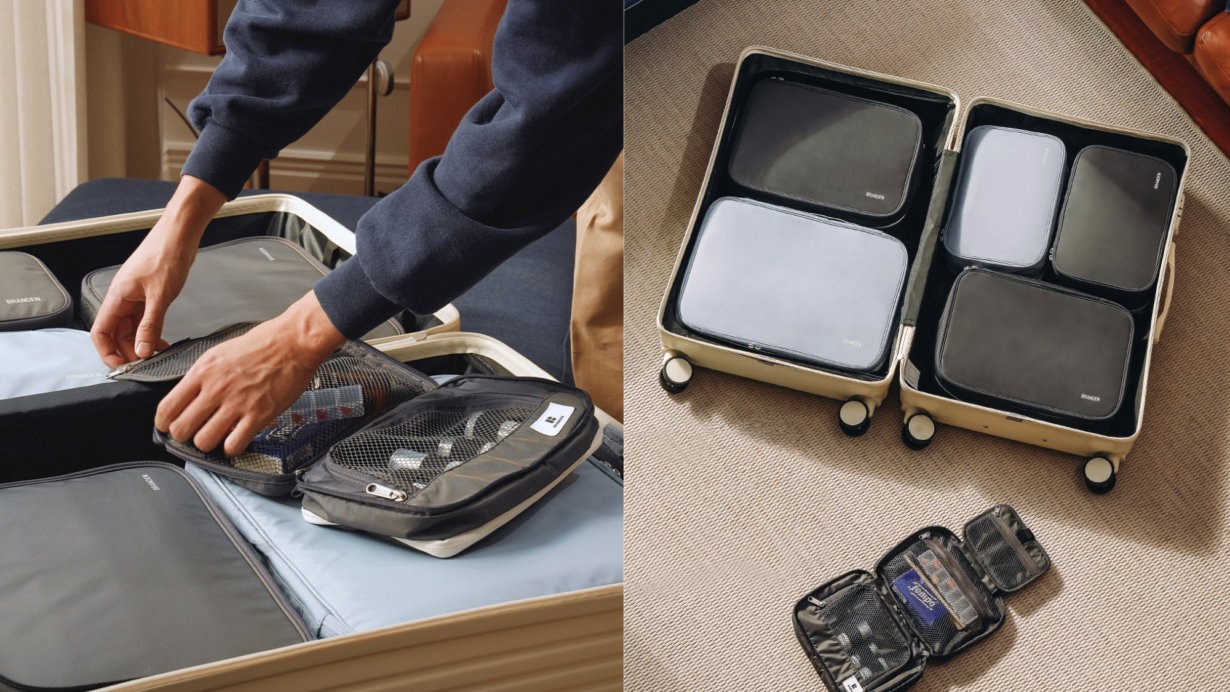
As preparation became more visible online, brands gained an unusually clear view of the small frustrations consumers wanted solved. Branden (브랜든), a travel organization brand, has built a full product line around the specific frustrations that preparation culture has made visible: compression pouches designed for bulky outerwear, a multi-hanging organizer that unfolds from a single pouch into a wall-mounted system for hotel rooms, and anti-theft wallets with RFID blocking. The brand didn’t create the demand for travel organization. It responded to a demand that content had already made legible.
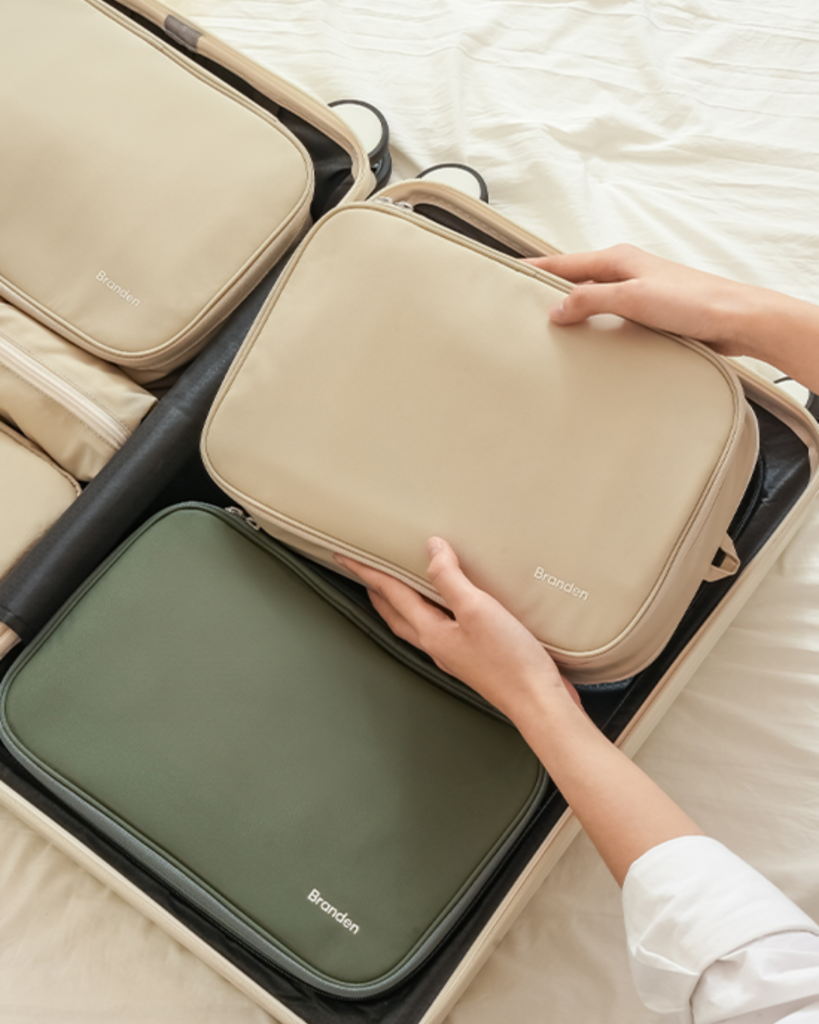
Image: Branden
From Packing to Experience Design
Korean consumers aren’t simply packing for travel. They’re designing the experience they want to have before the trip even begins. The products matter less than the expectation behind them: if discomfort is predictable, it should also be preventable.
Products Built Around Tolerances Most Travelers Don’t Question
One of the most revealing things about Korean travel products is what they assume about the traveler. Preparation culture doesn’t just influence what people pack. It also shapes the kinds of products companies decide to develop.
The products assume something important about the traveler: inconvenience isn’t something to accept if it can be designed away. This is a meaningful departure from the default travel mindset, which in most markets involves accepting a fairly long list of inconveniences as the inherent cost of being somewhere unfamiliar.
Many travel products aren’t solving dramatic problems. They’re solving the dozens of small frustrations people usually accept as inevitable. Weak hotel showers. Wrinkled clothes after a long flight. A phone with nowhere convenient to watch a movie during a twelve-hour flight. Korean brands increasingly treat each of these inconveniences as a legitimate design opportunity rather than something travelers should simply tolerate.
That’s why products like portable filtered shower heads, compact garment steamers, and airplane phone holders have found an audience. They’re designed around the assumption that improving lots of small moments can make the overall travel experience noticeably better.
What’s interesting about these products isn’t their ingenuity individually. It’s the shared premise they reflect: that the acceptable level of inconvenience during travel is lower than most markets have assumed. Korean consumers, operating in a culture that has spent years innovating around everyday comfort in beauty and lifestyle, bring the same expectation to travel. If something is predictably annoying, and a product exists that removes the annoyance, that product is worth bringing.
None of these products transforms a trip by itself. Together, however, they remove dozens of small moments of friction. The result isn’t a different vacation. It’s simply a smoother, more comfortable one.
MARKET INSIGHT
Korean travel products aren’t succeeding simply because people are traveling more. They’re succeeding because Korean consumers increasingly see preparation as part of the travel experience itself. The commercial opportunity isn’t simply travel. It’s the willingness of consumers to invest in preventing inconvenience before it occurs. For brands watching Korea, the more valuable lesson isn’t which travel products are selling—it’s why consumers have become willing to invest in them before the trip even begins.
Travel Doesn’t Mean Leaving Your Routine Behind
Many travelers accept that certain routines disappear while they’re away from home. Korean consumers increasingly expect the opposite. Travel should be different, but it shouldn’t feel lower quality.
Instead of thinking, “I’ll just use whatever is available,” many look for ways to recreate the same experience in a more portable format. Korean beauty brands have responded with travel-sized versions, individually packaged skincare, compact makeup, and portable toiletries that make maintaining familiar routines much easier while taking up less space.
Convenience often outweighs perfect duplication. Rather than decanting every full-sized product into small bottles, many consumers simply purchase travel-friendly alternatives that perform similarly enough for the duration of the trip. The trust Korean consumers place in domestic beauty brands makes that decision much easier. They’re often willing to try a new portable version because they already expect it to meet a certain quality standard.
The same thinking extends beyond beauty. Clothes are organized to arrive ready to wear. Packing systems are designed to make hotel living feel more organized. Travel isn’t treated as a break from everyday life so much as everyday life temporarily relocated somewhere else.
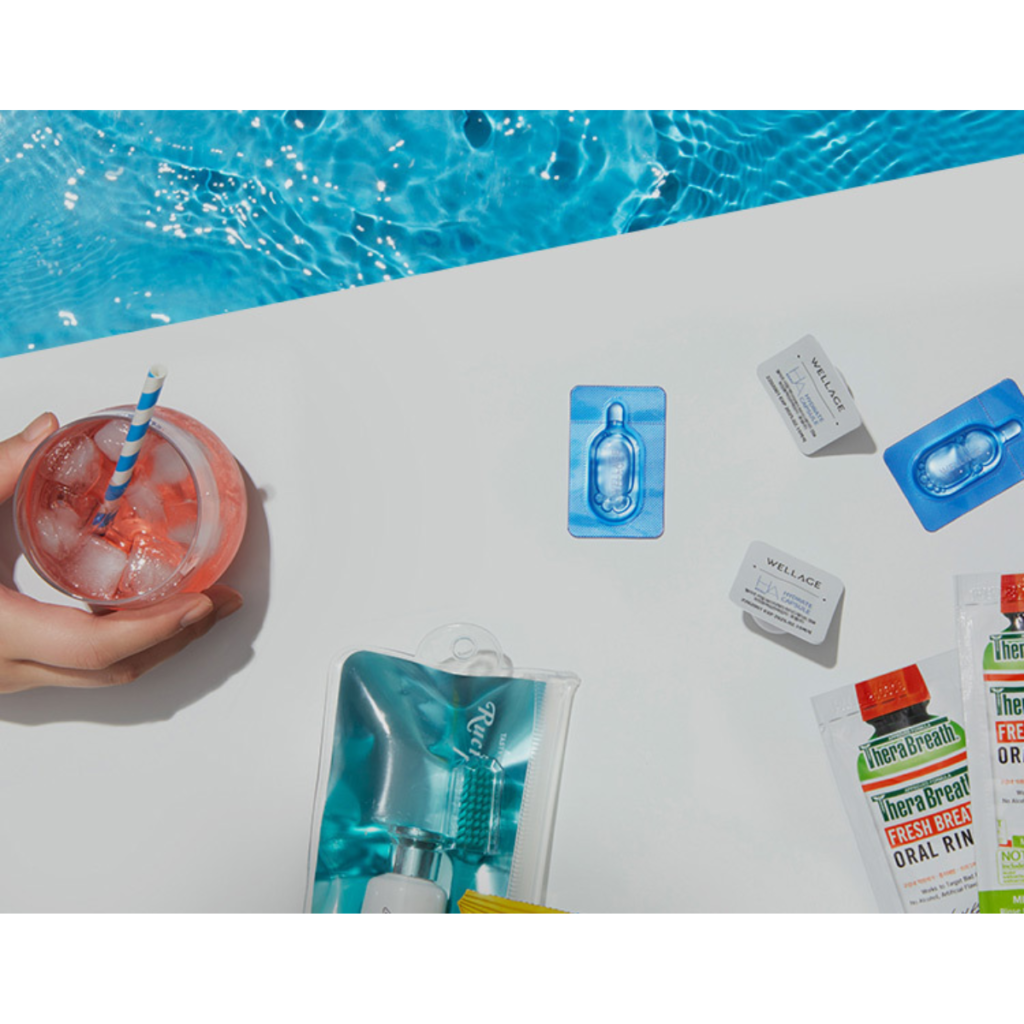
Image: Olive Young
Protecting the Trip From the Inside
Wellness products reveal another dimension of Korean travel preparation. The goal isn’t simply to stay healthy. It’s to protect the experience from disruptions that could have been prevented.
Fatigue-recovery supplements, electrolyte powders, cooling patches, massage balls, digestive medicine, and compression socks all serve the same purpose. They’re less about treating illness than preserving energy, comfort, and mobility throughout the trip. When vacation time is limited, avoiding a disrupted day often feels just as important as planning the itinerary itself.
This is what wellness preparation means in the Korean travel context: not hypochondria, but a considered effort to protect the experience itself. When vacation time is limited, health and comfort are part of the itinerary.
The Same Mindset, A Different Context
Looking at Korean travel products individually misses the larger story. The real insight isn’t that Korea has more travel accessories. It’s that Korean consumers increasingly expect everyday inconveniences, including ones they haven’t experienced yet, to have practical solutions.
That expectation appears across Korean consumer culture. It’s visible in beauty products that simplify routines, wellness services designed around recovery, fashion that adapts to changing weather, and travel products that remove friction before it appears. Travel simply makes the mindset easier to observe because the inconveniences are so obvious.
What’s consistent across all of it is the orientation: find the friction, look for the product, prepare in advance rather than react on arrival. Travel simply makes this behavior unusually visible, because the inconveniences of being somewhere unfamiliar are numerous and predictable, and the cost of dealing with them unprepared is genuinely high when you’ve spent limited vacation days to get there.
For anyone trying to understand Korean consumer culture, travel preparation is as good a place to look as any. Travel preparation isn’t important because it produces better packing. It’s important because it reveals how Korean consumers increasingly think about everyday life: inconvenience is something to anticipate, products are expected to solve it, and preparation is considered part of the experience rather than separate from it. Travel simply makes that mindset impossible to miss.
Sources
- Korea Tourism Organization — Korean outbound travel statistics, 2023 figures: https://kto.visitkorea.or.kr/eng.kto
- Branden (브랜든) official store — compression pouches, anti-theft wallets, multi-hanging organizers: https://branden.shop
- Harper’s Bazaar Korea — “짐 싸기 전에 참고해! 여행 파우치 필수템” (Korean travel editors’ packing essentials): https://www.harpersbazaar.co.kr/article/1867283
- YouTube — Korean celebrity and lifestyle creator packing content, cited as evidence of mainstream preparation culture: https://www.youtube.com/watch?v=OgJSAOyx1UA&t=2573s
- Namu Wiki — “여행/짐 싸기” (community-sourced Korean travel packing checklist): https://namu.wiki/w/%EC%97%AC%ED%96%89/%EC%A7%90%20%EC%8B%B8%EA%B8%B0
- Siseon — “The Korean Products Designed for Summer That You Didn’t Know Existed”: [internal cross-reference]