

Korea Experiments Asian Beauty
Korean consumers stand among the most beauty-literate in the global market. They know every active ingredient, spot microscopic cosmetic tweaks from a mile away, and handle the world’s most competitive beauty market like pros. Yet despite this sophistication, the market has never been closed to outside influences.
The food scene laid down the blueprint first. Foreign treats like Dubai chocolate, Japanese salt bread, and Chinese butter rice cakes exploded overnight from quirky imported snacks into full-blown national obsessions.
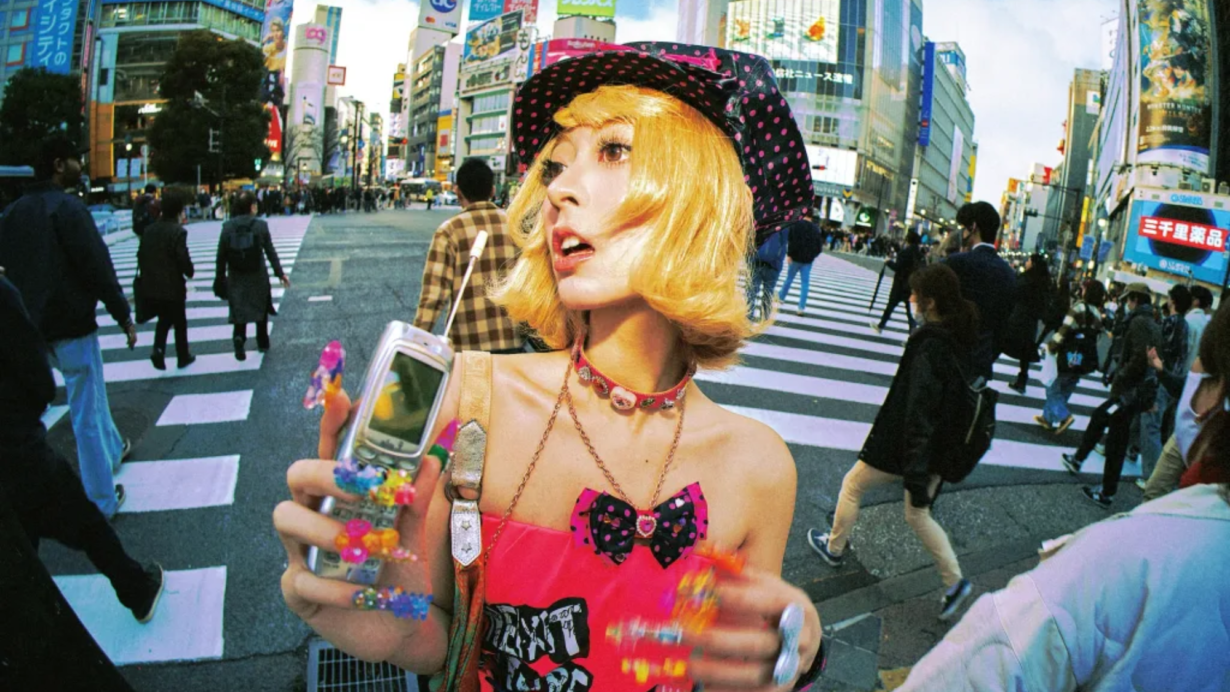
Now the beauty world is chasing that same wild viral energy. Top Korean influencers and big-name stars are flocking to Shanghai for hyper-glam wanghong transformations and booking Tokyo trips for dramatic gyaru makeovers. Their reveal videos are racking up millions of views across Korean social media. The craze is blowing up precisely because it throws out the standard K-beauty rulebook in favor of pure visual drama.
Shanghai’s Beauty Playground
The explosive wave of studio makeovers across Shanghai highlights a fundamental shift in consumer beauty priorities. Consumers no longer seek to buy just a product, choosing instead to purchase temporary fantasy personas.
Around Shanghai’s historical districts, studios offer full wanghong transformations featuring hyper-defined features, theatrical styling, and professional photography. Over the past year, this content has flooded Korean social feeds. What started with celebrities and top-tier creators has quickly spread to everyday travelers posting their own dramatic before-and-after reveals, turning a quick studio visit into one of the most visible travel highlights coming out of China.
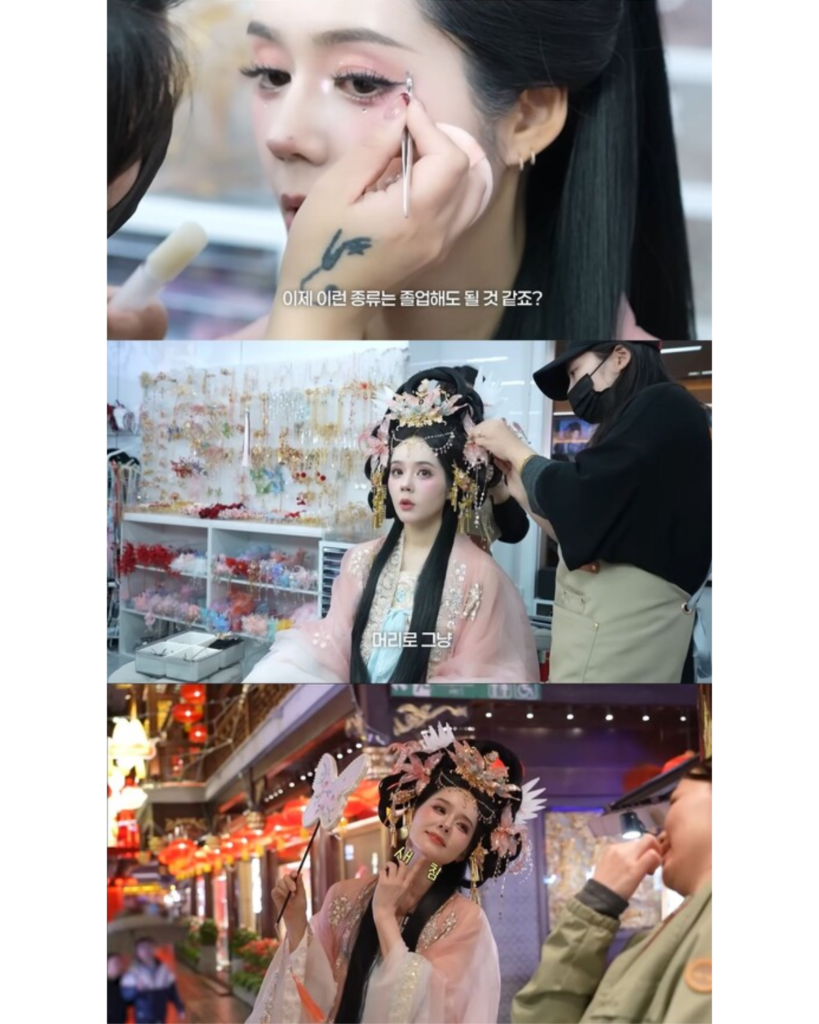
Image: 자유부인 한가인 YouTube Channel
The secret behind the virality boils down to the dramatic reveal. Watching someone shift into a literal fantasy character holds audience attention far longer than standard tutorials on Instagram or TikTok. Travelers are skipping basic makeup tips, willingly paying for a full-scale creative production, a set of high-end portraits, and guaranteed digital engagement.
Japan’s Viral Aesthetic
While the Shanghai trend relies on visual fantasy, the gyaru revival in Korea thrives on unfiltered, high-energy personality.
Rooted in nineties Japan, gyaru subculture combines maximalist makeup techniques with an unapologetically bold attitude. Over the past year, this distinct aesthetic crossed directly into mainstream Korean youth culture, propelled by K-pop idols adopting the style for public branding. When RESCENE member Minami paired full gyaru styling with energetic Japanese youth slang on a trip to coastal Geoje, the unexpected contrast immediately sparked a widespread meme across Korean online platforms.
Originating in nineties Japan, gyaru pairs maximalist makeup with an unapologetically bold attitude. This subculture has crossed into mainstream Korean youth culture in the past year, driven largely by K-pop idols incorporating the aesthetic into their public branding. The viral tipping point began when RESCENE’s Minami dropped an energetic Japanese slang in full gyaru gear while visiting the quiet coastal city, Geoje, instantly delivering one of the internet’s most reshared moments.
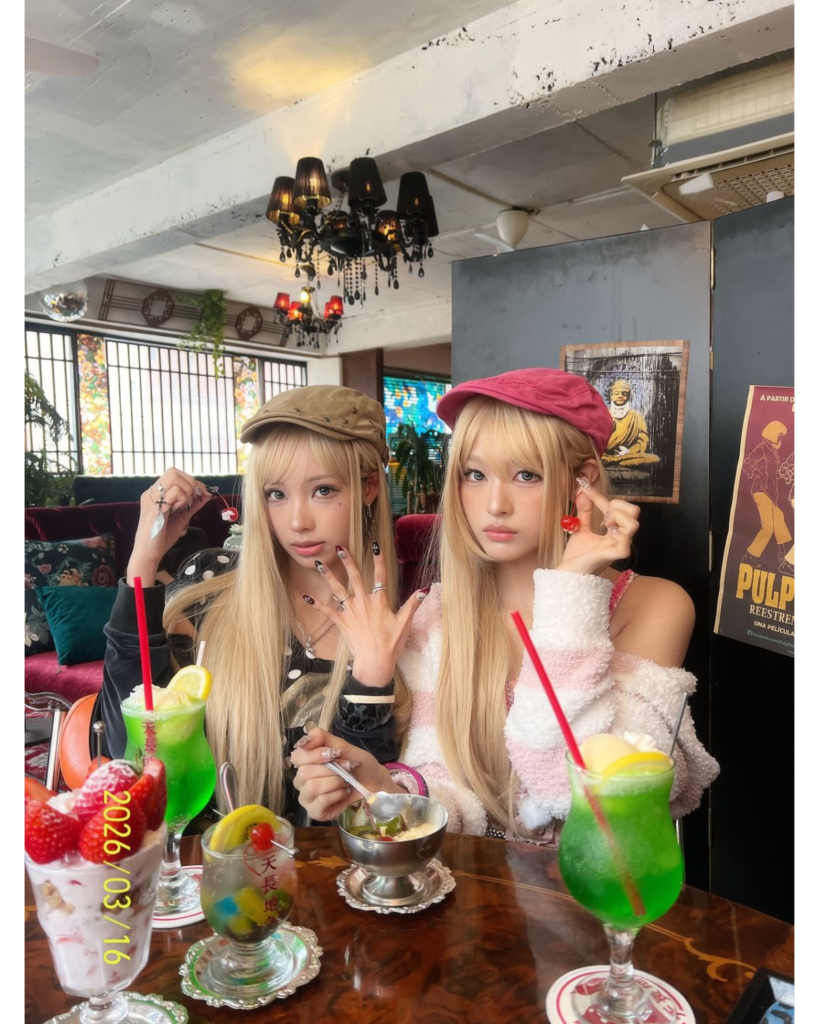
Image: @helloiamwoninicetomeetyou Instagram
This momentum has pushed gyaru culture far beyond online entertainment into everyday Gen Z behavior. Young consumers are readily adopting gyaru slang, signature peace-sign poses, and subculture-inspired fashion items like oversized leg warmers and statement accessories. While full gyaru makeup remains a distinct niche, its broader linguistic and stylistic elements have quickly become shorthand for Gen Z pop culture fluency.
When Aesthetics Travel
Going viral is easy, but driving real consumer behavior takes a whole different level of influence. Korean consumers aren’t just scrolling past foreign beauty trends anymore—they’re actively rewriting them. Aesthetics born on platforms like RedNote are filtered by local creators, tested on K-pop idols, and delivered directly to daily social feeds.
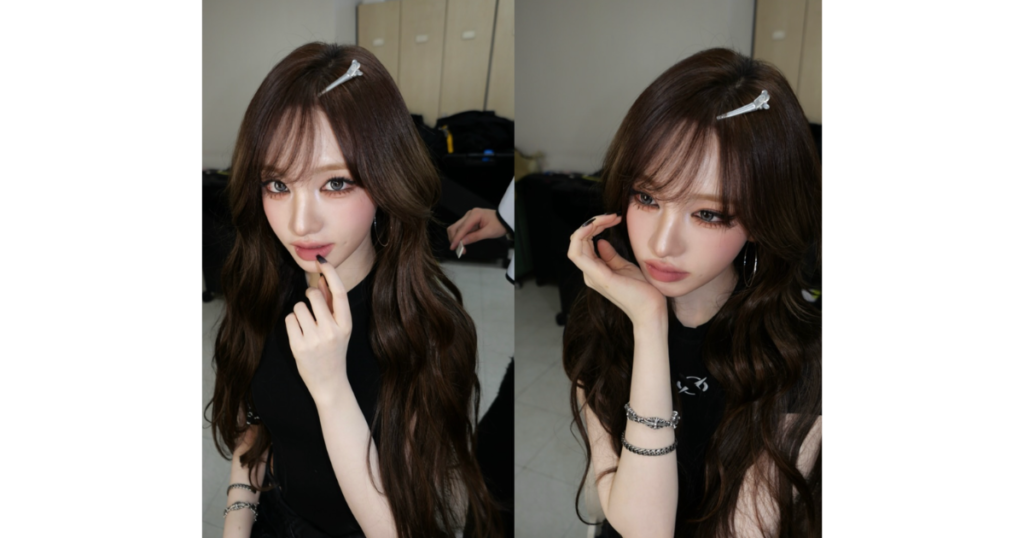
Image: @liz.yeyo Instagram
This creates an unusually transparent culture of beauty literacy. Gen Z consumers can instantly identify where a reference originated, whether a Chinese contouring technique or a Japanese subcultural styling cue. They adopt these elements selectively, trying a look for a photoshoot or a single post without committing to the full lifestyle behind it.
For a market historically defined by exporting its own standards, this depicts a major transition. Korean feeds are becoming far more international, blending local, Chinese, Japanese, and global influences into a single continuous stream. As these references move beyond makeup into hair, facial proportions, and clinical aesthetic procedures, they stop being temporary internet crazes and begin redefining what consumers consider visually ideal.
The Korean Test Market
For global brands, the key opportunity extends far beyond tracking the next local trend.
Think of Seoul as the ultimate high-speed accelerator for cross-border ideas. A viral Chinese makeup look pops up on RedNote, Japanese street-style elements get co-signed by top K-pop idols, and local creators mash them into a polished domestic trend before legacy brands can even catch up.
This rapid cycle serves as an early filter for commercial viability. When a Chinese technique or a Japanese subculture resonates with Korean consumers, it demonstrates how well that aesthetic translates beyond its original cultural context.
As digital channels bring more of Asia into the local conversation, influence no longer moves in a single direction. Success belongs to brands that monitor how these aesthetic systems interact in real time rather than expecting trends to emerge from one country at a time.
Redefining Korean Beauty
The rules are completely changing in the classic K-beauty aesthetic. Korean consumers feel comfortable adopting a gyaru look or a Chinese makeup technique because their foundational beauty habits are so deeply established.
Social feeds in Korea have turned into high-speed mixing boards for global style. Influencers and K-pop stars act as real-time curators, grabbing niche references from around the region and proving their mainstream potential in a matter of days.
For global brands, Korea has become much more than a source of local trends. It is now a live testing ground for regional aesthetics. Watching how Korean consumers refine and package these influences offers an advance look at which trends will cross international borders next.
Looking at Your Brand Strategy
Uncovering the hidden signals in Korean consumer culture requires looking past surface-level trends. If you are exploring how Korean market shifts, consumer behavior, and category movements can open new opportunities for your business, Siseon works with global teams to turn these observations into strategic advantage.
To discuss custom research, field intelligence, or strategic advisory for your team, connect with us directly at hello@siseonhq.com or fill out the contact form.
Sources
- Korea JoongAng Daily — “Two years and 1,500 videos: How Rescene pulled off a rare K-pop breakthrough” (March 20 2026 gyaru video, Love Attack #1 Melon July 8 2026): https://www.koreajoongangdaily.com/entertainment/two-years-and-1500-videos-how-rescene-pulled-off-a-rare-kpop-breakthrough/12773216
- Korea Times — “RESCENE’s rise proves small K-pop agencies still have a chance” (gyaru viral moment, Woni and Minami Geoje trip): https://www.koreatimes.co.kr/entertainment/k-pop/20260630/rescenes-rise-proves-small-k-pop-agencies-still-have-a-chance
- Kpopbio — RESCENE members profile (10.7M combined gyaru video views, Geoje City ambassador appointment, Woni YouTube channel 1M subscribers by mid-2026): https://kpopbio.com/rescene-members-profile-bio/
- Namu Wiki — 미나미(RESCENE) (gyaru persona background, Minami’s mother as gyaru generation, “거제 야호” origin and meme spread): https://namu.wiki/w/%EB%AF%B8%EB%82%98%EB%AF%B8(RESCENE)
- Seoul Sinmun — “예뻐지러 중국 갑니다, 연예인들도 우르르… 요즘 대세 왕홍 메이크업 뭐길래” (Han Ga-in, Park Myung-su, Lee Mi-ju, Gwak Beom; Park Myung-su 1.4M views; Korean China departures +48.1% January; Hana Tour 28% China): https://www.seoul.co.kr/news/lifestyle/trip/2026/03/28/20260328500017
- Daum News — “일본 대신 중국 간다더니… 상하이 왕홍 체험 직접 해봤다” (wanghong package ~100,000 won, 3-4 hours, Yuyuan Garden): https://v.daum.net/v/20260503060109165