


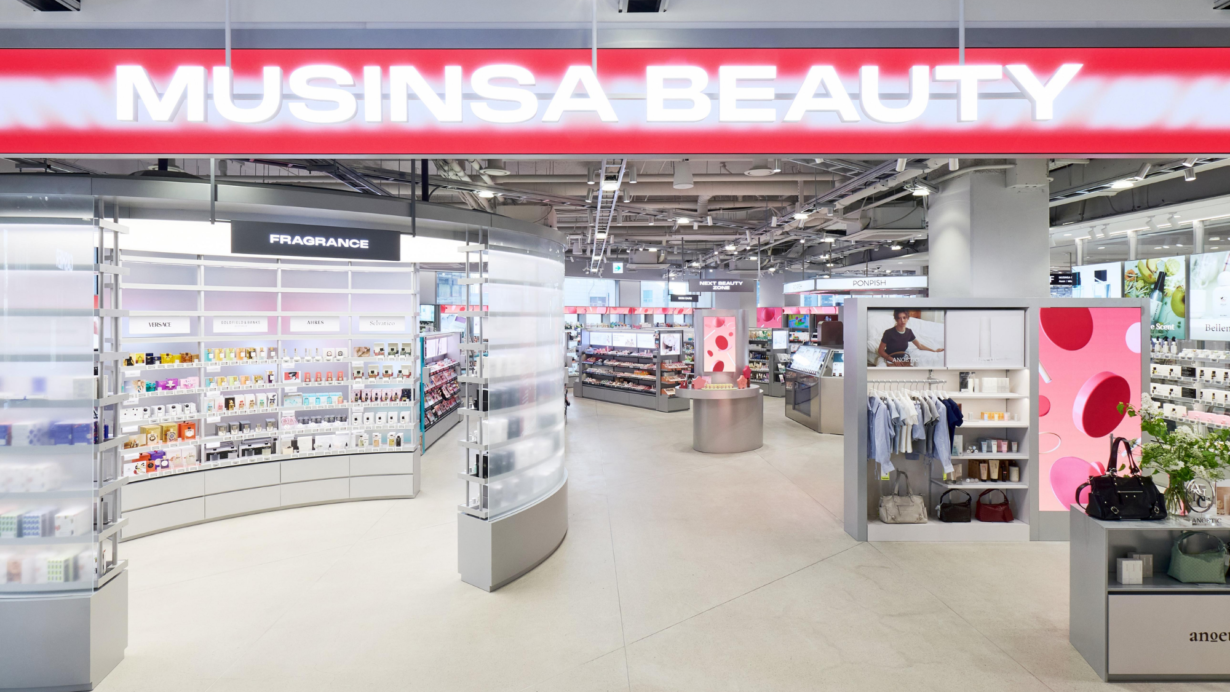
Fashion E-Commerce Takes on Beauty Retail
In Korea’s hyper-competitive digital market, multi-category expansion is transforming niche platforms into everyday lifestyle ecosystems.
A consumer might turn to Musinsa for streetwear, Olive Young for skincare, Market Kurly for gourmet groceries, and Coupang for immediate logistics. But as platforms compete for larger shares of everyday spending, those specialized boundaries are fading.
Beauty stands out as the ultimate expansion category because it shares an organic ecosystem with personal fashion. Anyone shopping for an outfit is already thinking about visual identity, tone, and personal presentation. That natural crossover gives apparel platforms an undeniable advantage, allowing them to capture higher-margin cart additions, proving that beauty no longer belongs exclusively to dedicated beauty retailers.
Olive Young Set the Standard
Olive Young, operated by Korean conglomerate CJ, dominates Korean beauty retail with more than 1,300 physical doors and an app membership base exceeding 15 million consumers.
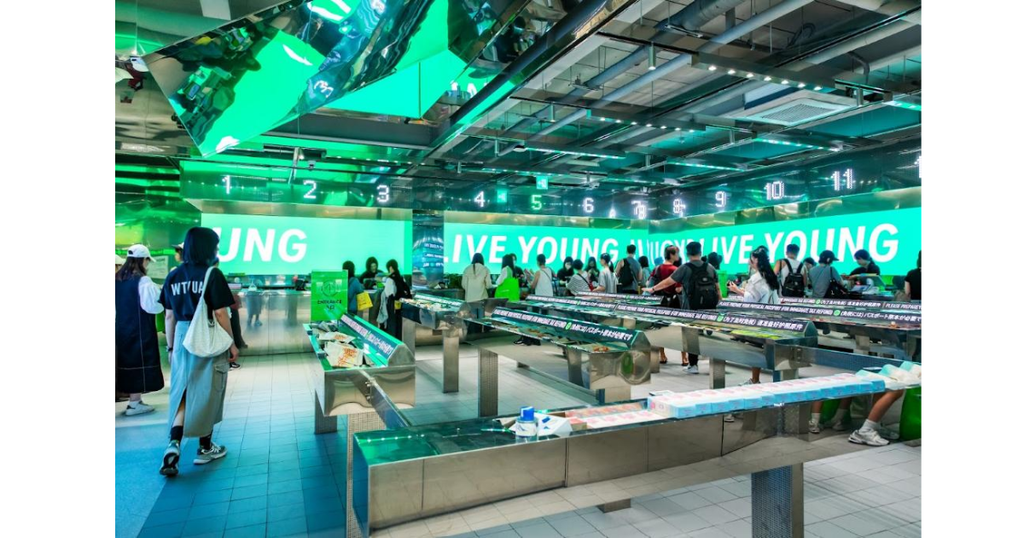
Image: CJ
It has also proven that modern beauty retail requires much more than simply stocking multi-brand shelves. Olive Young incubates private labels, co-develops exclusive formulations, and leverages massive transaction volume to direct broader market trends.
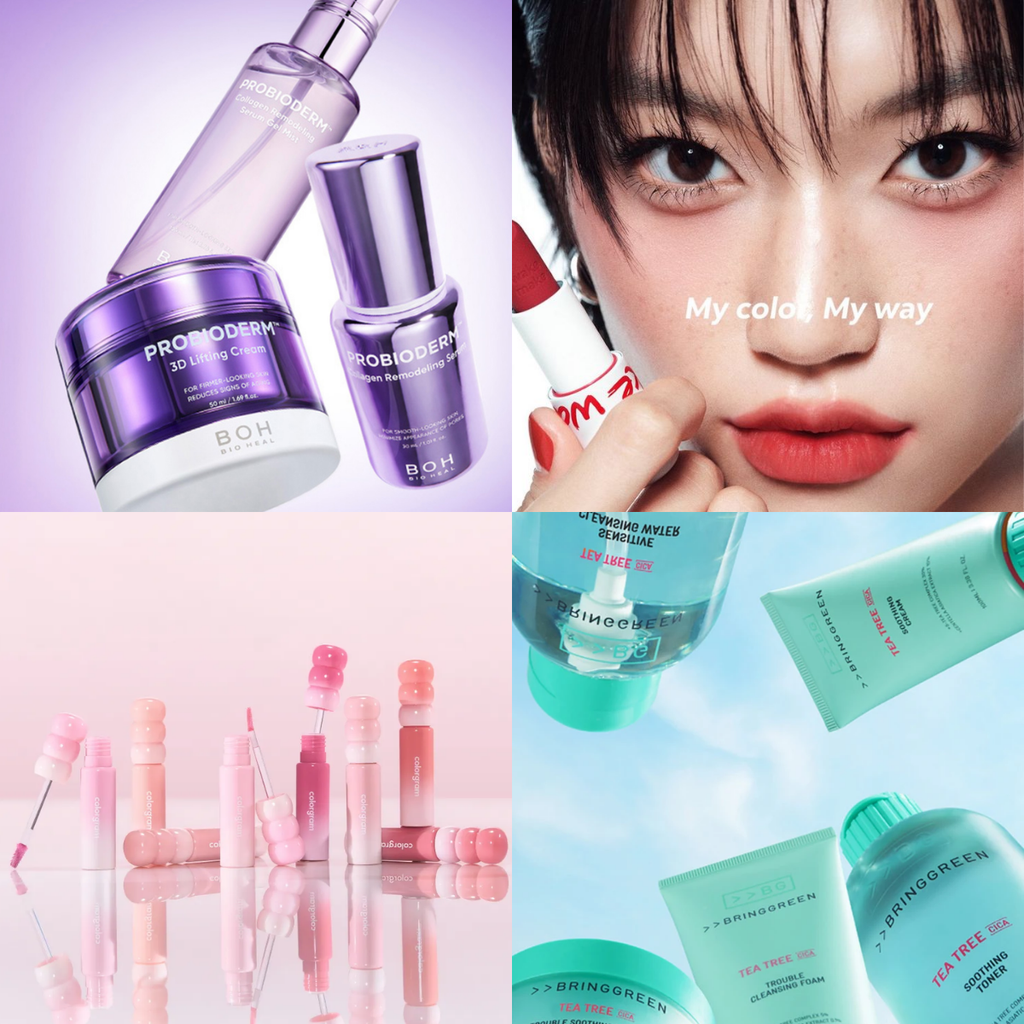
Image: BIOHEAL BOH, WAKEMAKE, colorgram, BRINGGREEN
For fashion-commerce platforms, attempting to beat Olive Young at standard beauty retail is a losing strategy. Fashion-focused platforms like Musinsa, ABLY, and Zigzag possess a different asset entirely. Their users arrive expecting curated discovery, personal style, and niche trends. Their competitive edge is not raw assortment depth, but hyper-targeted audience relevance.
By blending beauty directly into fashion lookbooks, these platforms match makeup with clothing trends. That smart integration turns everyday outfit shopping into quick, profitable beauty purchases.
From Platform Exclusives to In-House Formulations
Early platform expansion relied on a simple strategy, boosting profit margins by securing exclusive distribution rights
Zigzag drove traffic through platform-only colorways and sets, while ABLY locked in exclusive launches with major makeup brands like Peripera and Rom&nd. But exclusive distribution was merely a step toward direct product creation.
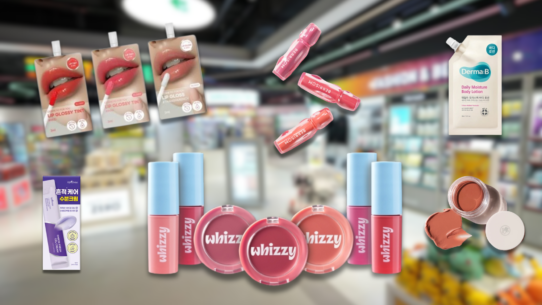
As platforms tracked precise shopping habits across their apps, they began launching their own cosmetics. Musinsa built internal beauty lines including Oddtype, WHIZZY, and Rest&Recreation Beauty, partnering directly with manufacturing giant Cosmax to access high-grade formulas.
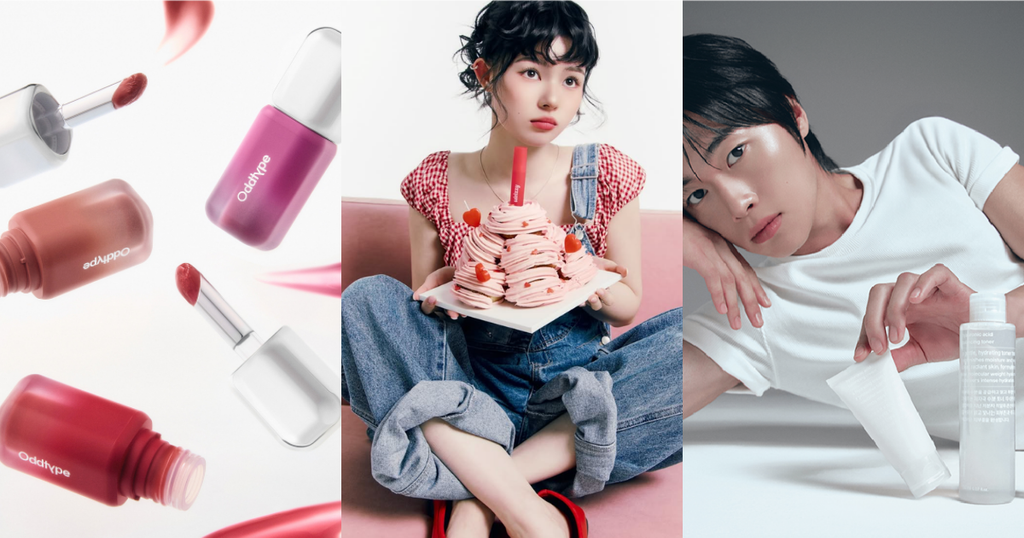
Image: Oddtype, Whizzy, Musinsa Standard Beauty
The real competitive breakthrough lies in platform-brand co-creation. Partnering with apparel brand Rest&Recreation on its beauty launch, Musinsa divided core responsibilities effectively. Rest&Recreation provided the creative direction and subculture authority, while Musinsa absorbed manufacturing risk, supply chain logistics, and retail execution.
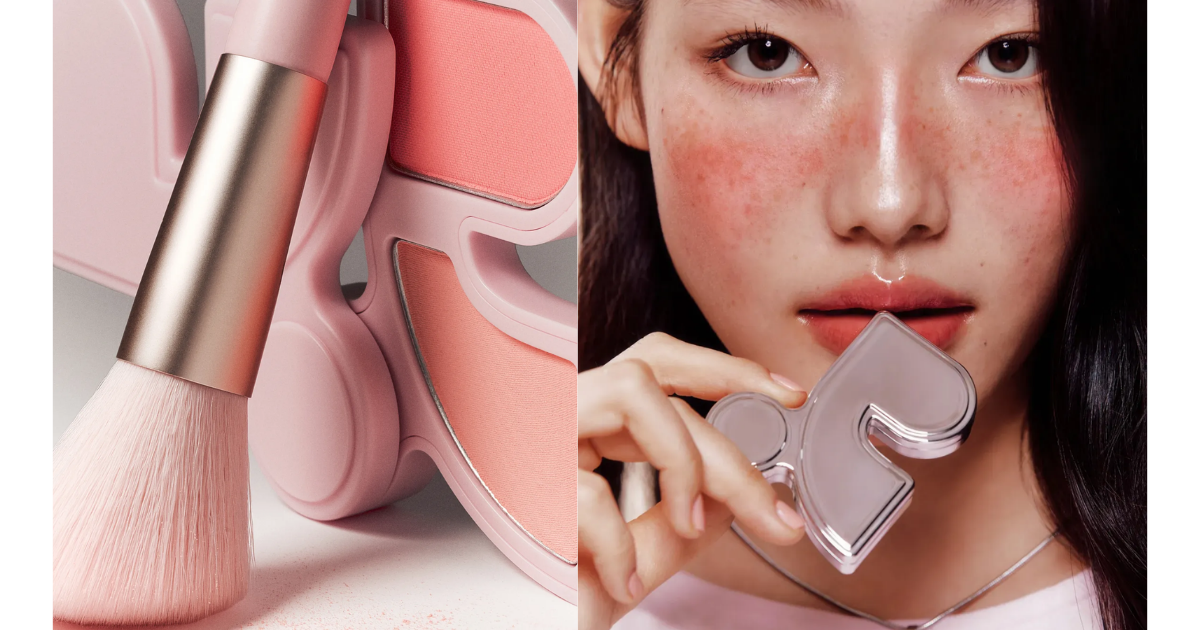
Image: Rest&Recreation Beauty
When Data Outpaces R&D
If Musinsa builds beauty around brand identity, ABLY builds it around raw consumer data.
Ably Label, launched in May 2026 in tandem with cosmetics giant CLIO, reverses the traditional product development sequence. Instead of starting with a brand’s creative concept, the venture begins with platform search intent.
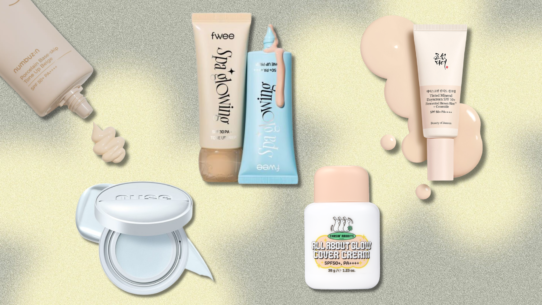
Under this model, ABLY oversees production, inventory financing, and logistics, while CLIO manages formula planning and manufacturing quality. Their releases, the Mad Blur Cushion and Mad Blur Pore Eraser, targeted an unaddressed gap in ABLY’s search data for accessible, high-demand, pore-focused base makeup aimed at younger demographics.
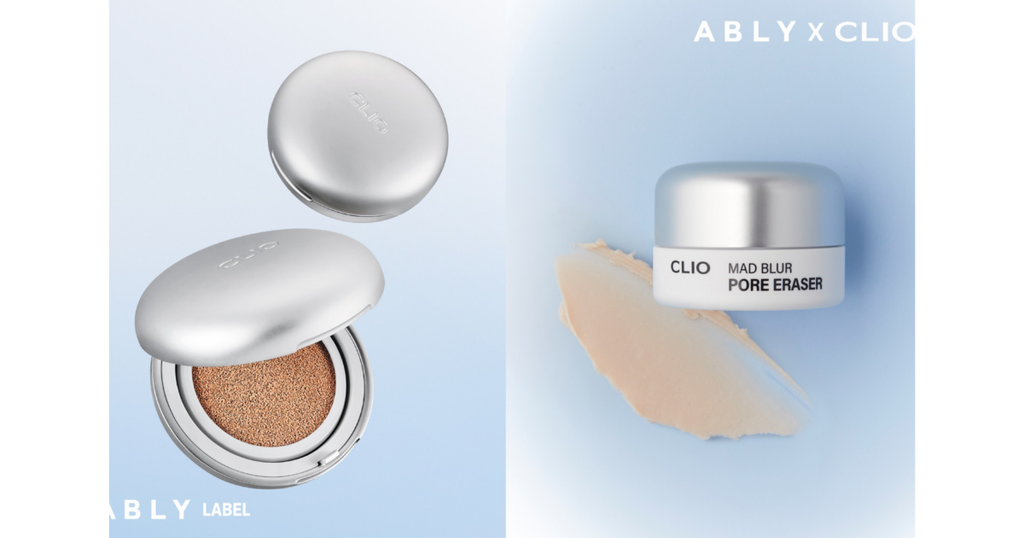
Image: Ably
ABLY processes over 150 billion consumer data points annually. That constant stream of search intent highlights exact product gaps that major beauty conglomerates miss.
By pairing CLIO’s formulation expertise with ABLY’s precise profile of the customer waiting to buy it, the partnership yields a platform-first SKU built specifically for the ABLY ecosystem rather than adapted for general retail.
Two Paths to Market
These parallel approaches highlight two distinct paths for digital beauty expansion.
Musinsa acts as an aesthetic incubator, taking established fashion identity and shaping it into curated cosmetics. ABLY acts as a data-first matchmaker, connecting billions of search signals with K-beauty giant CLIO to manufacture products tailored for its native user base.
Both models eliminate the need for one party to manage the entire supply chain. Rather than fighting over crowded distribution channels, platforms and brands combine core strengths to reduce go-to-market friction.
Korea’s fast-moving retail market makes this synergy exceptionally effective. Musinsa secures long-term brand equity through community trust, while ABLY turns real-time search intent into immediate, high-margin sales.
The Global Signal
As global beauty categories saturate, competitive advantage is shifting from pure product innovation to pre-existing consumer access.
The Korean model demonstrates that consumer relationships do not need to belong to a single entity. The platform supplies the pre-qualified audience, the fashion brand supplies the visual identity, the beauty house supplies formulation expertise, and the ODM handles high-speed production.
Western retail platforms like Amazon, Target, and ASOS hold massive consumer reach. Rather than simply stocking third-party inventory or printing generic private labels, the next logical move is co-creating targeted beauty lines alongside culturally relevant brands using platform search analytics.
Olive Young retains its dominance in Korean cosmetics, but fashion platforms are not attempting to copy its physical footprint. They are building a structurally different model for how beauty products are conceived, formulated, and sold.
The next major beauty launch may not begin with a cosmetics brand pitching a retailer for shelf space. It will begin with a platform analyzing user intent, identifying a product gap, and assembling the right partners to build the answer.
Looking at Your Brand Strategy
Uncovering the hidden signals in Korean consumer culture requires looking past surface-level trends. If you are exploring how Korean market shifts, consumer behavior, and category movements can open new opportunities for your business, Siseon works with global teams to turn these observations into strategic advantage.
To discuss custom research, field intelligence, or strategic advisory for your team, connect with us directly at hello@siseonhq.com or fill out the contact form.
Sources
- Zigzag (Kakao Style press release, February 2025): beauty GMV +137% in 2024, 2,400+ brands, 840 new brands in one year, 직잭픽 GMV increases 300-1,200%: https://partnerlounge.kakaostyle.com/press/937
- Digital Daily (February 2025): Zigzag 직잭픽 strategy with Peripera, Etude, VT Cosmetics; Musinsa nurturing new beauty brands: https://m.ddaily.co.kr/page/view/2025022509422237094
- Byline Network (May 2026): ABLY Label structure — ABLY handles production/inventory/marketing; CLIO handles product planning; future partners Chasing Rabbit and Torriden: https://byline.network/2026/05/19_29182737/
- Newsis (May 2026): ABLY accumulates 150 billion annual data points; CLIO quote on identifying Zalpha demand gap: https://www.newsis.com/view/NISX20260519_0003635053
- VentureSquare (May 2026): Mad Blur Cushion ~10,000 won, metallic packaging, pore coverage for 1020s, Mad Blur Pore Eraser: https://www.venturesquare.net/1083232
- Musinsa Newsroom (September 2025): Cosmax MOU covering Oddtype, WHIZZY, Musinsa Standard Beauty, Rest&Recreation Beauty: https://newsroom.musinsa.com/newsroom-menu/2025-0925
- CosIn Korea: Musinsa Standard Beauty H1 2025 +153% GMV, 5 beauty PBs, Oddtype global expansion: https://www.cosinkorea.com/news/article.html?no=58033