


Introduction
Korean summers used to be something people endured and moved on from. Now they’re a design challenge.
Average summer temperatures in Seoul have climbed noticeably over recent years, with July heat frequently settling above 33 degrees and humidity that makes the air feel closer to a steam room than open sky. Climate patterns have also made summers longer and more unpredictable, with intense UV days followed by sudden monsoon downpours, sometimes on the same afternoon.
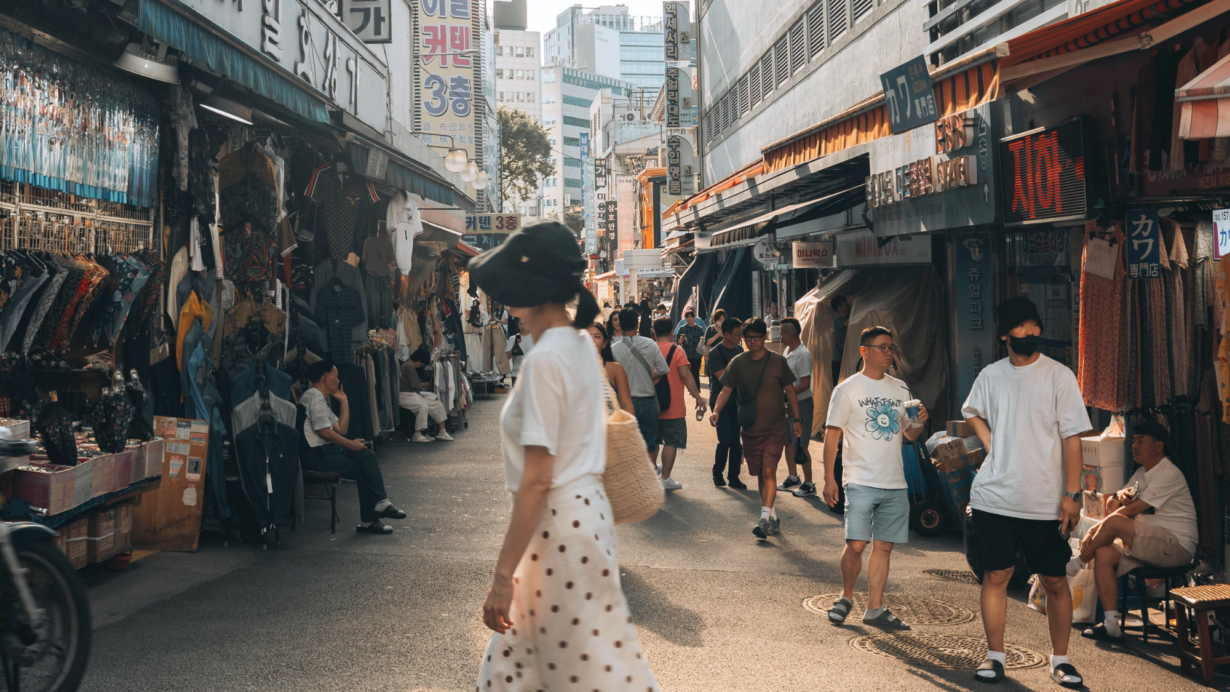
At the same time, Koreans are spending more time outside than they used to. Running clubs have become part of urban social life. Hiking is a weekend ritual across all ages. Golf, cycling, and other outdoor activities have grown steadily. Add everyday commuting by foot and public transport (which means significant time in direct sun with no car to retreat to) and you have a population that spends a considerable portion of its summer actively exposed to heat, humidity, and UV.
That combination has created demand for products most markets haven’t thought to make yet. Some of them are immediately recognizable in purpose but surprising in specificity. Others seem almost implausibly niche, until you understand the conditions they were designed for.
UV Protection Has Moved Well Beyond Your Face
Most people’s sun protection routine covers their face and occasionally their arms. In Korea, that’s the starting point, not the whole picture.
The scalp is one of the most directly sun-exposed surfaces on the body during any outdoor activity, and it’s spent years being underserved by the beauty industry. Korean brands have been filling that gap in increasingly creative ways. The 3WAAU Scalp Sun Powder, available on Musinsa, is a useful example of how specific the solutions have become. Rather than spraying sunscreen through hair (which can leave it feeling heavy or greasy), it delivers sun protection as a fine powder that sits at the parting and scalp surface while keeping roots matte. It’s the kind of product that seems odd until you think about what it’s actually solving.
On the cooling side, rather than UV protection specifically, Dr. ForHair’s Aero Cooling Scalp Spray has become a genuine summer staple. It brings the scalp temperature down, controls excess sebum, and keeps hair feeling fresh during long outdoor stretches. Commuters use it. Runners use it. It’s the kind of product that, once you’ve tried it on a 33-degree subway platform, feels indispensable.
SPF hand creams are another category that’s been quietly building. Hands are among the most UV-exposed parts of the body during a commute, completely unprotected unless someone has actively thought to put them on. Several Korean brands, including Pleuvoir, Ega, and De Barista, have introduced SPF hand creams, often combining UV protection with moisturizing, brightening, or anti-aging ingredients. They reflect a simple idea: if hands spend as much time in the sun as the face, why should they be treated any differently?
Products like sun-protecting facial patches have also gained popularity among golfers and anyone spending extended hours outdoors without the option of reapplication every two hours.
Parasols have also become a more common part of everyday summer life, especially among younger consumers. Rather than the large sun umbrellas people might picture, many newer versions are lightweight, fold down small enough to fit inside a handbag, and come in a wide range of colors and minimalist designs. They’re practical first, but increasingly stylish enough that carrying one feels no different from bringing along a reusable water bottle or a pair of sunglasses.
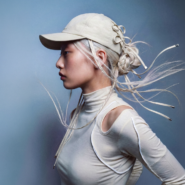
UV clothing has followed a similar evolution. UV-protective arm sleeves were popular first, offering a quick way to cover exposed skin without overheating. Brands then developed the idea further into full lightweight UV jackets, cardigans, and long-sleeved layers that are easier to wear as actual outfits rather than additions to them. These aren’t heavy or stiff. They’re designed to be as light as possible, worn over a camisole or slip, and taken off the moment you step inside.
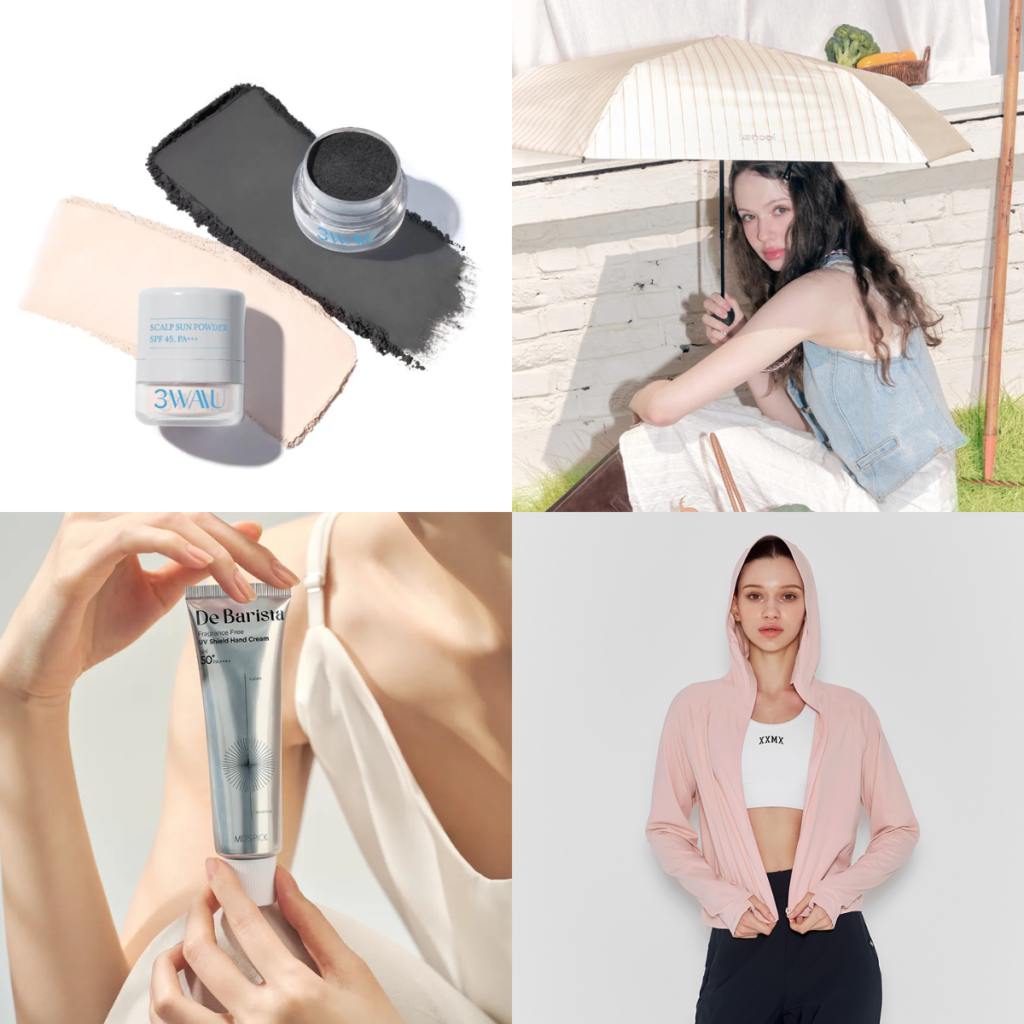
Image: 3WAAU, Kenopi, De Barista, Xexymix
Cooling as a Beauty Strategy
Fifteen years ago, cooling beauty products were still a novelty in Korea. Etude House’s Bubble Hair & Body Cooling Foam was one of the earliest attempts to turn cooling into a beauty category, but the market wasn’t ready and the product eventually disappeared.
Today, cooling is no longer a niche concept. As Korean summers have become hotter and more humid, brands have expanded the idea into skincare, scalp care, body care, hair care, and post-workout recovery products. This shift goes beyond adding a cooling ingredient for marketing. Increasingly, Korean beauty brands are treating heat itself as something worth managing, not just recovering from.
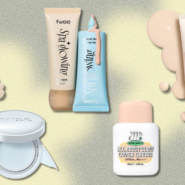
Beplain’s Mung Bean Cooling Moisture Sunscreen is a good illustration of where this is heading. It’s a sunscreen, but it’s been formulated to actively bring skin temperature down on application and maintain that cooling sensation across the day. It’s not just protecting against UV. It’s treating the experience of wearing sunscreen in hot weather as something worth addressing in itself.
The same principle has filtered through to other categories. Cooling scalp shampoos and tonics use menthol and herbal actives to lower scalp surface temperature during washing, with effects that extend beyond the shower. Cooling face mists are used as reset products throughout the day rather than only as post-cleanse steps. What these have in common is the underlying assumption that summer heat isn’t simply a backdrop. It’s something the product should actively push back against.
After-sun skincare, typically centella-heavy and focused on overnight repair, remains a well-established part of this. But it’s becoming less the center of the summer skincare story and more the evening chapter of one that starts much earlier.
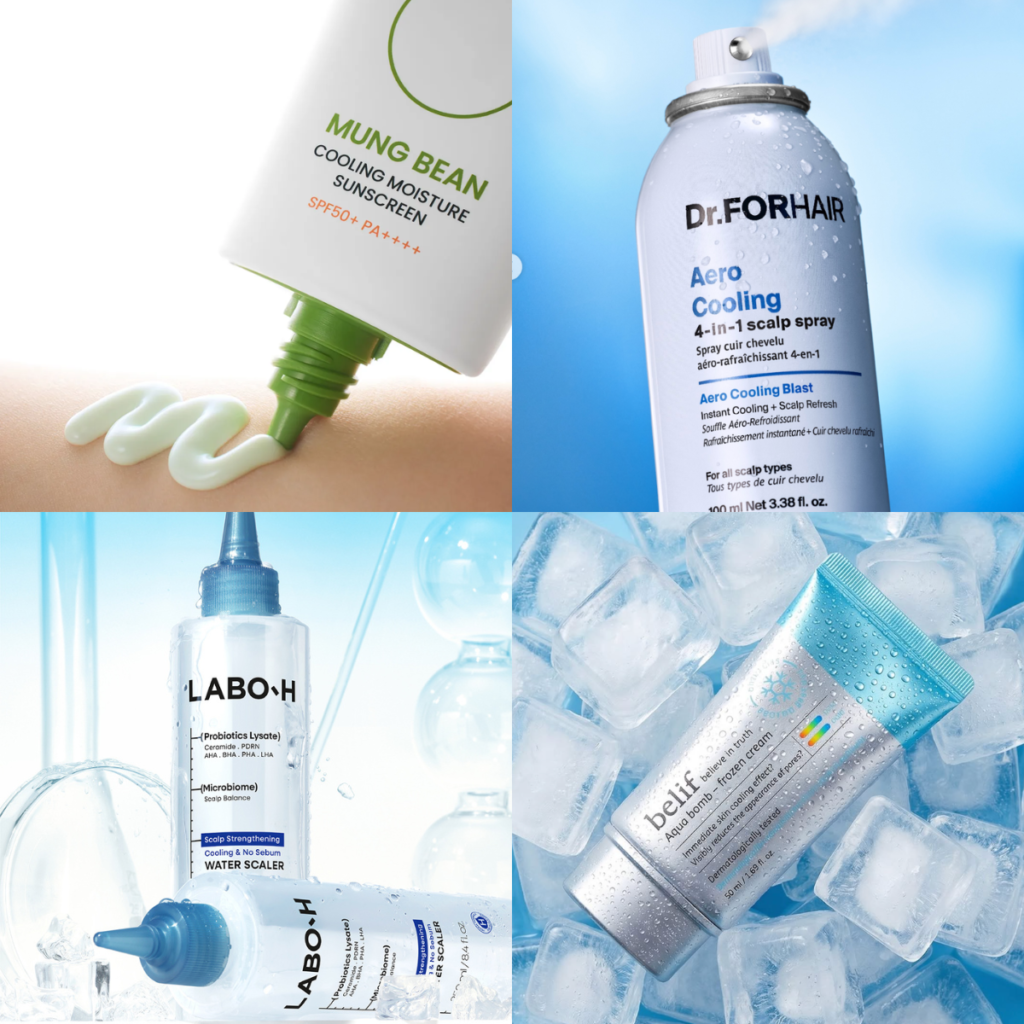
Image: Beplain, Dr.FORHAIR, Labo-H, Belif
Staying Fresh in a City That Doesn’t Stop
Freshness in a Korean summer isn’t just about looking presentable. It’s about staying comfortable through a day that often includes a commute, several hours of work, and then something physically active before heading home again.
Cooling body wipes and refreshing sprays have been standard commuter bag items for a while. What’s changed recently is that these products are increasingly being designed with post-exercise as well as post-commute in mind. Running, hiking, golf, and gym sessions have all become more common weekday activities rather than purely weekend pursuits, and the freshness category has followed.
Nutseline’s Acti Fit Cooling Guasha Serum is one of the more interesting products in this space. It combines a cooling formula with a guasha-shaped applicator designed for muscle recovery massage, targeting areas like the calves and shoulders after exercise. That combination of cooling, massage, and recovery into a single product tells you something about where body care is heading: closer to athletic recovery and further from purely cosmetic function.
Deodorant is now its own proper category in Korea, with considerably more variety than it had just a few years ago. Consumers can now choose between sprays, sticks, creams, gels, and single-use wipes depending on their routine. The sheer format diversity alone reflects how much the category has matured in a short time. If you’re curious why this category has expanded so quickly, we’ve explored it in more detail in our article on why deodorants are finally taking off in Korea. The short version is that hotter summers, more active lifestyles, and changing expectations around body care have all contributed to a category that barely existed in a meaningful way just a decade ago.
When Function Becomes Fashion
Korean summer fashion has been quietly developing its own logic over the past several years, and it’s one that prioritizes practical comfort without abandoning the idea of looking considered.
The UV jacket took a while to become fashionable, but it got there. What made the transition easier was a generation of brands that designed them to look like actual outerwear rather than protective equipment. Lightweight, often in muted or clean colors, they function as a summer layer that moves between outdoor and air-conditioned environments with minimum fuss.
Cooling-fabric pants have reached a similar point. Made from lightweight materials engineered to release heat and moisture quickly, they’re designed to stay comfortable through long commutes and humid afternoons. The important part is that they don’t look technical. They’re available in wide-leg, straight-leg, tailored, and casual styles, so most people wouldn’t realize they’re wearing cooling fabrics at all. The technology has quietly blended into everyday fashion.
Built-in bra tops are another category that’s expanded noticeably. More Korean fashion brands now offer summer tops with integrated bra cups, which addresses something simple: in high heat, every extra layer is uncomfortable. By building the structure into the top itself, the garment removes a layer while maintaining coverage. It’s not a complicated innovation, but it’s a useful one, and it’s showing up across price points from mass-market basics to mid-tier labels.
Cooling innerwear has become just as important. Because underwear, bras, and base layers sit directly against the skin, even small differences in fabric weight can noticeably affect comfort during Korea’s humid summers. Many brands now offer lightweight, cooling versions specifically designed for the season, helping reduce heat and moisture before the outer layers even come into play. It’s one of those products people don’t think about until they’ve tried it.
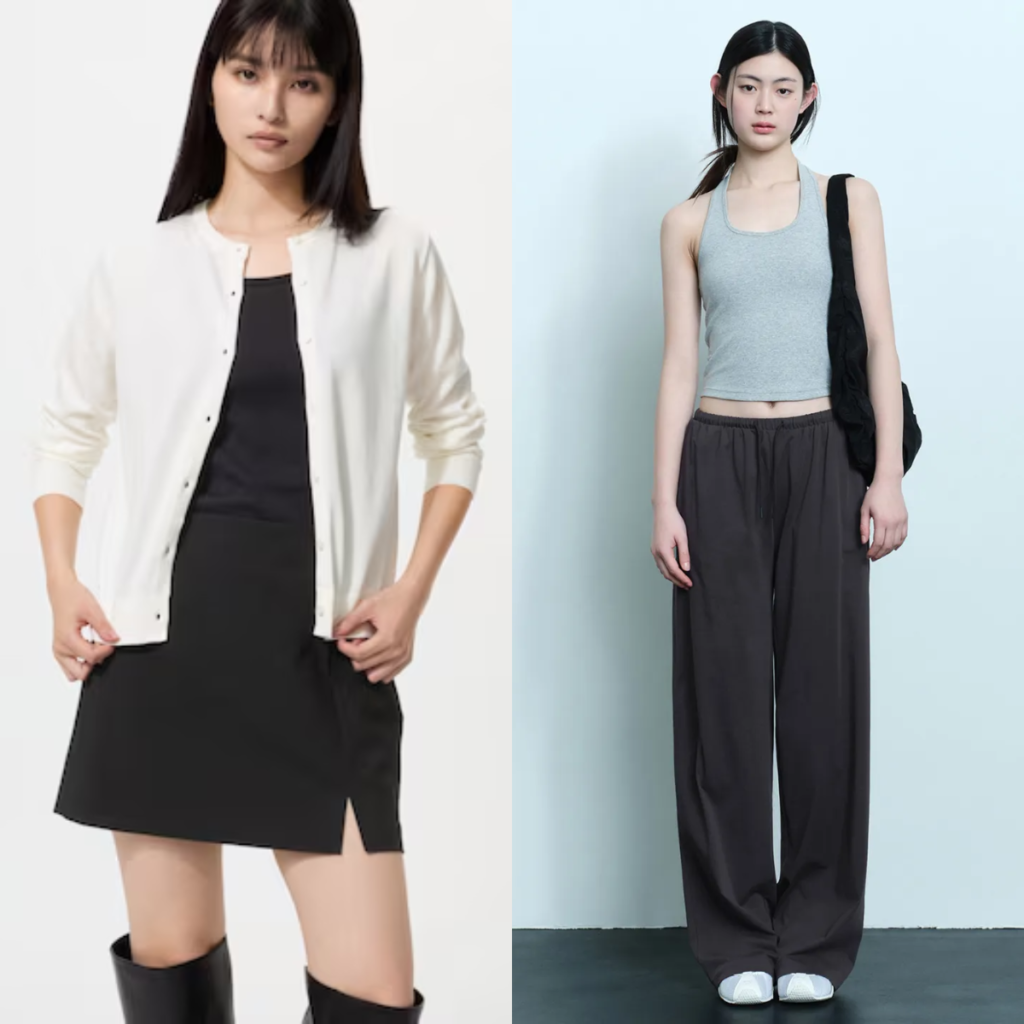
Image: Uniqlo Korea, Musinsa
Keeping Homes Cool
Korean summer adaptation doesn’t stop at the front door, and several product categories reflect that the discomfort of sleeping, sitting, and working in humid heat has been taken seriously as a design problem.
Rather than relying on air conditioning alone, many Korean households layer together smaller products that each solve a different kind of summer discomfort, whether it’s sleeping cooler, working more comfortably, or simply making a humid evening a little easier.
Cooling bedding made from heat-dissipating materials is a mainstream retail category, stocked seasonally the way lighter duvets would be in other markets. Bamboo mats placed on top of mattresses offer a low-tech but effective alternative that’s been part of Korean summer sleeping arrangements for generations. Cooling pillows with gel fills or water-cooled inserts address the specific frustration of a pillow that doesn’t return to cool no matter how many times you flip it.
Cordless rechargeable fans have replaced fixed-position models in many homes. The appeal is practical: rather than needing multiple fans for different rooms, a single powerful cordless unit can be moved from the desk to the bedroom to the kitchen without any cables involved. Cooling seat cushions for office chairs, using the same ice-touch materials as the wearable versions, round out a category that treats summer discomfort in the home as something worth engineering around.
More Than Summer Essentials
The products described here will evolve. New versions will arrive each year, formulas will improve, and some of the specific items mentioned will be discontinued or replaced. That’s not really the point.
What stays consistent is the pattern behind them. Korean consumers are genuinely good at noticing when something about everyday life is slightly more uncomfortable or inconvenient than it needs to be. And Korean brands, competing in one of the most demanding retail environments in the world, have developed a habit of responding to those observations with products rather than simply accepting them as seasonal facts of life.
Many of these categories barely existed fifteen years ago. Their growth reflects not only a changing climate, but also how quickly Korean brands respond when everyday discomfort becomes widespread enough to create new consumer demand.
The scalp gets too hot during the commute. Someone makes a spray for that. The roots get oily under sunscreen. Someone develops a powder instead. Wearing a bra under a summer blouse in 33-degree heat is one layer too many. Someone builds the bra into the blouse. Each of these sounds like a small problem. In Korea, small problems often become new product categories.
If you ever come across a Korean product that seems oddly specific, it’s worth pausing to ask what everyday inconvenience it was actually designed to solve. The answer is usually straightforward. And once you understand it, the product stops seeming strange and starts seeming like the most obvious thing in the world.
Sources
- 3WAAU Scalp Sun Powder (Musinsa product listing, scalp sun protection powder category): https://www.musinsa.com/products/6753613
- Beplain Mung Bean Cooling Moisture Sunscreen (Olive Young product listing, cooling sunscreen formulation): https://www.oliveyoung.co.kr/store/goods/getGoodsDetail.do?goodsNo=A000000249802
- Nutseline Acti Fit Cooling Guasha Serum (Olive Young product listing, cooling and recovery body care): https://www.oliveyoung.co.kr/store/goods/getGoodsDetail.do?goodsNo=A000000252045
- CJ Olive Young — Summer cooling product category and seasonal trending searches (“여름쿨” keyword): https://www.oliveyoung.co.kr
- Oliveyoung Corp — “올영세일로 보는 K뷰티 트렌드” (functional hair and body care growth, scalp care expansion): https://corp.oliveyoung.com/ko/news/88
[…] Siseon — “Korean Summer Products That Actually Solve Hot Weather Problems”: Siseon — Korean Summer Products That Actually Solve Hot Weather Problems […]