


Korean head spas have moved past selling simple scalp treatments. They are selling total body restoration. The old model was clinical, transactional, and strictly remedial, centered on hair loss prevention and short scaling procedures.
Today’s premium Seoul head spa operates on a completely different level.
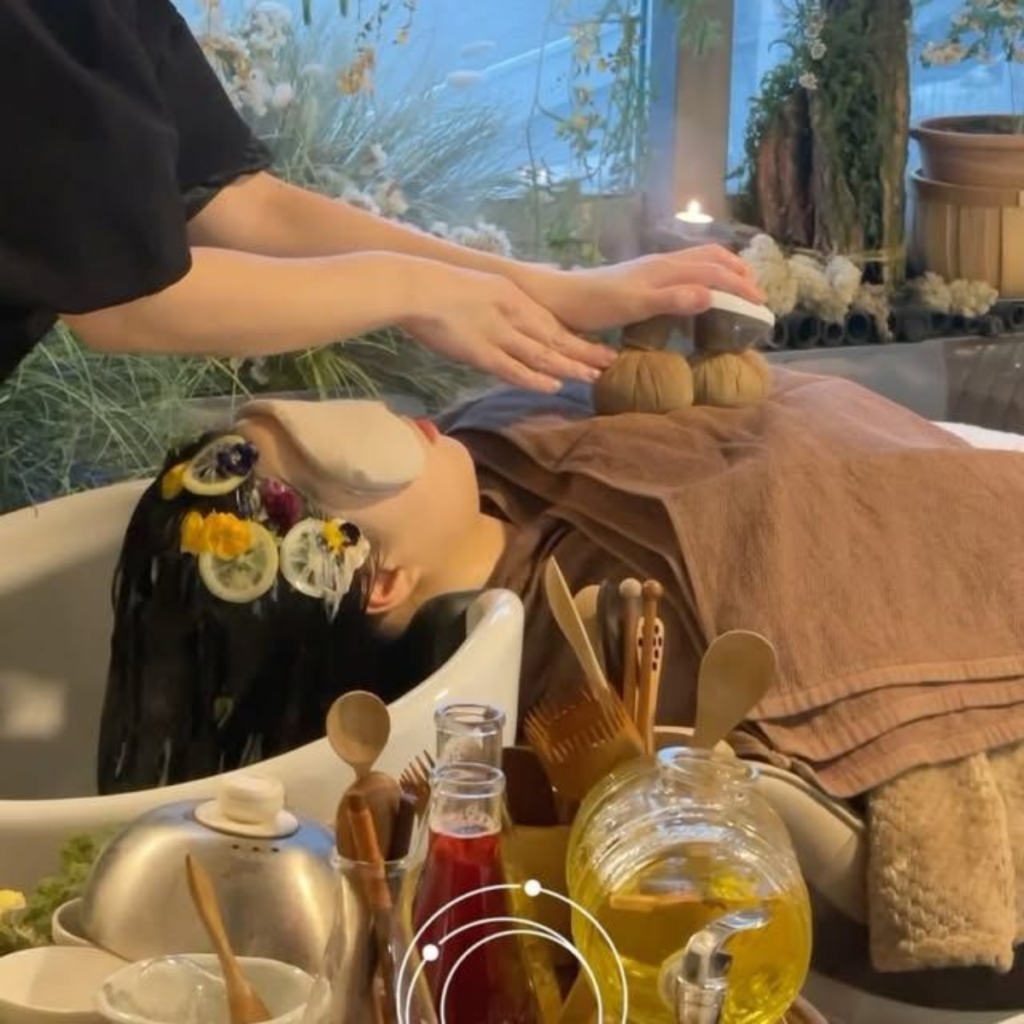
At the Signiel on the 86th floor, a session moves through guided aromatherapy, deep trapezius release, fascia manipulation, and hot stone lymph drainage before a drop of shampoo touches the hair. Treatment of the scalp is the final destination, not the starting line and that shift in priority defines the entire category transformation.
What’s Changing
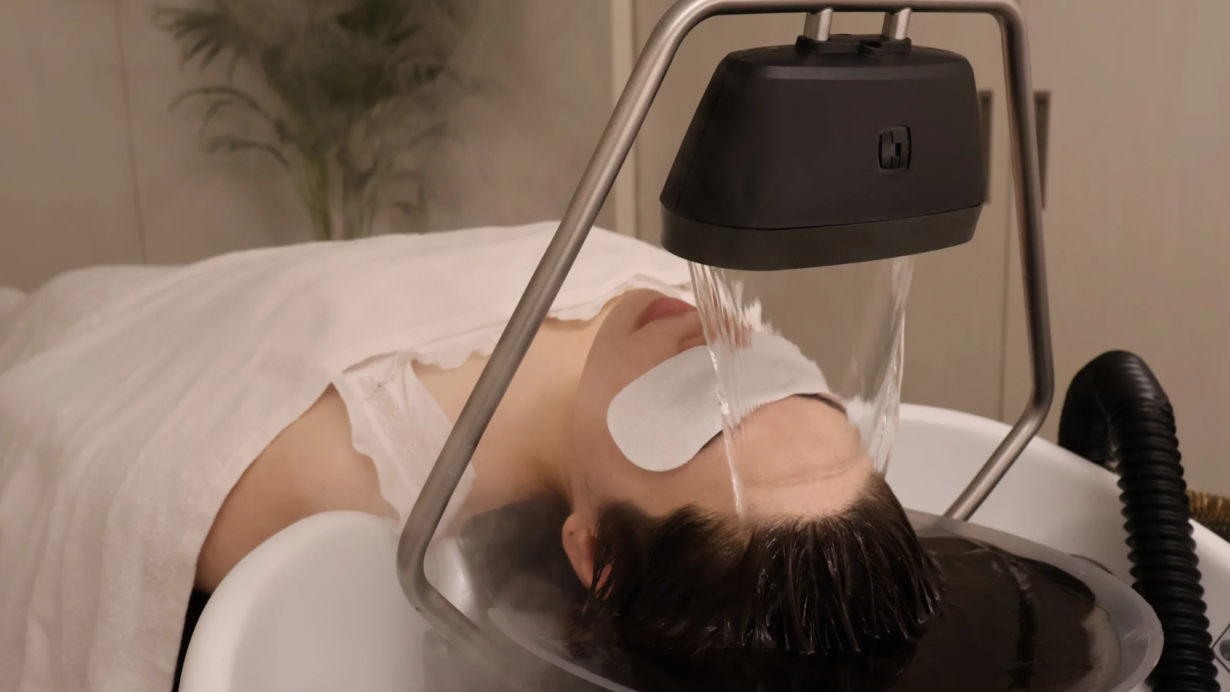
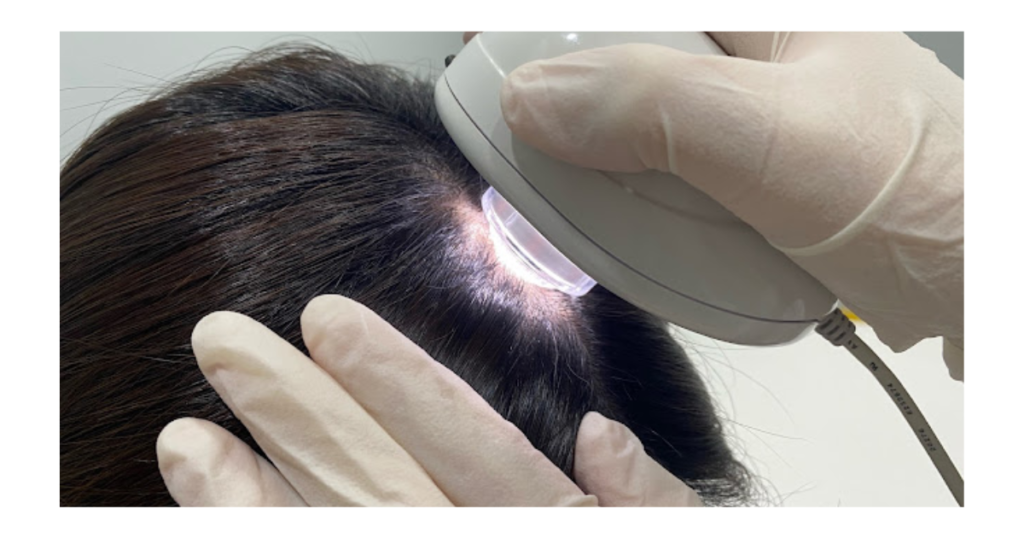
A visit to a premium head spa in Seoul now follows a sequence that has almost nothing in common with a salon appointment. It opens with a microscopic scalp diagnosis, a camera scan used to customize what follows. Then comes an aroma breathing ritual, where the therapist holds essential oils near the client’s face and guides slow, deliberate inhalation. From there: neck and trapezius release, gua sha brushing across the entire head, warm towel wrapping, steam, hot stone lymph drainage along the neckline. The scalp cleanse and treatment come last.
Some programs fold in foot massage during waiting periods. Some add eye spa components. Top-tier spaces include facial lifting work, grounded in the idea that scalp tension pulls on the muscles supporting facial structure.
Premium sessions typically run 70 to 120 minutes, with specialist clinics in Seoul charging roughly $66-170 per visit. What was once a niche service has become a recognizable premium wellness category.
Why It’s Happening
Stress is the presenting symptom.
Korean hair loss data has been shifting for years. Of the 241,000 Koreans who visited hospitals for hair loss in 2024, over 37% were in their twenties and thirties. Clinic founders and dermatologists track the problem back to chronic stress, sleep deprivation, and environmental load. A shampoo cannot resolve those underlying factors. They require long-term management, shifting the model from single appointments to recurring visits.
Seoul-based head spa brand Do.labs builds its entire model on combining scalp science with aroma psychology. Every session opens with guided aroma breathing and deep physical relaxation before treatment begins. The core offering is mental and physical decompression, with scalp care operating as a secondary benefit. One clinic customer put it plainly in Living Sense: “When stress causes my scalp to tighten, I can’t sleep. Aromatherapy massage releases the muscles.”
Skinification reached the scalp.
K-beauty has spent a decade teaching consumers to treat the body in zones. The eye area, the décolleté, the hands, and the neck all secured their own custom serums and ritualized steps over time. The scalp was the final frontier. Now, it has been completely integrated into the broader skincare framework.
The underlying logic is simple. The scalp is an extension of the face, driven by the same pores, microbiome, and moisture barrier. As Korean consumers increasingly apply skincare thinking to every part of the body, the scalp has become the next logical area of focus. Scalp serums, ampoules, and essence mists now occupy the same routines once reserved for facial skincare.
Premium wellness has become a lifestyle fixture.
The Korean consumer booking a head spa is likely the same person attending pilates three mornings a week, visiting a private sauna, or scheduling regular lymphatic massage sessions. They’re not choosing between wellness categories. Instead, they are building a routine across all of them.
This has pulled the head spa upmarket. A treatment that addresses only the physical condition of the scalp without restoring how the client feels when they leave is no longer meeting the expectation. Clinics that understand this have reorganized their service sequences and their language accordingly. Do.labs positions itself at the intersection of beauty and “inner healing” while Christian UV&V Spa in Yongsan competes explicitly at the level of “five-star hotel service.”
Then there is invisible luxury.
Korea has developed a distinct consumer appetite for spending on things that cannot be shown off. No logo. No visible product. Nothing to photograph. The value is felt, not displayed.
This is the same impulse driving the growth of premium pilates studios, IV therapy, contrast bathing clubs, lymphatic massage, and sleep optimization programs across Korea. What they share is that the benefit accrues inward. The investment shows up in how you feel, how you sleep, how you look over time, not in what you’re carrying or wearing.
The head spa belongs to this movement entirely. A $140 session leaves no visible artifact. The result is a clearer scalp, a looser neck, a better night’s sleep, and the quiet satisfaction of having invested two hours in your own maintenance. For the Korean consumer who has largely moved on from conspicuous luxury as a primary status signal, that’s enough.
What This Says About Korean Consumers
Monthly head spa clients are not buying a solution. They are funding a state of being. That distinction carries real economic weight. Problem-solving stops once the issue resolves, but routine maintenance never ends. It generates recurring, predictable visit behavior that no marketing campaign can replicate.
This also maps onto a broader consumer shift. The Korean beauty consumer who once measured their investment in creams and serums is increasingly measuring it in appointments, memberships, and protocols. The treatment has replaced the product as the primary unit of beauty spending at the premium tier.
Foreign visitors are beginning to arrive with similar logic. Bookings for Korean scalp care on Creatrip grew 219% year-on-year through late 2025, with English-speaking visitors from the US, Canada, and Australia accounting for the majority. The head spa is integrating into Korea’s cultural tourism landscape much like K-beauty skincare shopping did a decade ago. It has become an experience that visitors plan their trips around rather than something they stumble into.
Why Brands Should Pay Attention
Clinics at this tier are selective about the products they use. A placement in the treatment protocol at a high-end head spa is a credibility signal to a consumer paying close attention and willing to pay for the experience again. The aromatherapy and scalp ampoule categories are underpopulated by brands with genuine wellness positioning.
For hotel and resort brands, head spas are one of the most culturally resonant wellness offerings in Korea right now. With a trained therapist and a sequenced Korean protocol, it creates exactly the kind of memorable experience that generates return visits and international word-of-mouth.
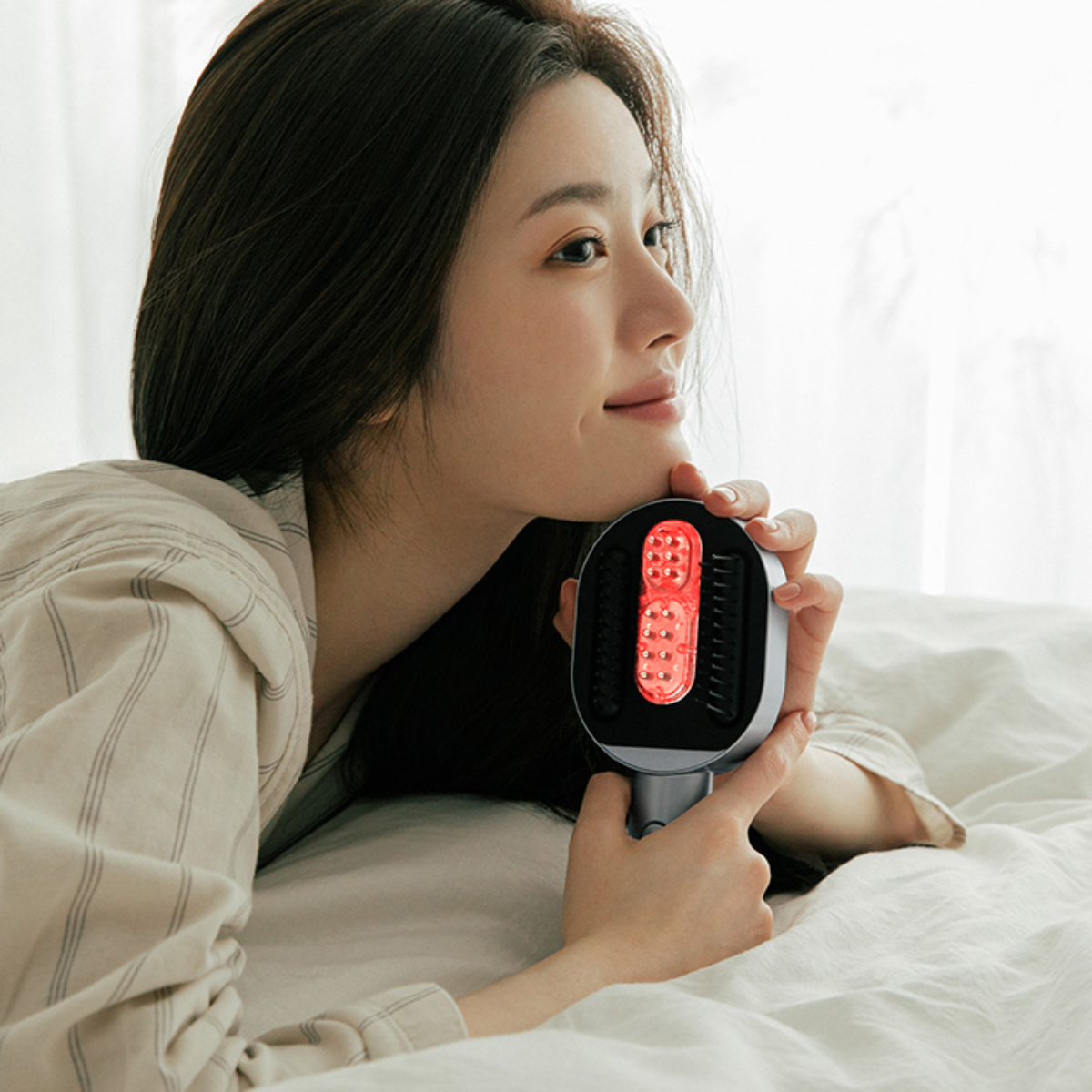
The home care category is also growing alongside it. The Klug scalp massager sold 100,000 units in its first year, with 40% of buyers aged 20 to 30. These consumers are building routines that move between clinic and home.
What We’re Watching Next
Korean head spas are no longer competing with hair salons alone. They’re competing with luxury spas, wellness clubs, and even fitness memberships for a place in consumers’ monthly routines.
That’s a remarkable transformation for a category once associated almost exclusively with dandruff, scalp irritation, and hair loss.
More broadly, it reflects a shift in Korean consumer culture. Consumers are increasingly willing to spend premium prices on experiences that leave no visible proof of purchase. The value isn’t what they take home. It’s how they leave feeling.
The scalp may be where the appointment begins. But what Korean head spas are really selling is restoration.
Looking at Your Brand Strategy
Uncovering the hidden signals in Korean consumer culture requires looking past surface-level trends. If you are exploring how Korean market shifts, consumer behavior, and category movements can open new opportunities for your business, Siseon works with global teams to turn these observations into strategic advantage.
To discuss custom research, field intelligence, or strategic advisory for your team, connect with us directly at hello@siseonhq.com or fill out the contact form.
Sources
- Vogue Korea — “근본적인 두피 관리를 도와줄 헤드 스파 6” (Signiel head spa full review, ‘Stress Relief’ program, aromatherapy sequence, full undressing protocol, March 2024): https://www.vogue.co.kr/2024/03/23/
- Harper’s Bazaar Korea — “여기가 극락! 젠다이아도 방문한 요즘 핫한 헤드 스파 3” (Christian UV&V Spa, Georgianne Laure, celebrity endorsement, program pricing): https://www.harpersbazaar.co.kr/article/1862324
- Do.labs 두랩스 — brand positioning and 10-step treatment protocol: https://signaturemg.co.kr/news_view.php?cate=&cate_sub=&idx=2985
- Glasswallet — “두피스파 1회 5-15만원, 6개월 다니면 60만원?” (price analysis across clinic categories, 2024-2025): https://glasswallet.com/blog/head-spa-cost-guide/
- Daum (Chosun Biz) — “외국인도 반한 ‘K두피 관리’…한국 시장, 아·태 지역서 가장 빨리 성장” (market size data, Creatrip inbound growth, nationality breakdown): https://v.daum.net/v/20260103003703972
- Daum Special Report — “넥스트 K뷰티 ‘탈모 이코노미'” (Klug massager sales, treatment-to-care shift): https://v.daum.net/v/20260107210308466?f=p
- Living Sense — “헤드 스파 추천 리스트” (consumer quotes, program descriptions, aromatherapy product integration): http://www.living-sense.co.kr/news/articleView.html?idxno=18746
[…] Siseon — “Korean Head Spas Are Selling More Than Scalp Care”: Siseon — Korean Head Spas Are Selling More Than Scalp Care […]
[…] culture, where ordinary activities are increasingly being turned into more intentional experiences. Head spas, saunas, and cold-plunge spaces have similarly added atmosphere, ritual, and social value to […]